


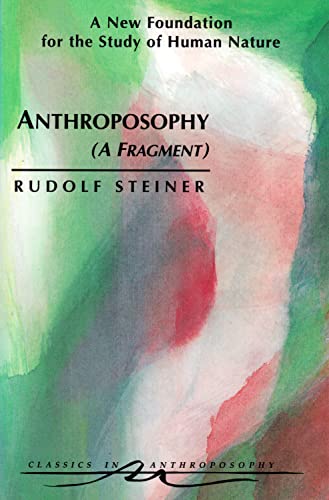
Anthroposophy by Rudolf Steiner
A dazzling variety of Native American dolls--from prehistoric ceramic figures to striking contemporary creations by Inuit and Pueblo artists--fills the pages of Small Spirits. These miniature forms have played rich and diverse roles in indigenous cultures from antiquity to the present, serving as toys and learning tools for children, sacred and magical figurines, props and performers in drama and dance, and, in recent years, items manufactured for sale. Some dolls today are created as artworks and coveted by collectors.
Stunning full-color images portray the beauty and craftsmanship of the dolls, from the simplest toy made of sticks and cloth scraps to the exquisitely dressed replica of a woman in her finest regalia. Each offers a glimpse into a particular cultural world--Navajo, Cree, or Tapirape--and into the mind of an individual maker. The great variety of form and materials--such as walrus tusk ivory, cornhusks, and beeswax embellished with the brilliantly colored feathers of tropical birds--reflects the vibrancy and range of Native American lifeways.
Mary Jane Lenz's insightful, authoritative text offers a lively discussion of the intriguing roles that dolls have played in Native American cultures and explores their significance today, while carefully chosen historical photographs bring to life the people who made and used these remarkable creations.
Rudolf Steiner (1861-1925) was born in the small village of Kraljevec, Austro-Hungarian Empire (now in Croatia), where he grew up (see right). As a young man, he lived in Weimar and Berlin, where he became a well-published scientific, literary, and philosophical scholar, known especially for his work with Goethe's scientific writings. At the beginning of the twentieth century, he began to develop his early philosophical principles into an approach to systematic research into psychological and spiritual phenomena. Formally beginning his spiritual teaching career under the auspices of the Theosophical Society, Steiner came to use the term Anthroposophy (and spiritual science) for his philosophy, spiritual research, and findings. The influence of Steiner's multifaceted genius has led to innovative and holistic approaches in medicine, various therapies, philosophy, religious renewal, Waldorf education, education for special needs, threefold economics, biodynamic agriculture, Goethean science, architecture, and the arts of drama, speech, and eurythmy. In 1924, Rudolf Steiner founded the General Anthroposophical Society, which today has branches throughout the world. He died in Dornach, Switzerland.
| SKU | Unavailable |
| ISBN 13 | 9780880104012 |
| ISBN 10 | 0880104015 |
| Title | Anthroposophy |
| Author | Rudolf Steiner |
| Series | Classics In Anthroposophy |
| Condition | Unavailable |
| Binding Type | Paperback |
| Publisher | Anthroposophic Press Inc |
| Year published | 1996-04-01 |
| Number of pages | 221 |
| Cover note | Book picture is for illustrative purposes only, actual binding, cover or edition may vary. |
| Note | Unavailable |