
Archaeologists Dig for Clues (Let's-Read-and-Find-Out Science: Stage 2)


World of Books
The feel-good place to buy books
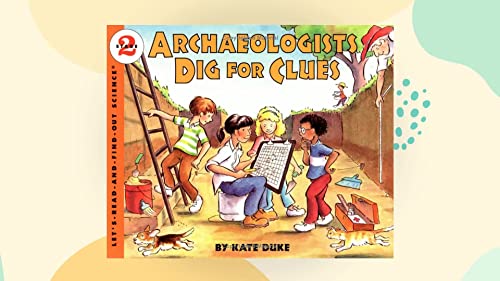
Archaeologists Dig for Clues (Let's-Read-and-Find-Out Science: Stage 2) by Kate-Duke
Deep into that darkness peering, long I stood there, wondering, fearing, doubting, dreaming dreams no mortal ever dared to dream before.--- Edgar Allan Poe, The Raven
The Raven is a narrative poem by American writer Edgar Allan Poe. First published in January 1845, the poem is often noted for its musicality, stylized language, and supernatural atmosphere. It tells of a talking raven's mysterious visit to a distraught lover, tracing the man's slow fall into madness. The lover, often identified as being a student, is lamenting the loss of his love, Lenore. Sitting on a bust of Pallas, the raven seems to further instigate his distress with its constant repetition of the word Nevermore. The poem makes use of a number of folk, mythological, religious, and classical references.
Poe claimed to have written the poem very logically and methodically, intending to create a poem that would appeal to both critical and popular tastes, as he explained in his 1846 follow-up essay, The Philosophy of Composition. The poem was inspired in part by a talking raven in the novel Barnaby Rudge: A Tale of the Riots of 'Eighty by Charles Dickens. Poe borrows the complex rhythm and meter of Elizabeth Barrett's poem Lady Geraldine's Courtship, and makes use of internal rhyme as well as alliteration throughout.
The Raven was first attributed to Poe in print in the New York Evening Mirror on January 29, 1845. Its publication made Poe widely popular in his lifetime, although it did not bring him much financial success. The poem was soon reprinted, parodied, and illustrated. Critical opinion is divided as to the poem's literary status, but it nevertheless remains one of the most famous poems ever written.
| SKU | Unavailable |
| ISBN 13 | 9780590273541 |
| ISBN 10 | 059027354X |
| Title | Archaeologists Dig for Clues (Let's-Read-and-Find-Out Science: Stage 2) |
| Author | Kate-Duke |
| Condition | Unavailable |
| Binding Type | Paperback |
| Publisher | Scholastic |
| Cover note | Book picture is for illustrative purposes only, actual binding, cover or edition may vary. |
| Note | Unavailable |