
The Architecture of Frank Lloyd Wright


Summary
The feel-good place to buy books
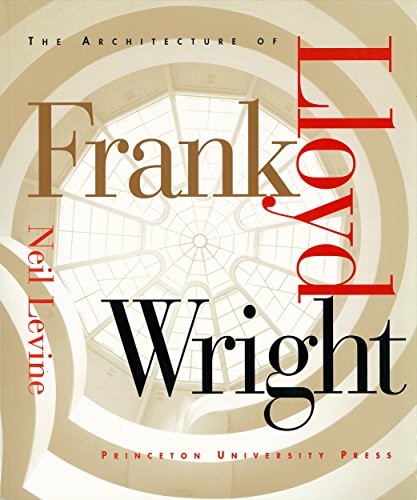
The Architecture of Frank Lloyd Wright by Neil Levine
This study of the architecture of Frank Lloyd Wright, beginning with his work in Oak Park in the late 1880s and culminating in the construction of the Guggenheim Museum in New York and the Marin County Civic Centre in the 1950s, is an analysis of the architect's entire career since the opening of the Wright Archives over a decade ago. Wright built more than 400 buildings and designed at least twice as many more. The characteristic features of his work - the open plan, dynamic space, fragmented volumes, natural materials, and integral structure-established the basic way that we think about modern architecture. For a general audience, this book provides an introduction to Wright's remarkable accomplishments, as seen against the background of his eventful and often tragic life. For the architect or the architectural historian, it should be a source of new insights into the development of Wright's whole body of work. It integrates biographical and historical material in a chronologically ordered framework that makes sense of his enormously varied career, and it provides over four hundred illustrations running parallel to the text. Levine conveys the meanings of the continuities and changes that he sees in Wright's architecture and thought by focusing successive chapters on his most significant buildings, such as the Winslow House, Taliesin, Hollyhock House, Fallingwater, Taliesin West, and the Guggenheim Museum. A new understanding of the representational imagery and narrative structure of Wright's work, along with a reconsideration of its historical and contextual underpinnings, gives this study a place in the writings on Wright. In contrast to the emphasis a previous generation of critics and historians placed on Wright's earlier buildings, this book offers a broader perspective that sees Wright's later work as the culmination of his earlier efforts and the basis for a new understanding of the centrality of his career to the evolution of modem architecture as a whole.
"Winner of the 1997 Award for Best Professional/Scholarly Book in Architecture and Urban Planning, Association of American Publishers"
"One of Choice's Outstanding Academic Titles for 1996"
"Scrupulously researched, elegantly written (with a refreshing lack of jargon), beautifully illustrated and designed. . the book is a feast for eye and mind, challenging assumptions and deepening understanding on almost every page. . . . Wright's ability to translate the poetic essence of a place into form was unrivaled, and no one has explored it with more insight than Levine." * The Architects' Journal *
"A major publication, a benchmark study not only of Wright's career but of architectural history as well. . . . A magnum opus by one of the most highly regarded architectural historians of our day." * Choice *
"He [Wright] created beauty, a serene beauty of space--new, undemocratic and unapologetic--a beauty springing from the deepest resonance of man and nature. The strength of Levine's book is that he explains exactly how and why he did it, with a wealth of illustration."---Joe Berridge, Toronto Globe & Mail
"A monumental project. . . This book, rather than any extant Wright biography, is the source for those who want to know about the immensity and worth of the accomplishments of Frank Lloyd Wright." * Library Journal *
"Wright's personal history was extraordinary by any standards, and it is the great strength of Neil Levine's book that he manages to correlate the developments in Wright's architecture with the events in his life, without being sentimental or over-reverent."---Andrew Ballantyne, The Times Literary Supplement
"One of Choice's Outstanding Academic Titles for 1996"
"Scrupulously researched, elegantly written (with a refreshing lack of jargon), beautifully illustrated and designed. . the book is a feast for eye and mind, challenging assumptions and deepening understanding on almost every page. . . . Wright's ability to translate the poetic essence of a place into form was unrivaled, and no one has explored it with more insight than Levine." * The Architects' Journal *
"A major publication, a benchmark study not only of Wright's career but of architectural history as well. . . . A magnum opus by one of the most highly regarded architectural historians of our day." * Choice *
"He [Wright] created beauty, a serene beauty of space--new, undemocratic and unapologetic--a beauty springing from the deepest resonance of man and nature. The strength of Levine's book is that he explains exactly how and why he did it, with a wealth of illustration."---Joe Berridge, Toronto Globe & Mail
"A monumental project. . . This book, rather than any extant Wright biography, is the source for those who want to know about the immensity and worth of the accomplishments of Frank Lloyd Wright." * Library Journal *
"Wright's personal history was extraordinary by any standards, and it is the great strength of Neil Levine's book that he manages to correlate the developments in Wright's architecture with the events in his life, without being sentimental or over-reverent."---Andrew Ballantyne, The Times Literary Supplement
Neil Levine teaches the history of modern architecture at Harvard University, where he is the Emmet Blakeney Gleason Professor of Fine Arts. He has been the Banister Fletcher Professor of Architecture at the University of London and the Slade Professor of Fine Art at Cambridge University. He is on the editorial board of the journal Wright Studies and was on the advisory board of an upcoming PBS documentary series on Wright. He is also on the Board of Directors of the Frank Lloyd Wright Building Conservancy.
| SKU | Unavailable |
| ISBN 13 | 9780691033716 |
| ISBN 10 | 0691033714 |
| Title | The Architecture of Frank Lloyd Wright |
| Author | Neil Levine |
| Condition | Unavailable |
| Publisher | Princeton University Press |
| Year published | 1996-03-24 |
| Number of pages | 520 |
| Cover note | Book picture is for illustrative purposes only, actual binding, cover or edition may vary. |
| Note | Unavailable |