


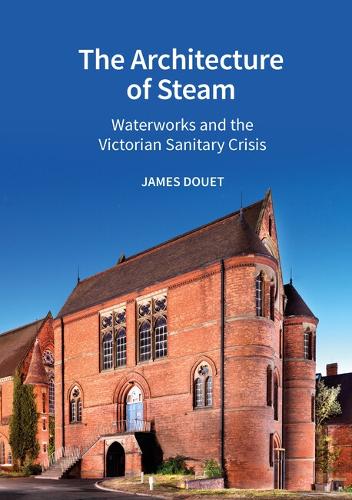
The Architecture of Steam by James Douet
Winner of the Association for Industrial Archaeology’s Peter Neaverson Award for Outstanding Scholarship 2024 Steam pumping stations are exceptional buildings, a rousing, eloquent architecture designed by engineers, and an industrial edifice intended to express civic pride. They were invented, perfected and superseded in barely a century during the determined struggle to overcome the historic threat to urban life posed by industrialization. Of the buildings of the industrial period only train stations can compete with waterworks for stylistic bravura, carried over into the cool, tiled interiors and the sparkle and warmth of the cherished steam engine. This first comprehensive account of a remarkable fusion of machinery and structure weaves together architectural fashions, shifting social conditions and engineering inventiveness to show why such care was taken by the communities that commissioned them and by the men who built them, and what makes us take such pleasure in them today. British waterworks heritage is a global reference, for the historical significance of the sites themselves but also for the conservation of the many preserved waterworks, often extending to the reanimation of historic steam engines. No prior knowledge of architecture, sanitation or steam technology is required to enjoy this spirited and richly-illustrated account of a singular British building.‘A well-researched and eloquently presented work that makes for insightful and enjoyable reading whether for work or for pleasureThis book is for anyone with either a passing interest in water heritage, archaeology or architecture, or a more advanced reader who is interested in researching and referencing the architecture of sanitation.’ Zoe Arthurs MSc, PCIfA, Heritage Management Archaeologist, Trustee for the Association for Industrial Archaeology
'Water was not only crucial to the growth of great nineteenth-century cities, but the visual symbolism of its supply and disposal found vivid expression in civic pride and dignity. Here, in this important new book, James Douet sets out how the architecture, not only of buildings but critically of the steam engines they contained, came to exemplify a style as distinctive in its own way as that of the great medieval cathedrals or the aqueducts of Rome.'
Sir Neil Cossons, former Director of the Science Museum London, and Chairman of English Heritage
‘Douet not only offers a guide to a wide selection of buildings erected to house pumping stations in Victorian England, but also explains the motivations of architects, engineers, and designers for creating these special places deliberately with the public in mind… lifting the veil of anonymity off these extraordinary buildings, the book displays them as testimonies of industrial water development and serves as a model for the retracing of the history of other industrial landscapes, giving new life and meaning to abandoned, recycled, reused, or reinvented structures once symbolic of modernity and progress.’ Hélène B. Ducros, EuropeNow
‘James Douet, long-time editor of the TICCIH Bulletin… has a compact work for the technical and architectural development of the water factories with their magnificent steam engine pumps in the United Kingdom. It is also well illustrated, fluently written and elegantly formulated, so that even the non-native speakers have a good understanding of the explanations of the technical development and its “makers”.’
Translated from German: ‘James Douet, langjähriger Herausgeber des TICCIH-Bulletins… hat ein kompaktes Werk zur technischen und architektonischen Entwicklung der Wasserwerke mit ihren großartigen dampfbetriebenen Pumpen in Großbritannien vorgelegt. Es ist zudem gut bebildert, flüssig geschrieben und elegant formuliert, sodass auch der Nicht-Muttersprachler den gut verständlichen Erläuterungen zur technischen Entwicklung und ihren „Machern“ gerne folgt.’ Norbert Tempel, Industriekultur
'A crucial part of this history, and the one that has attracted the most attention from historians, is the gradual assumption of municipal ownership… Douet, however, is primarily interested in two other aspects of the waterworks… Anyone interested in the technical and artitectural facets of nineteenth-century sanitation will benefit from reading Douet's work; but it is also a wonderful tribute to a world we have lost—a world where municipal pride and engineering ambition went hand in hand.' Tom Crook, Technology and Culture
‘A work of the highest scholarship. It is almost certainly destined to become the classic introduction to the subject and hence will probably be used globally to inform and assess comparative studies leading to nominations for World Heritage Site status for some of the sites of international significance.’
Keith Falconer, Industrial Archaeology Review
| SKU | Unavailable |
| ISBN 13 | 9781802077537 |
| ISBN 10 | 1802077537 |
| Title | The Architecture of Steam |
| Author | James Douet |
| Condition | Unavailable |
| Binding Type | Hardback |
| Publisher | Liverpool University Press |
| Year published | 2023-01-31 |
| Number of pages | 144 |
| Cover note | Book picture is for illustrative purposes only, actual binding, cover or edition may vary. |
| Note | Unavailable |