
English Authorship and the Early Modern Sublime


Regular price
Checking stock...

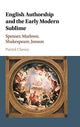
English Authorship and the Early Modern Sublime by Patrick Cheney
Patrick Cheney's new book places the sublime at the heart of poems and plays in late sixteenth- and early seventeenth-century England. Specifically, Cheney argues for the importance of an 'early modern sublime' to the advent of modern authorship in Spenser, Marlowe, Shakespeare, and Jonson. Chapters feature a model of creative excellence and social liberty that helps explain the greatness of the English Renaissance. Cheney's argument revises the received wisdom, which locates the sublime in the eighteenth-century philosophical 'subject'. The book demonstrates that canonical works like The Faerie Queene and King Lear reinvent sublimity as a new standard of authorship. This standard emerges not only in rational, patriotic paradigms of classical and Christian goodness but also in the eternizing greatness of the author's work: free, heightened, ecstatic. Playing a centralizing role in the advent of modern authorship, the early modern sublime becomes a catalyst in the formation of an English canon.| SKU | Unavailable |
| ISBN 13 | |
| ISBN 10 | |
| Title | English Authorship and the Early Modern Sublime |
| Author | Patrick Cheney |
| Series | |
| Condition | Unavailable |
| Binding Type | |
| Publisher | |
| Year published | |
| Number of pages | |
| Cover note | Book picture is for illustrative purposes only, actual binding, cover or edition may vary. |
| Note | Unavailable |
View All Editions
Filter
Applied Filters (0)
Sort by:
Loading editions...