


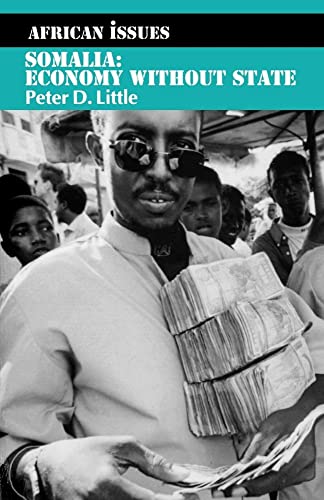
Somalia by Peter D Little
Amaury Talbot Prize Winner Shows that Somalia is an extreme case of an economy without a government. Does statelessness necessarily mean anarchy and disorder? Clan elders, religious leaders and businessmen have worked together to provide stability and security in large parts of Somalia. Urban centres continue to suffer violence, political chaos and economic disruption. Do money, international trade and investment survive without a state? Somalia has been without a state, a Ministry of Finance, or a central bank, but the Somali Shilling wasmore stable during the second half of the 1990s than during the 1980s. Economic agreements with transnational firms and sovereign states go ahead. Do town-dwellers fare as well as pastoralists? With the collapse of the state, herders and traders have benefited from reduced restrictions on movement and there is a booming unofficial export and import trade. Settled populations have fared less well. Do pastoralists care about development and socialimprovement? Throughout the Horn western-funded development projects have had disastrous results. Nevertheless the Somalis have selectively accepted certain elements; phone and internet services are surprisingly cheap. Published in association with the International African Institute North America: Indiana U Press| SKU | Unavailable |
| ISBN 13 | |
| ISBN 10 | |
| Title | Somalia |
| Author | Peter D Little |
| Series | |
| Condition | Unavailable |
| Binding Type | |
| Publisher | |
| Year published | |
| Number of pages | |
| Cover note | Book picture is for illustrative purposes only, actual binding, cover or edition may vary. |
| Note | Unavailable |
View All Editions
Filter
Applied Filters (0)
Sort by:
Loading editions...