
The Social Epistemology of Legal Trials


Regular price
Regular price
Checking stock...

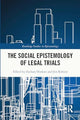
The Social Epistemology of Legal Trials by Zachary Hoskins
This collection is the first book-length examination of the various epistemological issues underlying legal trials. Trials are centrally concerned with determining truth: whether a criminal defendant has in fact culpably committed the act of which they are accused, or whether a civil defendant is in fact responsible for the damages alleged by the plaintiff. Truth is not, however, the only epistemic value which seems relevant to how trials proceed. We may think that a jury shouldn’t convict a defendant, even one who is as a matter of fact guilty, unless its members know or at least are justified in believing that the defendant committed the crime in question. Similarly, we might reasonably assume that the trier of fact must have some level of understanding to reach an adequate verdict in any case, but legitimate questions arise as to what level of understanding should be required. The essays collected in this volume consider a range of epistemological issues raised by trials, such as how much credence jurors should give to eyewitness testimony, the admissibility and role of statistical evidence, and the appropriate standards of proof in different contexts. The Social Epistemology of Legal Trials will be of interest to scholars and upper-level students working on issues at the intersection of epistemology and philosophy of law.| SKU | Unavailable |
| ISBN 13 | |
| ISBN 10 | |
| Title | The Social Epistemology of Legal Trials |
| Author | Zachary Hoskins |
| Series | |
| Condition | Unavailable |
| Binding Type | |
| Publisher | |
| Year published | |
| Number of pages | |
| Cover note | Book picture is for illustrative purposes only, actual binding, cover or edition may vary. |
| Note | Unavailable |
View All Editions
Filter
Applied Filters (0)
Sort by:
Loading editions...