


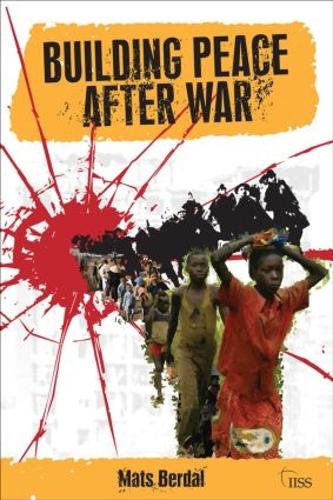
Building Peace After War by Mats Berdal
The widespread practice of intervention by outside actors aimed at building ‘sustainable peace’ within societies ravaged by war has been a striking feature of the post-Cold War era. But, at a time when more peacekeepers are deployed around the world than at any other point in history, is the international will to intervene beginning to wane? And how capable are the systems that exist for planning and deploying ‘peacebuilding’ missions of fulfilling the increasingly complex tasks set for them? In Building Peace After War, Mats Berdal addresses these and other crucial questions, examining the record of interventions from Cambodia in the early 1990s to contemporary efforts in Afghanistan and the Democratic Republic of the Congo. The book analyses the nature of the modern peacebuilding environment, in particular the historical and psychological conditions that shape it, and addresses the key tasks faced by outside forces in the early and critical ‘post-conflict’ phase of an intervention. In doing so, it asks searching questions about the role of military force in support of peacebuilding, and the vital importance of legitimacy to any intervention. Berdal also looks critically at the ways in which governments and international organisations, particularly the UN, have responded to these many challenges. He highlights the pivotal role of politics in planning peacebuilding operations, and offers some sober reflections on the future prospects for post-conflict intervention.'In work after analytical work Mats Berdal has trained his sharp, inquiring gaze on numerous aspects of the work for peace with a keen understanding of what is desirable and what is possibleI cannot think of anyone better suited to shine a light on the experience of peacebuilding efforts since the 1990s. He has raised fundamental questions which the international community should heed.'Alvaro de Soto, former Under-Secretary General, United Nations
'In this cogent, concise and incisive study, Mats Berdal persuasively argues that post-conflict reconstruction must be based on an understanding of local political structures that have been shaped - but not obliterated - by war. I cannot think of a better guide to the treacherous terrain of international peacebuilding'
Professor David Keen, London School of Economics'Berdal's description of the peace-building environment is detailed and compelling.'Dr John Mackinlay, RUSI Journal April/May 2010, 100
'The most illuminating part of his book is his thorough examination of not only the initial causes of violence in war-torn societies, but also the myriad ways that intervening forces create conditions and form alliances that strengthen local warlords and trigger an expansion of violent crime, especially trafficking in drugs, arms and human beings' - International Peacekeeping, 18: 1, 2011, 123
| SKU | Unavailable |
| ISBN 13 | 9780415474368 |
| ISBN 10 | 0415474361 |
| Title | Building Peace After War |
| Author | Mats Berdal |
| Series | Adelphi Series |
| Condition | Unavailable |
| Binding Type | Paperback |
| Publisher | Taylor & Francis Ltd |
| Year published | 2009-10-08 |
| Number of pages | 216 |
| Cover note | Book picture is for illustrative purposes only, actual binding, cover or edition may vary. |
| Note | Unavailable |