
The Cambridge Handbook of the Neuroscience of Creativity


Summary
The feel-good place to buy books
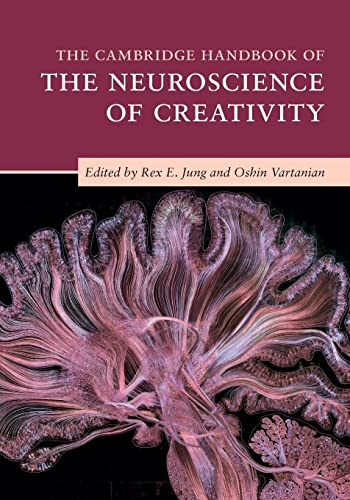
The Cambridge Handbook of the Neuroscience of Creativity by Rex E Jung
Historically, the brain bases of creativity have been of great interest to scholars and the public alike. However, recent technological innovations in the neurosciences, coupled with theoretical and methodological advances in creativity assessment, have enabled humans to gain unprecedented insights into the contributions of the brain to creative thought. This unique volume brings together contributions by the very best scholars to offer a comprehensive overview of cutting edge research on this important and fascinating topic. The chapters discuss creativity's relationship with intelligence, motivation, psychopathology and pharmacology, as well as the contributions of general psychological processes to creativity, such as attention, memory, imagination, and language. This book also includes specific and novel approaches to understanding creativity involving musicians, polymaths, animal models, and psychedelic experiences. The chapters are meant to give the reader a solid grasp of the diversity of approaches currently at play in this active and rapidly growing field of inquiry.
'This wide-ranging text delves into areas where neuroscience and creativity intermingleEditors Jung and Vartanian bring together 30 scholarly essays that leverage the diverse approaches of 45 experts in the field. Entries include an introduction and fundamental concepts, pharmacology and psychopathology, attention and imagination, memory and language, cognitive control and executive functions, reasoning and intelligence, individual differences, and artistic and aesthetic processes. This handbook is a convenient, contemporary, authoritative source for instructors, researchers, and students. Entries are engaging and represent myriad areas of interest in this new and growing field of inquiry. It is also a fine complement to an earlier book edited by Vartanian, Neuroscience of Creativity (CH, Apr'14, 51-4733). Useful tables and figures accompany the text where appropriate throughout. Summing Up: Highly recommended. Upper-division undergraduates through faculty and professionals.' N. Nero, Choice
'If your tastes favor basic neural and cognitive mechanisms of creativity, then you would be hard-pressed to find a better compendium than this one.' Aaron Kozbelt, Evolutionary Studies in Imaginative Culture
'If your tastes favor basic neural and cognitive mechanisms of creativity, then you would be hard-pressed to find a better compendium than this one.' Aaron Kozbelt, Evolutionary Studies in Imaginative Culture
Rex E. Jung received his Ph.D. in Clinical Psychology from the University of New Mexico with specialty training in clinical neuropsychology. He is a clinical professor in the Department of Neurosurgery at the University of New Mexico, and in private practice, with current duties focused around neuropsychological assessment during awake craniotomy. He has published research articles across a wide range of disciplines, including traumatic brain injury, systemic lupus erythematosus, schizophrenia, intelligence, creativity, and genius. His research has been funded by the National Institutes of Health, The National Endowment for the Arts, DARPA, and the John Templeton Foundation. He is on the Editorial Boards of several journals including: Intelligence, PLOS ONE, Frontiers in Neuropsychiatric Imaging and Stimulation, and the Creativity Research Journal. Oshin Vartanian received his Ph.D. in Psychology from the University of Maine. He is a Defence Scientist at Defence Research and Development Canada, and an Adjunct Assistant Professor in the Department of Psychology at the University of Toronto. He is the co-editor of Neuroaesthetics (2009), Neuroscience of Decision Making (2011), and Neuroscience of Creativity (2016). He is the Editor of Empirical Studies of the Arts, and serves on the editorial boards of Creativity Research Journal, Thinking Skills and Creativity, and Psychology of Aesthetics, Creativity, and the Arts. He is the recipient of the Daniel E. Berlyne Award from Division 10 of the American Psychological Association for outstanding research by a junior scholar for his work on the neuroscience of creativity and aesthetics.
| SKU | Unavailable |
| ISBN 13 | 9781316602102 |
| ISBN 10 | 1316602109 |
| Title | The Cambridge Handbook of the Neuroscience of Creativity |
| Author | Rex E Jung |
| Series | Cambridge Handbooks In Psychology |
| Condition | Unavailable |
| Binding Type | Paperback |
| Publisher | Cambridge University Press |
| Year published | 2018-01-25 |
| Number of pages | 566 |
| Cover note | Book picture is for illustrative purposes only, actual binding, cover or edition may vary. |
| Note | Unavailable |