


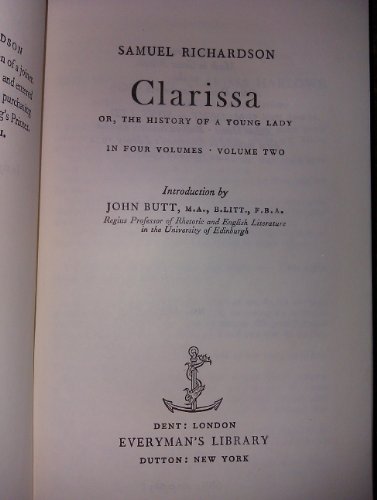
Clarissa: v. 2 by Samuel Richardson
This book is designed to usher the reader into the realm of semiotic studies. It analyzes the most important approaches to semiotics as they have developed over the last hundred years out of philosophy, linguistics, psychology, and biology. As a science of sign processes, semiotics investigates all types of com- munication and information exchange among human beings, animals, plants, internal systems of organisms, and machines. Thus it encompasses most of the subject areas of the arts and the social sciences, as well as those of biology and medicine. Semiotic inquiry into the conditions, functions, and structures of sign processes is older than anyone scientific discipline. As a result, it is able to make the underlying unity of these disciplines apparent once again without impairing their function as specializations. Semiotics is, above all, research into the theoretical foundations of sign- oriented disciplines: that is, it is General Semiotics. Under the name of Zei- chenlehre, it has been pursued in the German-speaking countries since the age of the Enlightenment. During the nineteenth century, the systematic inquiry into the functioning of signs was superseded by historical investigations into the origins of signs. This opposition was overcome in the first half of the twentieth century by American Semiotic as well as by various directions of European structuralism working in the tradition of Semiology. Present-day General Semiot- ics builds on all these developments.Samuel Richardson (1689-1761) was an English writer and printer. Born the son of a carpenter, Richardson received a limited education before becoming a printer's apprentice. He established his own shop in 1719 and received his first major contract in 1723, printing a bi-weekly Jacobite newspaper which was soon censored. Having married in 1721, Richardson and his wife Martha Wilde suffered the loss of several sons before Martha succumbed to illness in 1732. Devastated, Richardson eventually remarried and focused on his career, earning a contract with the House of Commons in 1733 and hiring several apprentices to assist him at his shop. During this time, Richardson turned to fiction, publishing his first novel, Pamela; or, Virtue Rewarded in 1740, a work now considered the first modern novel. Throughout the remainder of his career, he published two more epistolary novels--Clarissa: Or the History of a Young Lady (1748) and The History of Sir Charles Grandison (1753)--while continuing his work as a prominent and successful printer. He published and befriended many of the leading writers of his time, including Daniel Defoe, Sarah Fielding, and Samuel Johnson.
| SKU | Unavailable |
| ISBN 13 | 9780460008839 |
| ISBN 10 | 0460008838 |
| Title | Clarissa: v. 2 |
| Author | Samuel Richardson |
| Condition | Unavailable |
| Binding Type | Hardback |
| Publisher | Orion Publishing Co |
| Year published | 1962-07-01 |
| Number of pages | 544 |
| Cover note | Book picture is for illustrative purposes only, actual binding, cover or edition may vary. |
| Note | Unavailable |