
Cultural Sensitivity and Responsiveness in Neurorehabilitation


Summary
The feel-good place to buy books
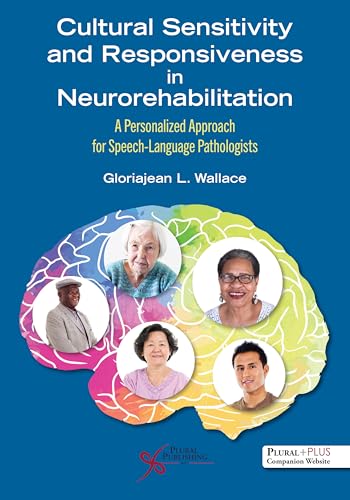
Cultural Sensitivity and Responsiveness in Neurorehabilitation by Gloriajean Wallace
Cultural Sensitivity and Responsiveness in Neurorehabilitation: A Personalized Approach for Speech-Language Pathologists is a groundbreaking and transformative resource for designing quality and equitable neurorehabilitation care for individuals from diverse communities. Material coverage is comprehensive, and chapters are user-friendly for speech-language pathologists (SLP) and SLP students alike. Case presentations are provided to demonstrate best practices. As our world becomes increasingly more diverse, it is imperative for SLPs to be knowledgeable about and experienced with foundational information relating to diversity, equity, inclusion, implicit bias, intersectionality, and SLP best practices for cases from culturally and linguistically diverse communities. The text culminates with an insightful epilogue featuring people from diverse communities from around the world who have neurogenic communication, cognitive, and swallowing disorders, and who share information about what they would like neurorehabilitation specialists to know.
The book is organized into seven sections:
Part I: Introduction to Personalized Care sets the stage by introducing the concept of multicultural neurogenics and personalized care. Chapters delve into topics like implicit bias, interprofessional collaboration, and the tools clinicians need for effective case management when working with diverse populations.
Part II: Building a Foundation for Neurorehabilitation in a Multicultural World: Personalization Personified provides practical guidance for SLPs. It covers the preparation for case contact, working with interpreters and translators, and the assessment and management of speech, language, cognitive, and swallowing issues in culturally and linguistically diverse populations.
Part III: Specialty Neurogenics Chapters offers in-depth knowledge on various neurogenic conditions such as aphasia, traumatic brain injury, right hemisphere brain damage, the dementias, dysarthrias, and dysphagia within a cultural context.
Part IV: A Sampling of Information About U.S. Census Bureau Racial/Ethnic Groups delves into the unique cultural and communication factors related to various racial and ethnic groups in the United States, including Blacks, Hispanics, Chinese and Asian Americans, American Indians and Alaska Natives, and White Americans.
Part V: Intersectionality examines the intersection of factors that create unique challenges in care, including ethical perspectives for serving LGBTQIA+ individuals, trauma-informed care for marginalized populations, and the cultural aspects of care for the Deaf community.
Part VI: Contributions from Educators and a Look at Neurorehabilitation Care Trends within the U.S. provides insights from academics on diversity, equity, and inclusion in education, designing courses that promote DEI, and current trends in SLP neurorehabilitation.
Part VII presents real-world cases with accompanying videos illustrating best practices in SLP neurorehabilitation care for diverse communities. These cases cover a wide range of scenarios, from collaboration between medical SLPs and interpreters to culturally adapted therapy for older adults and complex management considerations for stroke survivors from the Deaf community. This section ends with a chapter by visionaries from Asia, Africa, Europe, Oceania, South America, and North America sharing their insights on bridging the international diversity sensitivity and responsiveness gap, emphasizing the importance of cultural competence in a global context.
- Comprised of 40 chapters by 80 renowned authors and over 100 total contributors from diverse communities, including experienced SLP clinicians, academicians, and researchers; diversity, equity, and inclusion (DEI) specialists; and professionals from the areas of audiology, medicine, psychology, and education
- Includes real-world case studies, including accompanying videos to illustrate best practices in SLP neurorehabilitation care for people from diverse communities
- Discusses diversity matters for people with major neurologically based communication, cognitive, and swallowing disorders; and by race/ethnicity and culture, with attention to intersectionality
- Features content designed specifically for this book, including considerations for individuals with neurogenic disorders who are from the Deaf community; trauma-informed care for the unsheltered and people who have experienced interpartner violence; as well as intersectionality issues
- Incorporates perspectives about the value of non-traditional approaches to supplement SLP treatment, health literacy, and public health partnerships
- Provides information by international SLPs about DEI issues that matter most in their respective countries and features thoughts about future neurorehabilitation directions
- Includes interviews with people who have neurogenic communication, cognitive, and swallowing disorders from culturally and linguistically diverse communities in the United States and abroad, providing insights into what matters most and how to best achieve personalization of neurorehabilitation care from their perspective
Gloriajean L. Wallace, MA, PhD, MDiv, ASHA-CCC, ANCDS-BC, is a tenured Catherine Brewer Smith Distinguished Professor of Communication Disorders and Sciences at Western Carolina University, in Cullowhee, North Carolina. At the age of 7 years, she decided to become a speech-language pathologist (SLP) after reading about the impact that Annie Sullivan had on Helen Keller’s life, and then attending a play with her parents where both characters came to life.
Dr. Wallace obtained a BS from Miami University in Oxford, Ohio; an MA from the University of Colorado, Boulder; a PhD from Northwestern University in Evanston, Illinois; and postdoctoral training at the University of Arizona, Tucson and the Boston V.A. Dr. Wallace has had an illustrious career that spans 40 plus years, during which time she has served as Professor, Endowed Professor, Department Chairperson and Graduate Program Director, Medical SLP and Neurorehabilitation Coach and Advocate for people with neurogenic disorders, and Mentor to junior faculty and students (with a desire to help fill the speech-language pathology pipeline with the best and brightest future leaders).
Dr. Wallace specializes in neurogenics, with a focus on adult aphasia, and a special interest in people from underserved communities. This is her third neurogenics book. Dr. Wallace’s current research includes the development of an assessment system, the Reliable Assessment Inventory of Neuro-Behavioral Organization (RAINBO), designed for people from diverse backgrounds who have communication, cognitive, and swallowing impairments. It is her vision that the RAINBO will support the selection of evidence-based treatments and prediction of life participation outcomes.
Dr. Wallace is an ASHA Fellow, Board Certified by the Academy of Neurologic Communication Disorders and Sciences (ANCDS), and licensed to practice in North Carolina, California, Ohio, and Hawai’i. She is a recipient of the ANCDS Special Recognition for Leadership and Contributions to Neurogenics Award, and the National Black Association for Speech-Language-Hearing Association (NBASLH) Scholar Mentor Award. Dr. Wallace, is ordained as both an Interfaith and a Christian Minister, with extensive Chaplaincy training in medical contexts.
| SKU | Unavailable |
| ISBN 13 | 9781635500325 |
| ISBN 10 | 163550032X |
| Title | Cultural Sensitivity and Responsiveness in Neurorehabilitation |
| Author | Gloriajean Wallace |
| Condition | Unavailable |
| Binding Type | Paperback |
| Publisher | Plural Publishing Inc |
| Year published | 2024-12-06 |
| Number of pages | 853 |
| Cover note | Book picture is for illustrative purposes only, actual binding, cover or edition may vary. |
| Note | Unavailable |