


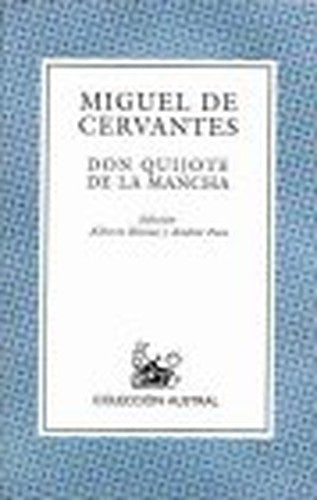
Don Quijote De La Mancha by Miguel De Cervantes
El Ingenioso Hidalgo Don Quijote de La ManchaCompuesto por Miguel de Cervantes Saavedra
Prologo del Autor Desocupado lector: sin juramento me podras creer que quisiera que este libro, como hijo del entendimiento, fuera el mas hermoso, el mas gallardo y mas discreto que pudiera imaginarse. Pero no he podido yo contravenir la orden de naturaleza, que en ella cada cosa engendra su semejante. Y asi que podia engendrar el esteril y mal cultivado ingenio mio, sino la historia de un hijo seco, avellanado, antojadizo y lleno de pensamientos varios y nunca imaginados de otro alguno: bien como quien se engendro en una carcel, donde toda incomodidad tiene su asiento, y donde todo triste ruido hace su habitacion? El sosiego, el lugar apacible, la amenidad de los campos, la serenidad de los cielos, el murmurar de las fuentest, la quietud de espiritu, son grande parte para que las musas mas esterlies se muestren fecundas, y ofrezcan partos al mundo que le colmen de maravilla y de contento. Acontece tener un padre un hijo feo y sin gracia alguna: y el amor que le tiene le pone una venda en los ojos para que no vea sus faltas, antes la juzga por discreciones y lindezas, y las cuenta a sus amigos por agudezas y donaires. Pero yo, que aunque parezco padre soy padrastro de Don Quijote, no quiero irme con la corriente del uso, ni suplicarte casi con las lagrimas en los ojos, como otros hacen, lector carisimo, que perdones o disimules las faltas que en este mi jijo vieres: y pues ni eres so pariente ni su amigo, y tienes tu alma en tu cuerpo y to libre albedrio como el mas pintado, y estas en tu casa, donde eres senor della, como el rey de sus alcahalas, y sabes lo que comunmente se dice, que debajo de mi mante al rey mato, todo lo cual te exenta y hace libre de todo respeto y obligacion, puedes decir de la historia todo aquello que te pareciere, sin temor que te calunien por el mal, ni te premien el bien que dijeres della. Solo quisiera dartela monda y desnuda, sin el ornato de prologo, ni de la inumerabilidad y catalogo de los acostumbrados sonetos, epigramas y elogios que al principio de los libros suelen ponerse. Porque te se decir que aunque me costo algun trabajo componerla, ninjuno tuve por mayor que hacer esta prefacion que vas leyendo. Muchas veces tome la pluma para escribilla, y muchas la deje, por no saber lo que escribiria; y estando una suspenso, con el papel delante, la pluma en la oreja, el codo en el bufete y la mano en la mejilla, pensando lo que diria, entro a deshora un amigo mio gracioso y bien entendido, el cual viendome tan imaginativo, me pregunto la causa, y no encubriendose la yo, le dije... ------------------------------------------------------------------------------------------------------------------------------------------ Windham Press is committed to bringing the lost cultural heritage of ages past into the 21st century through high-quality reproductions of original, classic printed works at affordable prices. This book has been carefully crafted to utilize the original images of antique books rather than error-prone OCR text. This also preserves the work of the original typesetters of these classics, unknown craftsmen who laid out the text, often by hand, of each and every page you will read. Their subtle art involving judgment and interaction with the text is in many ways superior and more human than the mechanical methods utilized today, and gave each book a unique, hand-crafted feel in its text that connected the reader organically to the art of bindery and book-making. We think these benefits are worth the occasional imperfection resulting from the age of these books at the time of scanning, and their vintage feel provides a connection to the past that goes beyond the mere words of the text.
Miguel De Cervantes Saavedra was born in Spain in 1547 to a family once proud and influential but now fallen on hard times. His father, a poor barber-surgeon, wandered up and down Spain in search of work. Educated as a child by the Jesuits in Seville, the creator of Don Quixote grew up to follow the career of a professional soldier. He was wounded at Lepanto in 1571, captured by the Turks in 1575, imprisoned for five years, and was finally rescued by the Trinitarian friars in 1580. On his return to Spain he found his family more impoverished than ever before. Supporting his mother, two sisters, and an illegitimate daughter, he settled down to a literary career and had hopes of becoming a successful playwright, but just then the youthful Lope de Vega entered triumphantly to transform the Spanish theatre by his genius. Galatea, a pastoral romance, was published in 1585, the year of Cervantes' marriage to Catalina de Palacios y Salazar Vozmediano. But it did not bring him an escape from poverty, and he was forced to become a roving commissary for the Spanish armada. This venture, which led to bankruptcy and jail, lasted for fifteen years. Although he never knew prosperity, Cervantes did gain a measure of fame during his lifetime, and Don Quixote and Sancho Panza were known all over the world. Part I of Don Quixote was published in 1605; in 1613, his Exemplary Novels appeared, and these picaresque tales of romantic adventure gained immediate popularity. Journey to Parnassas, a satirical review of his fellow Spanish poets, appeared in 1614, and Part II of Don Quixote in 1615 as well as Eight Plays and Eight Interludes. Miguel de Cervantes died on April 23, 1616, the same day as the death of Shakespeare--his English contemporary, his only peer.
| SKU | Unavailable |
| ISBN 13 | 9788423995998 |
| ISBN 10 | 8423995992 |
| Title | Don Quijote De La Mancha |
| Author | Miguel De Cervantes |
| Series | Coleccion Austral Ser |
| Condition | Unavailable |
| Binding Type | Paperback |
| Publisher | Espasa-Calpe SA |
| Year published | 1999-03-01 |
| Number of pages | 1162 |
| Cover note | Book picture is for illustrative purposes only, actual binding, cover or edition may vary. |
| Note | Unavailable |