The Enlightenment by John Robertson
This Very Short Introduction explores the history of the 18th-century Enlightenment movement. Considering its intellectual commitments, Robertson then turns to their impact on society, and the ways in which Enlightenment thinkers sought to further the goal of human betterment, by promoting economic improvement and civil and political justice.You might also like
Jungian Archetypes
Loading...

A Compassionate Civilization
Loading...
The Daily Stoic
Loading...
Meditations
Loading...




Discourses and Selected Writings
Loading...

How to Know a Person
Loading...

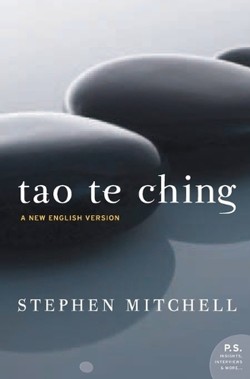
Tao Te Ching
Loading...

-
 Philosophy: A Very Short Introduction
-
 Economics
-
 Medical Ethics: A Very Short Introduction
-
 Jung
-
 The French Revolution: A Very Short Introduction
-
 The Brain
-
 The Palestinian-Israeli Conflict
-
 Game Theory
-
 Classics
-
 Political Philosophy
-
 Logic: A Very Short Introduction
-
 Literary Theory
-
 The Roman Empire: A Very Short Introduction
-
 Psychology
-
 Existentialism
-
 Marx: A Very Short Introduction
-
 Buddhism
-
 Forensic Psychology
-
 The Spanish Civil War
-
 Ethics: A Very Short Introduction
-
 Feminism
-
 History
-
 Quantum Theory
-
 Classical Mythology
-
 Mathematics
-
 Freud
-
 International Relations: A Very Short Introduction
-
 The British Empire
-
 The History of Medicine
-
 Particle Physics: A Very Short Introduction
-
 British Politics: A Very Short Introduction
-
 Consciousness: A Very Short Introduction
-
 Foucault: A Very Short Introduction
-
 Ancient Philosophy: A Very Short Introduction
-
 Kant
-
 Nietzsche
-
 The First World War
-
 Islam: A Very Short Introduction
-
 The Cold War: A Very Short Introduction
-
 Philosophy of Science: A Very Short Introduction
-
 Socialism: A Very Short Introduction
-
 Art History: A Very Short Introduction
-
 The Roman Republic
-
 Hegel
-
 The Russian Revolution
-
 Linguistics
-
 Ancient Greece
-
 Child Psychology
-
 Witchcraft
-
 Medical Ethics


For all its concision, [this book] manages to be both wide-ranging and rigoriousIn five compressed yet elegant chapters it summarizes the current state of research while also adding a series of important insights. * Times Literary Supplement *
the book does exactly what it says it will do * Chris Pierson, Political Studies Review *
This intelligently written and informative book is more than simply a "a very short introduction". John Robertson's book provides, although concisely, a thorough and original interpretation of the Enlightenment as both a historical phenomenon and a philosophical idea. * H-Albion *
John Robertson has been Professor of the History of Political Thought at Cambridge since 2010. He covers the intellectual history of early modern and Enlightenment Europe, with particular interests in political and historical thought, and in the Enlightenment in Scotland and in Italy. His books include the comparative study The Case for the Enlightenment: Scotland and Naples 1680-1760 (Cambridge University Press, 2005), and he is now working on the uses of sacred history in political and social thought between 1650 and 1800. For many years he taught History at Oxford, as a University Lecturer in the Faculty of History and a Fellow of St Hugh's College, and he has held visiting appointments in Germany, the United States and, most recently in Paris.
| SKU | Unavailable |
| ISBN 13 | 9780199591787 |
| ISBN 10 | 0199591784 |
| Title | The Enlightenment |
| Author | John Robertson |
| Series | Very Short Introductions |
| Condition | Unavailable |
| Binding Type | Paperback |
| Publisher | Oxford University Press |
| Year published | 2015-09-24 |
| Number of pages | 176 |
| Cover note | Book picture is for illustrative purposes only, actual binding, cover or edition may vary. |
| Note | Unavailable |
Customers who bought this item also bought
The Daily Stoic
Loading...
Meditations
Loading...
Discourses and Selected Writings
Loading...
How to Know a Person
Loading...
Tao Te Ching
Loading...

The Abolition of Man
Loading...

The Consolation of Philosophy
Loading...
City of God
Loading...


Beyond Good and Evil
Loading...
Simulacra and Simulation
Loading...



Leviathan
Loading...

Why Buddhism Is True
Loading...