An Essay Concerning Human Understanding by John Locke
John Locke (1632-1704) war ein einflussreicher englischer Philosoph und Vordenker der Aufkl rung.In seinem aus vier B chern bestehenden Hauptwerk Ein Versuch ber den menschlichen Verstand untersuchte Locke den Ursprung, die Gewissheit und den Umfang menschlichen Wissens in Abgrenzung zu Glauben, Meinen und Vermuten. Ausgangspunkt war einerseits Lockes scholastische Ausbildung in Oxford auf Basis des in England vorherrschenden Nominalismus. Andererseits hatte er sich in seinem vierj hrigen Frankreichaufenthalt intensiv mit Descartes und dessen Vorstellung eingeborener Ideen auseinandergesetzt. Entsprechend untersuchte Locke im ersten Buch zun chst den Ursprung der Ideen und entwickelte eine Vielzahl pragmatischer Argumente zur Ablehnung eingeborener Ideen. Seine Grundthese lautete: Nihil est in intellectu quod non (prius) fuerit in sensibus (Nichts ist im Verstand, was nicht vorher in den Sinnen gewesen w re). Das zweite Buch befasst sich mit dem Zusammenhang der Ideen mit der Erfahrung. Das menschliche Bewusstsein ist bei der Geburt eine tabula rasa, auf das die Erfahrung erst schreibt. Ausgangspunkt der Erkenntnis ist die sinnliche Wahrnehmung. Allerdings war Locke kein Sensualist. Er unterschied u ere Wahrnehmungen (sensations) und innere Wahrnehmungen (reflections). Der n chste Schritt ist im dritten Buch die Untersuchung der Rolle der Sprache, ihres Zusammenhangs mit den Ideen und ihre Bedeutung f r das Wissen. Buch vier handelt schlie lich von den komplexen (zusammengefassten) Ideen, von den Grenzen des Wissens und dem Verh ltnis von Begr ndung und Glauben. Locke kritisiert den ausschlie lichen Ansatz des Ex praecognitis et praeconcessis.You might also like
The Second Treatise of Government: and a Letter Concerning Toleration
Enhancing Evolution
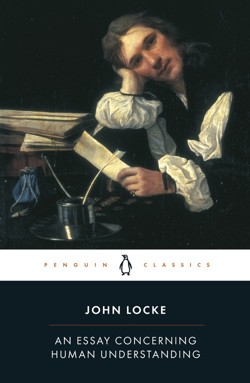
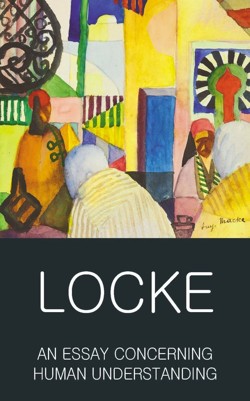
An Essay Concerning Human Understanding
Social Contract
The First & Second Treatises of Government

At Home in the World
Morality and Moral Controversies
The Daily Stoic

Meditations
Meditations


Marcus Aurelius - Meditations

-
 Meditations on First Philosophy
-
 The Trial and Death of Socrates
-
 Prolegomena to Any Future Metaphysics
-
 The Grand Inquisitor
-
 Dialogues Concerning Natural Religion
-
 Discourse on Metaphysics and Other Essays
-
 The Guide of the Perplexed
-
 An Enquiry Concerning the Principles of Morals
-
 Perpetual Peace and Other Essays
-
 A Letter Concerning Toleration
-
 The Subjection of Women
-
 Three Dialogues Between Hylas and Philonous
-
 On Art, Religion, and the History of Philosophy
-
 Pragmatism
-
 The Essential Federalist and Anti-Federalist Papers
-
 Theological-Political Treatise
-
 On the Dignity of Man
-
 Two Comic Dialogues: Ion and Hippias Major
-
 The Essential Augustine
-
 On Faith and Reason
-
 The First New Chronicle and Good Government, Abridged
-
 Reflections on the Revolution in France
-
 Andromache, Hecuba, Trojan Women
-
 Principles of the Philosophy of the Future
-
 Le Le Morte D'Arthur
-
 Discourse on Voluntary Servitude
-
 The Fable of the Bees and Other Writings
-
 Passions of the Soul
-
 Malebranche: Philosophical Selections
-
 Discourse on Method
-
 Ideas for a Pure Phenomenology and Phenomenological Philosophy
-
 Hume: Moral Philosophy
-
 Electra, Phoenician Women, Bacchae, and Iphigenia at Aulis
-
 Parmenides
-
 An Account, Much Abbreviated, of the Destruction of the Indies
-
 On Poetry & Style
-
 The Reveries of the Solitary Walker
-
 The Essential Petrarch
-
 A Disquisition On Government and Selections from The Discourse
-
 Another Philosophy of History and Selected Political Writings
-
 The Royal Commentaries of the Incas and General History of Peru, Abridged
-
 Writings of the Young Marx on Philosophy and Society


This abridgment by Kenneth Winkler is the best that has ever been doneWinkler's judgment as to what must be kept and what may be dropped is unerring, and his literary skill has enabled him to fashion a text that reads smoothly. An illuminating Introduction and comprehensive glossary enhance the value of this volume for students. --Vere Chappell, University of Massachusetts, Amherst
Locke's Essay is a massive, scarcely organized work that is easy for students to get lost in and difficult for teachers to lend coherence to. But Winkler's abridgment succeeds remarkably at bringing out the underlying structure of Locke's masterpiece without sacrificing any of the long and important passages that put the meat on that structure. I didn't think this could be done until I came across Winkler's abridgment. It certainly makes teaching Locke much easier, since it makes the structure of the Essay more apparent, and leaves the teacher thus freer to concentrate on the details of the text. I know of no passages from the Essay left out of this abridgment that I would prefer to use in a lower-level class. If anything, I would have made the abridgment shorter still. But to my knowledge, nobody has yet done a better job than Winkler. --Michael Rolf, University of Pennsylvania
| SKU | Unavailable |
| ISBN 13 | 9780872202160 |
| ISBN 10 | 087220216X |
| Title | An Essay Concerning Human Understanding |
| Author | John Locke |
| Series | Hackett Classics Ser |
| Condition | Unavailable |
| Binding Type | Paperback |
| Publisher | Hackett Publishing Co, Inc |
| Year published | 1996-09-15 |
| Number of pages | 416 |
| Cover note | Book picture is for illustrative purposes only, actual binding, cover or edition may vary. |
| Note | Unavailable |
Customers who bought this item also bought
The Science of Logic
The Second Treatise of Government: and a Letter Concerning Toleration
Critique of Pure Reason
Leviathan
Leviathan
Essays and Aphorisms
The Daily Stoic
Meditations
Meditations
Marcus Aurelius - Meditations
The Fallacy Detective

Discourses and Selected Writings

How to Know a Person

Tao Te Ching
City of God




The Good Life Method
Beyond Good and Evil
The Abolition of Man
The Consolation of Philosophy