
Evolution of Infectious Disease


Summary
The feel-good place to buy books
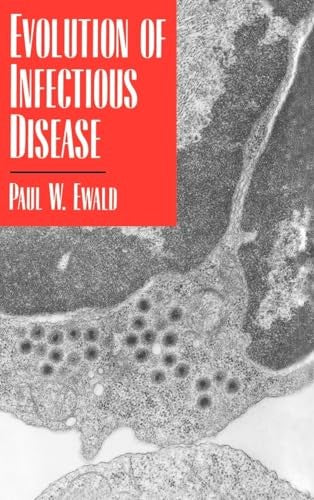
Evolution of Infectious Disease by Paul W Ewald
Findings from the field of evolutionary biology are yielding dramatic insights for health scientists, especially those involved in the fight against infectious diseases. This book is the first in-depth presentation of these insights. In detailing why the pathogens that cause malaria, smallpox, tuberculosis, and AIDS have their special kinds of deadliness, the book shows how efforts to control virtually all diseases would benefit from a more thorough application of evolutionary principles. When viewed from a Darwinian perspective, a pathogen is not simply a disease-causing agent, it is a self-replicating organism driven by evolutionary pressures to pass on as many copies of itself as possible. In this context, so-called cultural vectors - those aspects of human behavior and the human environment that allow spread of disease from immobilized people - become more important than ever. Interventions to control diseases don't simply hinder their spread but can cause pathogens and the diseases they engender to evolve into more benign forms. In fact, the union of health science with evolutionary biology offers an entirely new dimension to policy making, as the possibility of determining the future course of many diseases becomes a reality. By presenting the first detailed explanation of an evolutionary perspective on infectious disease, the author has achieved a genuine milestone in the synthesis of health science, epidemiology, and evolutionary biology. Written in a clear, accessible style, it is intended for a wide readership among professionals in these fields and general readers interested in science and health.
Of interest to professionals in health science, epidemiology, and evolutionary biology, but also accessible to general readers* SciTech Book News, June 1994 *
I have not picked up a book on infectious disease with so much anticipation as Paul Ewald's Evolution of Infectious Disease since reading William McNeil's Plagues and Peoples more than 15 years ago. I was not disappointed: Ewald's book is as teeming with ideas as some of us are with microbes. Evolution of Infectious Disease is a challenging and readable introduction to current thinking on the topic. * Robin A. Weiss, Nature, Vol. 373, 1994 *
very interesting book ... well written book that should be of interest to the educated layperson as well as the evolutionary reasercher and the medical profession. Ewald presents a great deal of grist to chew on providing a lot of documented research on some of his theories and observations. There is a 70-page list of references that would keep any skeptic busy in looking up historical information. For the AIDS researcher, looking into the evolutionary route of the disease should not be overlooked ... recommended for public, academic, and medical libraries. * AIDS Book Review Journal *
... this is a scholarly work, well-referenced, and up-to-date. Ewald has succeeded in producing an interesting and thought-provoking book. * Jonathan Cohen, The Lancet, Dec '94 *
Evolution of Infectious Disease is a challenging and readable introduction to current thinking on the topic. As an experimental, laboratory-based virologist, I certainly found it stimulating. * Robin W. Weiss, Nature, Vol. 372, November 1994 *
Ewald's book is as teeming with ideas as some of us are with microbes ... a challenging and readable introduction to current thinking on the topic ... I certainly found it stimulating. Ewald has plenty of pithy aphorisms. * Robin A. Weiss, Nature, Vol. 372 1994 *
I have not picked up a book on infectious disease with so much anticipation as Paul Ewald's Evolution of Infectious Disease since reading William McNeil's Plagues and Peoples more than 15 years ago. I was not disappointed: Ewald's book is as teeming with ideas as some of us are with microbes. Evolution of Infectious Disease is a challenging and readable introduction to current thinking on the topic. * Robin A. Weiss, Nature, Vol. 373, 1994 *
very interesting book ... well written book that should be of interest to the educated layperson as well as the evolutionary reasercher and the medical profession. Ewald presents a great deal of grist to chew on providing a lot of documented research on some of his theories and observations. There is a 70-page list of references that would keep any skeptic busy in looking up historical information. For the AIDS researcher, looking into the evolutionary route of the disease should not be overlooked ... recommended for public, academic, and medical libraries. * AIDS Book Review Journal *
... this is a scholarly work, well-referenced, and up-to-date. Ewald has succeeded in producing an interesting and thought-provoking book. * Jonathan Cohen, The Lancet, Dec '94 *
Evolution of Infectious Disease is a challenging and readable introduction to current thinking on the topic. As an experimental, laboratory-based virologist, I certainly found it stimulating. * Robin W. Weiss, Nature, Vol. 372, November 1994 *
Ewald's book is as teeming with ideas as some of us are with microbes ... a challenging and readable introduction to current thinking on the topic ... I certainly found it stimulating. Ewald has plenty of pithy aphorisms. * Robin A. Weiss, Nature, Vol. 372 1994 *
Paul W. Ewald is a professor and Chair of the Biology Department at Amherst College, and holds an adjunct faculty appointment at the University of Massachusetts, Amherst. He has been named the first George E. Burch Fellow of Theoretic Medicine and Affiliated Sciences, a position awarded by the Smithsonian Institution and hosted by the Smithsonian Tropical Institute.
| SKU | Unavailable |
| ISBN 13 | 9780195060584 |
| ISBN 10 | 019506058X |
| Title | Evolution of Infectious Disease |
| Author | Paul W Ewald |
| Condition | Unavailable |
| Binding Type | Hardback |
| Publisher | Oxford University Press Inc |
| Year published | 1994-03-24 |
| Number of pages | 308 |
| Cover note | Book picture is for illustrative purposes only, actual binding, cover or edition may vary. |
| Note | Unavailable |