
The Expansion and Apogee of the Ottoman Empire


World of Books
The feel-good place to buy books
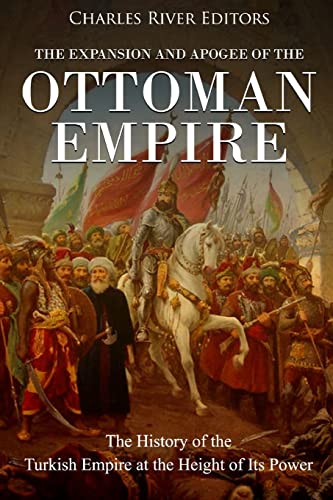
The Expansion and Apogee of the Ottoman Empire by Charles River
*Includes pictures*Includes online resources and a bibliography for further reading
In terms of geopolitics, perhaps the most seminal event of the Middle Ages was the successful Ottoman siege of Constantinople in 1453. The city had been an imperial capital as far back as the 4th century, when Constantine the Great shifted the power center of the Roman Empire there, effectively establishing two almost equally powerful halves of antiquity's greatest empire. Constantinople would continue to serve as the capital of the Byzantine Empire even after the Western half of the Roman Empire collapsed in the late 5th century. Naturally, the Ottoman Empire would also use Constantinople as the capital of its empire after their conquest effectively ended the Byzantine Empire, and thanks to its strategic location, it has been a trading center for years and remains one today under the Turkish name of Istanbul.
The end of the Byzantine Empire had a profound effect not only on the Middle East but Europe as well. Constantinople had played a crucial part in the Crusades, and the fall of the Byzantines meant that the Ottomans now shared a border with Europe. The Islamic empire was viewed as a threat by the predominantly Christian continent to their west, and it took little time for different European nations to start clashing with the powerful Turks. In fact, the Ottomans would clash with Russians, Austrians, Venetians, Polish, and more before collapsing as a result of World War I, when they were part of the Central powers.
The Ottoman conquest of Constantinople also played a decisive role in fostering the Renaissance in Western Europe. The Byzantine Empire's influence had helped ensure that it was the custodian of various ancient texts, most notably from the ancient Greeks, and when Constantinople fell, Byzantine refugees flocked west to seek refuge in Europe. Those refugees brought books that helped spark an interest in antiquity that fueled the Italian Renaissance and essentially put an end to the Middle Ages altogether.
In the wake of taking Constantinople, the Ottoman Empire would spend the next few centuries expanding its size, power, and influence, bumping up against Eastern Europe and becoming one of the world's most important geopolitical players. It was a rise that would not truly start to wane until the 19th century. The Expansion and Apogee of the Ottoman Empire: The History of the Turkish Empire at the Height of Its Power examines what made the Turks' empire and power grow. Along with pictures of important people, places, and events, you will learn about the apogee of the Ottoman Empire like never before.
| SKU | Unavailable |
| ISBN 13 | 9781985308893 |
| ISBN 10 | 1985308894 |
| Title | The Expansion and Apogee of the Ottoman Empire |
| Author | Charles River |
| Condition | Unavailable |
| Binding Type | Paperback |
| Publisher | Createspace Independent Publishing Platform |
| Year published | 2018-02-11 |
| Number of pages | 50 |
| Cover note | Book picture is for illustrative purposes only, actual binding, cover or edition may vary. |
| Note | Unavailable |