Exploring RANDOMNESS by Gregory J Chaitin
This essential companion to Chaitin's successful books The Unknowable and The Limits of Mathematics, presents the technical core of his theory of program-size complexity. The two previous volumes are more concerned with applications to meta-mathematics. LISP is used to present the key algorithms and to enable computer users to interact with the authors proofs and discover for themselves how they work. The LISP code for this book is available at the author's Web site together with a Java applet LISP interpreter. No one has looked deeper and farther into the abyss of randomness and its role in mathematics than Greg Chaitin. This book tells you everything hes seen. Don miss it. John Casti, Santa Fe Institute, Author of Goedel: A Life of Logic.'You might also like
Python Crash Course, 3rd Edition
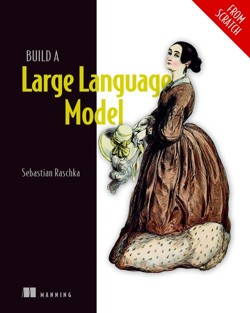
Build a Large Language Model (From Scratch)

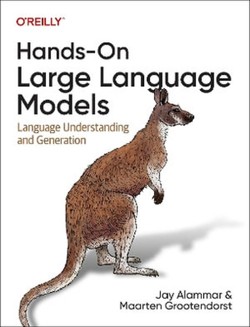
Hands-On Large Language Models
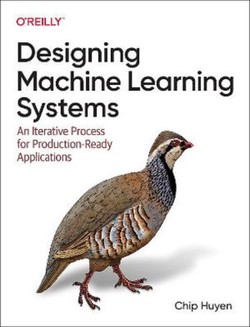
Designing Machine Learning Systems
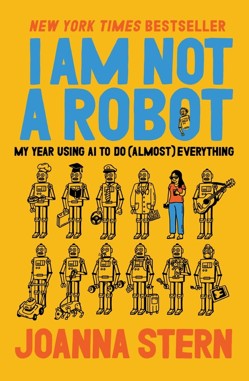
I Am Not a Robot
Hands-On Machine Learning with Scikit-Learn, Keras, and TensorFlow 3e
LLM Engineer's Handbook
Mathematics of Machine Learning
Deep Learning
Computer Architecture


Advances in Financial Machine Learning
Elements of Programming Interviews in Python
Pattern Recognition and Machine Learning
Writing AI Prompts For Dummies

Human + Machine, Updated and Expanded
-
 The Unknowable
-
 The LIMITS of MATHEMATICS
-
 Logic and Complexity
-
 Combinatorics, Computability and Logic
-
 Sequences and their Applications
-
 Finite Versus Infinite
-
 Lattice Functions and Equations
-
 Turing's Connectionism
-
 Network Algebra
-
 Information Algebras
-
 Unconventional Models of Computation, UMC'2K
-
 Quantum Logic


From the reviews:
"In this book on algorithmic information theory, the author compares his concept of randomness (for recursive functions) which is based on the complexity (length) of the generating algorithm (program) with other concepts (by Martin-Löw, Solovay) and discusses its relation to incompleteness and the halting problemAlgorithms (needed for proof) are described in a (small) dialect of LISP. The style mostly is that of a lecture, lively and readable." (P. Schmitt, Monatshefte für Mathematik, Vol. 141 (1), 2004)
"Chaitin is the main architect of a new branch of mathematics called algorithmic information theory, or ‘AIT’. … in Exploring Randomness, he develops algorithmic theory, further revealing its technical core. This is important work, with implications that go far beyond the arcane arguments of one branch of mathematics. … As one gets to the substance … it is difficult to resist Chaitin’s enthusiastic style and obvious intelligence. Beyond the technicalities of the argument, the reader is quickly drawn into a fundamental new landscape of ideas." (Jacques F. Vallee, Journal of Scientific Exploration, Vol. 16 (4), 2002)
"Chaitin’s latest three books form a nice triangular base to support and explore the concepts underlying algorithmic information theory (AIT) – a clever blend of Gödel, Turing, and Shannon that Chaitin developed in his late teens … . this set of three volumes packages the material in a nice, quite digestible fashion … . Chaitin’s results demonstrate that not only there is no structure to foundation of mathematics, the foundation is in fact random." (The Mathematica Journal, April, 2002)
"The book is devoted to a Lisp formalism for exploring the basic ideas, concepts and results on program-size complexity and random sequences. The book contains a wealth of exercises, ranging from the ‘mathematical equivalent of finger warm-ups for pianists’ to substantial programmingprojects, from open questions to questions the author cannot even formulate. Highly recommended to anyone interested in understanding algorithmic information theory through programming." (Cristian S. Calude, Zentralblatt MATH, Vol. 963, 2002)
"This book uses LISP to explore the theory of randomness, called algorithmic information theory (AIT). This is the third of Chaitin’s book … . The common theme of the books is the study of H(x), the size in bits of the smallest program for calculating x … . Each book has a different emphasis. This book gives a detailed discussion of the metamathematical implications of these ideas and presents the technical core of Chaitin’s algorithmic theory." (Book News on the Internet, October, 2001)
"This is revolutionary, explosive stuff. … Chaitin challenges readers to follow his lead and forge their own path into the black hole of randomness, the ‘darkness at the edge of mathematics’. When Chaitin wrote ‘explore’, he well and truly meant it. An exhilarating, mind-blowing book from one of the great ideas men of mathematics and computer science." (Marcus Chown, New Scientist, January, 2002)
| SKU | Unavailable |
| ISBN 13 | 9781852334178 |
| ISBN 10 | 1852334177 |
| Title | Exploring RANDOMNESS |
| Author | Gregory J Chaitin |
| Series | Discrete Mathematics And Theoretical Computer Science |
| Condition | Unavailable |
| Binding Type | Hardback |
| Publisher | Springer London Ltd |
| Year published | 2000-12-11 |
| Number of pages | 164 |
| Cover note | Book picture is for illustrative purposes only, actual binding, cover or edition may vary. |
| Note | Unavailable |
Customers who bought this item also bought
Python Crash Course, 3rd Edition
Build a Large Language Model (From Scratch)
Hands-On Large Language Models
Designing Machine Learning Systems
I Am Not a Robot
Hands-On Machine Learning with Scikit-Learn, Keras, and TensorFlow 3e
LLM Engineer's Handbook
Mathematics of Machine Learning
Deep Learning
Computer Architecture
Advances in Financial Machine Learning
Elements of Programming Interviews in Python
Pattern Recognition and Machine Learning
Writing AI Prompts For Dummies
Human + Machine, Updated and Expanded
The Ultimate ChatGPT Prompt Book

Platform Engineering
Rust Atomics and Locks
Data-Driven Science and Engineering
The Elements of Statistical Learning
Computer Vision
Machine Learning for Algorithmic Trading
The Developer's Guide to AI
Human Edge in the AI Age
A A Thousand Brains
The Annotated Turing
Dark Aeon
Deep Learning


A A Thousand Brains