
Fossil Invertebrates


Fossil Invertebrates
Regular price
Checking stock...
Regular price
Checking stock...
Summary
The plates in this book capture incredibly detailed impressions and casts of ancient life, contrasting them with forms, such as the horseshoe crab and the chambered nautilus, that persist today virtually unchanged. Paul D. Taylor and David N. Lewis, both of the Natural History Museum, London, have written a comprehensive and accessible resource.
The feel-good place to buy books
- Free US shipping over $15
- Buying preloved emits 41% less CO2 than new
- Millions of affordable books
- Give your books a new home - sell them back to us!
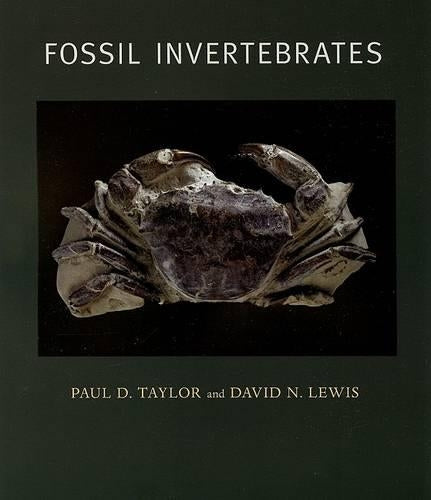
Fossil Invertebrates by Paul D Taylor
Fossil Invertebrates introduces readers to the biosphere as it was hundreds of millions of years ago, when seas teemed with animal forms both familiar and strange: ammonites and corals, mollusks and sponges, crinoids and trilobites. On land, terrestrial forms were beginning to make their mark, leaving behind traces such as burrows and track ways and other fossil evidence of the important transition to life on land. The plates in this book capture the incredibly detailed impressions and casts of ancient life, contrasting them with forms, such as the horseshoe crab and the chambered nautilus, that persist today virtually unchanged. The shells and hard exoskeletons of invertebrates make them excellent candidates for fossilization, and the amateur fossil collectors are more likely to uncover an invertebrate fossil than any other kind. The fossilized remains of invertebrates dominate university collections and museum holdings worldwide and their study continues to yield important insights into the nature of evolutionary change and the impact of climate change on biodiversity, as great explosions of diversity were succeeded by mass extinctions. Paul D. Taylor and David N. Lewis, both of the Natural History Museum, London, have written a comprehensive and accessible resource, one that provides undergraduates and amateur fossil enthusiasts with a means to understand and interpret this rich fossil record.
A richly illustrated guide to fossil invertebrates and related modern species..Paul D. Taylor and David N. Lewis, scientists at the Natural History Museum, London, provide a guided tour of five major groups of boneless animals whose histories can be traced in the fossil record...This book can be appreciated on multiple levels. As a feast for the eye, it can be leafed through at leisure or studied by students of art and photography. For students of biology and earth history, it provides an overview of major groups of organisms and their fossil...The book will amply reward the attention given it by the interested layman or interested student. -- Donald R. Franceschetti * Magill Book Reviews *
When people think of fossils, they usually think of dinosaur fossils. But the majority of fossils that have been discovered belong to invertebrates, those members of the animal kingdom lacking a backbone. Taylor and Lewis, both of the Natural History Museum in London, take readers back in time millions of years ago, when seas were filled with ammonites, corals, sponges, mollusks, trilobites, and crinoids. Fossils reveal the diversity of life that existed in the past and show what is still present--e.g., horseshoe crabs and the chambered nautilus. The authors provide a comprehensive compendium of information regarding every aspect relating to invertebrate fossils: history, general descriptions, and specifics related to all types of shells and fossils discovered. Numerous plates augment the text and provide visual reference points for readers. This book is an invaluable resource. -- Gloria Maxwell * Library Journal(starred review) *
When people think of fossils, they usually think of dinosaur fossils. But the majority of fossils that have been discovered belong to invertebrates, those members of the animal kingdom lacking a backbone. Taylor and Lewis, both of the Natural History Museum in London, take readers back in time millions of years ago, when seas were filled with ammonites, corals, sponges, mollusks, trilobites, and crinoids. Fossils reveal the diversity of life that existed in the past and show what is still present--e.g., horseshoe crabs and the chambered nautilus. The authors provide a comprehensive compendium of information regarding every aspect relating to invertebrate fossils: history, general descriptions, and specifics related to all types of shells and fossils discovered. Numerous plates augment the text and provide visual reference points for readers. This book is an invaluable resource. -- Gloria Maxwell * Library Journal(starred review) *
Paul D. Taylor is Research Scientist, Natural History Museum, London. David N. Lewis is Collections Manager, Fossil Invertebrates, Natural History Museum, London.
| SKU | Unavailable |
| ISBN 13 | 9780674025745 |
| ISBN 10 | 0674025741 |
| Title | Fossil Invertebrates |
| Author | Paul D Taylor |
| Condition | Unavailable |
| Binding Type | Paperback |
| Publisher | Harvard University Press |
| Year published | 2007-10-01 |
| Number of pages | 208 |
| Cover note | Book picture is for illustrative purposes only, actual binding, cover or edition may vary. |
| Note | Unavailable |