
The Future of Russian Gas and Gazprom


Summary
The feel-good place to buy books
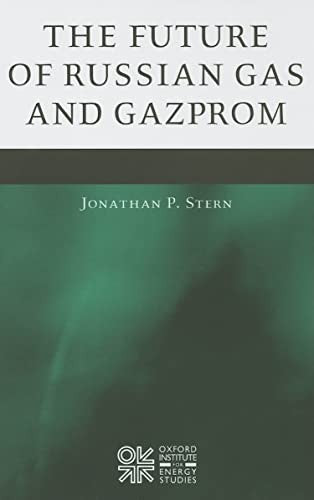
The Future of Russian Gas and Gazprom by Jonathan Stern
The Russian gas industry provides 50% of Russian domestic energy supplies, a substantial proportion of CIS gas supplies, and around 20% of European gas demand. Declines in production at existing fields mean that Gazprom will face increasingly difficult decisions about moving to higher cost fields on the Yamal Peninsula. The alternative will be increasing imports from Central Asian countries and allowing other Russian gas producers to increase their role in the industry. Russian exports to Europe will gradually increase and deliveries of Russian LNG will commence to Asia and the both coasts of North America. Pipeline gas deliveries to East Asian countries may have a longer time horizon. Export projects aimed at new markets will depend crucially on the maintenance of (oil and) gas prices at the levels of 2003-05. European exports will also depend on the pace of EU market liberalisation and Gazprom's ability to agree mutually acceptable terms for transit, principally with Ukraine and Belarus. Reform, liberalisation and restructuring of the Russian gas industry have been more substantial than has generally been recognised. Most important has been price reform which, in 2005, allowed Russian industrial customers to become profitable to serve at regulated prices. Price increases may significantly reduce future increases in domestic gas demand. The increasing need for production from companies other than Gazprom will ensure that liberalised access to networks expands considerably over the next decade. In the 2000s, Gazprom reclaimed its CIS gas business from intermediaries, while maintaining its de facto monopoly of exports to Europe and establishing a similar degree of authority over future exports to Asia. The merger of Gazprom and Rosneft will provide the potential to become a force in the domestic and international oil markets, particularly given the authority that the president has conferred on the company in terms of Russian energy policy.
Jonathan PStern, the leading authority on Gazprom for the past three decades, has pulled together his wisdom into this monograph which will be an essential vade mecum for Russia-watchers. * The Russian Review *
Jonathan Stern is Director of Gas Research at the Oxford Institute for Energy Studies and Honorary Professor at the Centre for Energy, Petroleum & Mineral Law & Policy, University of Dundee. Since 1992 he has been Associate Fellow of the Royal Institute of International Affairs' Sustainable Development (formerly Energy and Environment) Programme; and since 2001 Honorary Principal Research Fellow in the Department of Environmental Science and Technology at Imperial College in London. From 1985-92, he was Head of the Energy and Environmental Programme, based at the Royal Institute of International Affairs in London. From October 1990 to September 1991, he was Director of Studies at the Institute.
| SKU | Unavailable |
| ISBN 13 | 9780197300312 |
| ISBN 10 | 0197300316 |
| Title | The Future of Russian Gas and Gazprom |
| Author | Jonathan Stern |
| Condition | Unavailable |
| Binding Type | Hardback |
| Publisher | Oxford University Press |
| Year published | 2005-10-27 |
| Number of pages | 300 |
| Cover note | Book picture is for illustrative purposes only, actual binding, cover or edition may vary. |
| Note | Unavailable |