
The Handbook of Acoustic Bat Detection


Summary
The feel-good place to buy books
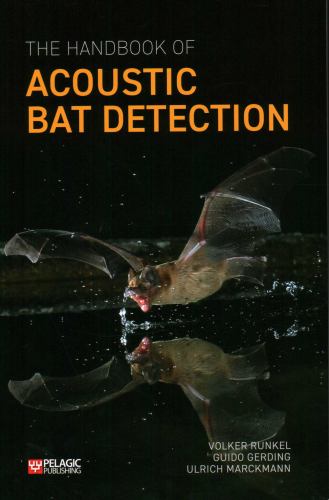
The Handbook of Acoustic Bat Detection by Volker Runkel
An accessible and comprehensive guide to all things acoustic bat detection. This highly illustrated handbook provides an in-depth understanding of acoustic detection principles, study planning, data handling, properties of bat calls, manual identification of species, automatic species recognition, analysis of results, quality assurance and the background physics of sound. No other method of detecting bats is so popular and widespread in the context of environmental assessment and voluntary work as acoustic detection, and its increased use has driven the development of a large number of sophisticated devices and analytical methods. Acoustic detection has become a standard approach for establishing the presence of bats, carrying out species identification and monitoring levels of activity. The resolution, accuracy and scale with which these tasks can be done has risen dramatically with the availability of automated real-time recording. But anyone interested in acoustic recording will quickly recognise that there are still quite a few open questions about the limits and possibilities of acoustic detection. Clear definitions of how to handle the data are usually missing, for example, and there are no clearly described activity indices. In response to the lack of thorough information on the underlying science of acoustic detection, the authors present this handbook.Acoustic detection has become a standard method for determining the presence of bats, and for species identification and monitoringThe resolution, accuracy and scale with which these surveys can be carried out has risen dramatically with the availability of automated real-time recording. Acoustic monitoring does have its limitations, however, and The Handbook of Acoustic Bat Detection addresses these by providing an in-depth understanding of the properties of bat calls, manual species identification, analysis of results and the background physics of sound. First published in German in 2018, this English translation includes new content that was not included in the original.
* Conservation Land Management *This well-written and ably translated volume presents a thorough but accessible compendium on a timely subject. Runkel et al. give excellent coverage of highly technical systems applied to the biology of the animals. They explain methods with direct application to large-scale industrial developments, but never lose sight of the fundamental importance of the experienced observer who understands the animals and the environment.
-- Winston C. Lancaster * The Quarterly Review of Biology *Volker Runkel started working with bats and bioacoustics in the late 1990s. Since then he has invented a unique detector system and specialist software solutions for bat workers.
Guido Gerding, a bat call (bioacoustics) expert, commenced voluntary work with bats in 2000 and has been a full-time consultant in bat protection since 2009.
Ulrich Marckmann built his first bat detector in the 1980s, subsequently working on the development of hardware and software for recording bat calls. He is a consultant in bioacoustic studies.
| SKU | Unavailable |
| ISBN 13 | 9781784272203 |
| ISBN 10 | 1784272205 |
| Title | The Handbook of Acoustic Bat Detection |
| Author | Volker Runkel |
| Series | Bat Biology And Conservation |
| Condition | Unavailable |
| Binding Type | Paperback |
| Publisher | Pelagic Publishing |
| Year published | 2021-08-26 |
| Number of pages | 208 |
| Cover note | Book picture is for illustrative purposes only, actual binding, cover or edition may vary. |
| Note | Unavailable |