
Helping Children with Dyspraxia


Summary
The feel-good place to buy books
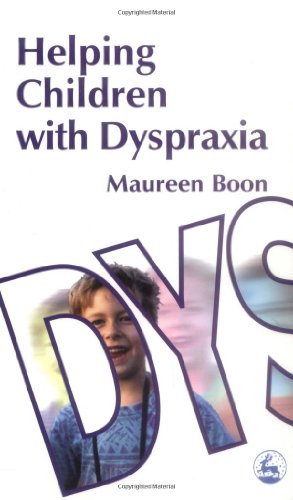
Helping Children with Dyspraxia by Maureen Boon
Helping Children with Dyspraxia provides clear and positive answers to the questions commonly asked by parents and teachers about behaviour, causes, identification and assessment associated with dyspraxia and discusses the range of possible therapeutic interventions. Drawing on her extensive experience of working with children with movement disorders and liasing with their mainstream schools, Maureen Boon shows how a therapeutic approach can benefit this group and how parents and teachers can actively participate in the child's therapy. She provides information and ideas for parents and teachers wanting to improve the child's movements and language abilities and thus increase their self-confidence and self-esteem. Helping Children with Dyspraxia is a concise yet comprehensive handbook for parents and professionals. Its clear structure and practical, positive advice will make it an invaluable resource for anyone involved with a dyspraxic child.
I found this a very user-friendly bookIt handles well, is set out clearly, and has a sharp focus on dyspraxia. -- Hedway News
Clear and positive answers to the questions asked by parents and teachers about behaviour, causes and assessment associated with dyspraxia. It also discusses the range of possible therapeutic interventions. -- ASCS
This is the first book to be written for parents, and those who counsel them, about children who have co-ordination disorders which can affect their social, perceptual and motor skills, attention control and self-confidence. It has practical case and picture illustrations with varied descriptions of this recently recognised developmental disorder, which is unrelated to high intelligence, and which can be undiagnosed because it may be so minimal. Useful advice is given about helping children and young adults at various stages, and addresses of treatment, teaching and support organisations are provided. -- Counselling
Clear and positive answers to the questions asked by parents and teachers about behaviour, causes and assessment associated with dyspraxia. It also discusses the range of possible therapeutic interventions. -- ASCS for information
The book opens with an exploration of the various facets of Dyspraxia. The book also includes many case histories and photographs of children at Vranch House. These are both useful and enjoyable and consolidates some of the previous information, as these are clearly successful working practices at Vranch House. I found the book easy to read and the information well laid out... for readers who want a quick, simple and succinct reference on dyspraxia, this publication is ideal. It tells the reader what Dyspraxia is, how it affects children and how they can be helped. The book also has other useful information in Appendices on publications, programmes, equipment and organisations. I recommend this book to anyone with an interest in dyspraxia and how it can be helped within the school system. -- Midline
Clear and positive answers to the questions asked by parents and teachers about behaviour, causes and assessment associated with dyspraxia. It also discusses the range of possible therapeutic interventions. -- ASCS
This is the first book to be written for parents, and those who counsel them, about children who have co-ordination disorders which can affect their social, perceptual and motor skills, attention control and self-confidence. It has practical case and picture illustrations with varied descriptions of this recently recognised developmental disorder, which is unrelated to high intelligence, and which can be undiagnosed because it may be so minimal. Useful advice is given about helping children and young adults at various stages, and addresses of treatment, teaching and support organisations are provided. -- Counselling
Clear and positive answers to the questions asked by parents and teachers about behaviour, causes and assessment associated with dyspraxia. It also discusses the range of possible therapeutic interventions. -- ASCS for information
The book opens with an exploration of the various facets of Dyspraxia. The book also includes many case histories and photographs of children at Vranch House. These are both useful and enjoyable and consolidates some of the previous information, as these are clearly successful working practices at Vranch House. I found the book easy to read and the information well laid out... for readers who want a quick, simple and succinct reference on dyspraxia, this publication is ideal. It tells the reader what Dyspraxia is, how it affects children and how they can be helped. The book also has other useful information in Appendices on publications, programmes, equipment and organisations. I recommend this book to anyone with an interest in dyspraxia and how it can be helped within the school system. -- Midline
Maureen Boon is Headteacher of Vranch House, an independent school for children with physical disabilities in Exeter. Vranch House is also a centre which provides weekly therapy for children with movement and associated disorders such as cerebral palsy and dyspraxia. She has worked with children with movement disorders for over twenty years, and previously taught in primary schools.
| SKU | Unavailable |
| ISBN 13 | 9781853028816 |
| ISBN 10 | 1853028819 |
| Title | Helping Children with Dyspraxia |
| Author | Maureen Boon |
| Condition | Unavailable |
| Binding Type | Paperback |
| Publisher | Jessica Kingsley Publishers |
| Year published | 2000-11-01 |
| Number of pages | 112 |
| Cover note | Book picture is for illustrative purposes only, actual binding, cover or edition may vary. |
| Note | Unavailable |