


Herman Melville: Redburn, White-Jacket, Moby-Dick (LOA #9) by Herman Melville
The Penguin English Library Edition of Moby-Dick by Herman Melville'The frail gunwales bent in, collapsed, and snapped, as both jaws, like an enormous shears, sliding further aft, bit the craft completely in twain...' Moby-Dick is one of the most expansive feats of imagination in the whole of literature: the mad, raging, Shakespearean tale of Captain Ahab's insane quest to kill a giant white whale that has taken his leg, and upon which he has sworn vengeance, at any cost. A creation unlike any other, this is an epic story of fatal monomania and the deepest dreams and obsessions of mankind. The Penguin English Library - 100 editions of the best fiction in English, from the eighteenth century and the very first novels to the beginning of the First World War.
Herman Melville (August 1, 1819 - September 28, 1891) was born into a seemingly secure, prosperous world, a descendant of prominent Dutch and English families long established in New York State. That security vanished when first, the family business failed, and then, two years later, in young Melville's thirteenth year, his father died. Without enough money to gain the formal education that professions required, Melville was thrown on his own resources and in 1841 sailed off on a whaling ship bound for the South Seas. His experiences at sea during the next four years were to form in part the basis of his best fiction. Melville's first two books, Typee (1846) and Omoo (1847), were partly romance and partly autobiographical travel books set in the South Seas. Both were popular successes, particularly Typee, which included a stay among cannibals and a romance with a South Sea maiden. During the next several years, Melville published three more romances that drew upon his experiences at sea: Redburn (1849) and White-Jacket (1850), both fairly realistic accounts of the sailor's life and depicting the loss of innocence of central characters; and Mardi (1849), which, like the other two books, began as a romance of adventure but turned into an allegorical critique of contemporary American civilization. Moby Dick (1851) also began as an adventure story, based on Melville's experiences aboard the whaling ship. However, in the writing of it inspired in part by conversations with his friend and neighbor Hawthorne and partly by his own irrepressible imagination and reading of Shakespeare and other Renaissance dramatists Melville turned the book into something so strange that, when it appeared in print, many of his readers and critics were dumbfounded, even outraged. By the mid-1850s, Melville's literary reputation was all but destroyed, and he was obliged to live the rest of his life taking whatever jobs he could find and borrowing money from relatives, who fortunately were always in a position to help him. He continued to write, however, and published some marvelous short fiction pieces Benito Cereno (1855) and Bartleby, the Scrivener (1853) are the best. He also published several volumes of poetry, the most important of which was Battle Pieces and Aspects of the War (1866), poems of occasionally great power that were written in response to the moral challenge of the Civil War. His posthumously published work, Billy Budd (1924), on which he worked up until the time of his death, became Melville's last significant literary work, a brilliant short novel that movingly describes a young sailor's imprisonment and death. Melville's reputation, however, rests most solidly on his great epic romance, Moby Dick. It is a difficult as well as a brilliant book, and many critics have offered interpretations of its complicated ambiguous symbolism. Darrel Abel briefly summed up Moby Dick as the story of an attempt to search the unsearchable ways of God, although the book has historical, political, and moral implications as well. Melville died at his home in New York City early on the morning of September 28, 1891, at age 72. The doctor listed cardiac dilation on the death certificate. He was interred in the Woodlawn Cemetery in The Bronx, New York, along with his wife, Elizabeth Shaw Melville.
| SKU | Unavailable |
| ISBN 13 | 9780940450097 |
| ISBN 10 | 0940450097 |
| Title | Herman Melville: Redburn, White-Jacket, Moby-Dick (LOA #9) |
| Author | Herman Melville |
| Series | Library Of America Herman Melville Edition |
| Condition | Unavailable |
| Binding Type | Hardback |
| Publisher | The Library of America |
| Year published | 1983-04-15 |
| Number of pages | 1436 |
| Cover note | Book picture is for illustrative purposes only, actual binding, cover or edition may vary. |
| Note | Unavailable |
Customers who bought this item also bought
-
 Dracula
-
 The Great Gatsby, the; (Us Import Ed.)
-
 The Count of Monte Cristo
-
 Pride and Prejudice
-
 The Brothers Karamazov
-
 Their Eyes Were Watching God T
-
 A Tree Grows in Brooklyn
-
 Wuthering Heights
-
 Jane Eyre
-
 Frankenstein
-
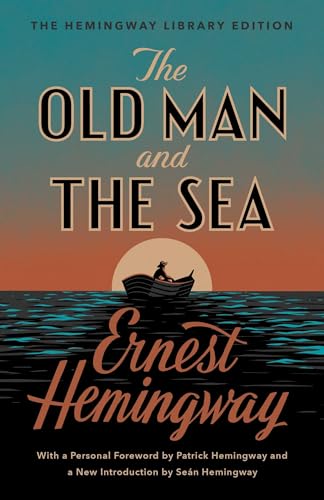 The Old Man and the Sea
-
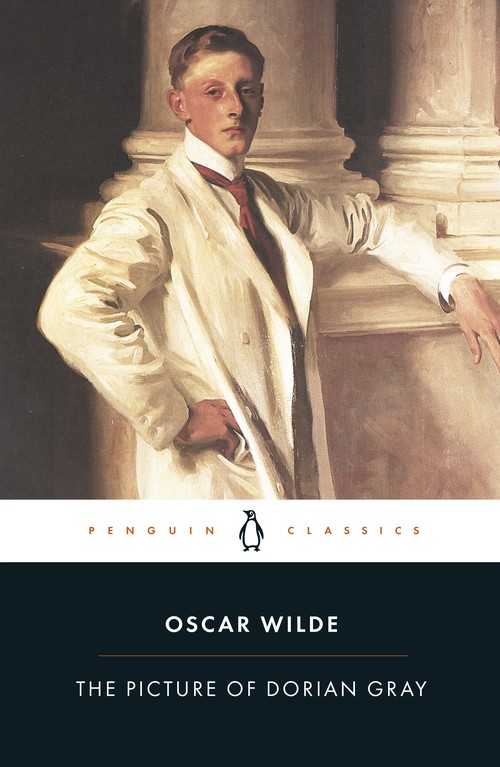 The Picture of Dorian Gray
-
 East of Eden
-
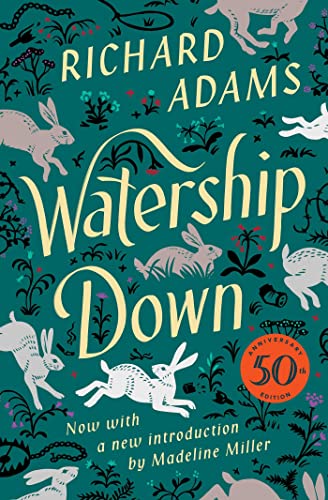 Watership Down
-
 The Call of the Wild (Reader's Library Classics)
-
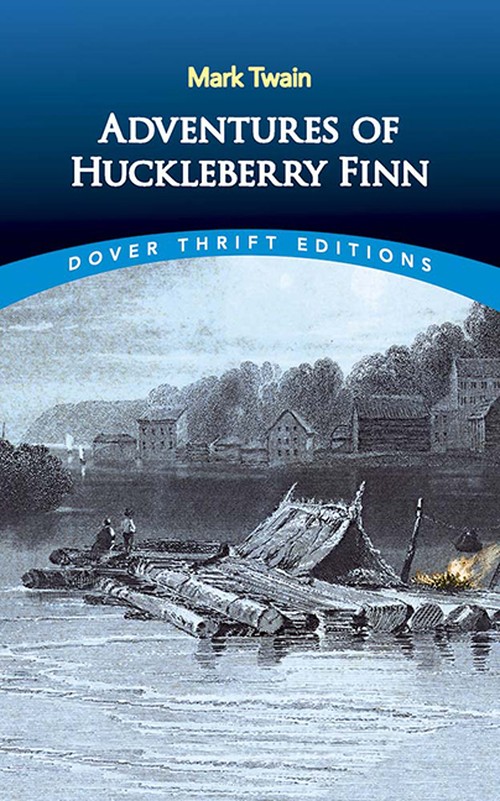 Adventures of Huckleberry Finn
-
 The Scarlet Letter
-
 Dr. Jekyll and Mr. Hyde - the Original 1886 Classic (Reader's Library Classics)
-
 Frankenstein (Masterpiece Library Edition)
-
 Don Quixote
-
 Lord of the Flies
-
 Moby-Dick
-
 The Call of the Wild
-
 A Christmas Carol
-
 Treasure Island
-
 Pride & Prejudice (Masterpiece Library Edition)
-
 The Complete Jane Austen Collection
-
 A Tale of Two Cities
-
 Persuasion
-
 A Clockwork Orange
-
 Little Women
-
 The Great Gatsby
-
 War and Peace
-
 Pride & Prejudice
-
 The Merchant of Venice
-
 Greatest Works of Edgar Allan Poe
-
 Grimm's Complete Fairy Tales
-
 Jane Eyre
-
 The Strange Case of Dr. Jekyll and Mr. Hyde
-
 Catch-22
-
 Passing
-
 Up from Slavery
-
 The Adventures of Huckleberry Finn
-
 The End of the Affair
-
 The Red Badge of Courage
-
 Brave New World and Brave New World Revisited
-
 The Metamorphosis
-
 Anna Karenina
-
 Middlemarch
-
 The Scarlet Letter