
The Immortal Life of Henrietta Lacks


Summary
The feel-good place to buy books
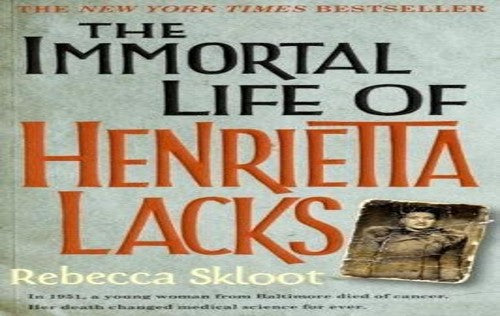
The Immortal Life of Henrietta Lacks by Rebecca Skloot
In 1951, Henrietta Lacks from Baltimore died of cancer. Her death changed medical science for ever. Her cancer cells - taken without her knowledge - became one of the most important tools in medicine. This book takes us on a journey in search of Henrietta's story, from the 'coloured' ward of Johns Hopkins Hospital in the 1950s onwards.
"'One of the most graceful and moving non-fiction books I've read in a very long time' Dwight Garner, New York Times 'Skloot's book is wonderful - deeply felt, gracefully written, sharply reportedIt is a story about science but, much more, about life.' Susan Orlean, author of The Orchid Thief"
Rebecca Skloot is an award-winning science writer whose articles have appeared in The New York Times Magazine; O, The Oprah Magazine; Discover; Prevention; Glamour; and others. She has worked as a correspondent for NPR’s Radiolab and PBS’s NOVAscienceNOW, and is a contributing editor at Popular Science magazine and guest editor of The Best AmericanScience Writing 2011. Her work has been anthologized in several collections, including The Best Creative Nonfiction. She is a former vice president of the National Book Critics Circle, and has taught creative non-fiction and science journalism at the University of Memphis, the University of Pittsburgh, and New York University. She lives in Chicago. The Immortal Life of Henrietta Lacks is her first book. It is being translated into more than twenty languages and adapted into an HBO film produced by Oprah Winfrey and Alan Ball. For more information, visit her website at RebeccaSkloot.com, where you’ll find links to follow her on Twitter and Facebook.
| SKU | Unavailable |
| ISBN 13 | 9780230750210 |
| ISBN 10 | 0230750214 |
| Title | The Immortal Life of Henrietta Lacks |
| Author | Rebecca Skloot |
| Condition | Unavailable |
| Binding Type | Paperback |
| Publisher | Pan Macmillan |
| Year published | 2010-04-16 |
| Number of pages | 384 |
| Prizes | Winner of The Wellcome Trust Book Prize 2010 (UK) |
| Cover note | Book picture is for illustrative purposes only, actual binding, cover or edition may vary. |
| Note | Unavailable |