
Interpreting the English Village


Summary
The feel-good place to buy books
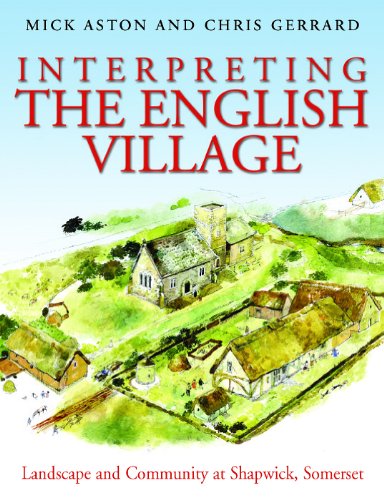
Interpreting the English Village by Mick Aston
An original and approachable account of how archaeology can tell the story of the English village. Shapwick lies in the middle of Somerset, next to the important monastic centre of Glastonbury: the abbey owned the manor for 800 years from the 8th to the 16th century and its abbots and officials had a great influence on the lives of the peasants who lived there. It is possible that abbot Dunstan, one of the great reformers of tenth century monasticism directed the planning of the village. The Shapwick Project examined the development and history of an English parish and village over a ten thousand-year period. This was a truly multi-disciplinary project. Not only were a battery of archaeological and historical techniques explored - such as field walking, test-pitting, archaeological excavation, aerial reconnaissance, documentary research and cartographic analysis - but numerous other techniques such as building analysis, dendrochronological dating and soil analysis were undertaken on a large scale. The result is a fascinating study about how the community lived and prospered in Shapwick. In addition we learn how a group of enthusiastic and dedicated scholars unravelled this story. As such there is much here to inspire and enthuse others who might want to embark on a landscape study of a parish or village area. Seven of the ten chapters begin with a fictional vignette to bring the story of the village to life. Text-boxes elucidate re-occurring themes and techniques. Extensively illustrated in colour including 100 full page images.This title was the winner of the 2014 British Archaeological Association's Best Archaeological Book Award.
Interpreting the English Village..is an interesting, informative and entertaining description of the results of a 10 year study into the wilds of Somerset. Its plentiful full color images and sidebar stories assist in making the story come alive, and, by the way, passing along the wider history of the British Isles... This is a great example of the public archaeology output from landscape archaeology, and I recommend it wholeheartedly. * About.com Archaeology Guide *
...an inspiring example of a local study carried out by the people, about the people and written for the people... yet it might well be asked why it should merit a place on the bookshelves of enthusiasts of archaeology in Cornwall, or other places [outside of] Shapwick [and Somerset]. Quite simply, besides being a good read, it provides a possible model for others to follow in their own communities. Not only does it show how various disciplines have been applied but it is clear to follow, without the jargon that can be so daunting, and abundantly supplied with maps, so strangers can locate the places named with ease... Every parish deserves this treatment. * Cornwall Archaeological Society Newsletter *
Fascinating, compelling and never patronising, this magnificent book is popular archaeology at its best. I cannot recommend it too highly. 10/10 * Fortean Times *
...an inspiring example of a local study carried out by the people, about the people and written for the people... yet it might well be asked why it should merit a place on the bookshelves of enthusiasts of archaeology in Cornwall, or other places [outside of] Shapwick [and Somerset]. Quite simply, besides being a good read, it provides a possible model for others to follow in their own communities. Not only does it show how various disciplines have been applied but it is clear to follow, without the jargon that can be so daunting, and abundantly supplied with maps, so strangers can locate the places named with ease... Every parish deserves this treatment. * Cornwall Archaeological Society Newsletter *
Fascinating, compelling and never patronising, this magnificent book is popular archaeology at its best. I cannot recommend it too highly. 10/10 * Fortean Times *
Aston, Mick: - Known to millions from Channel 4's 'Time Team', Mick Aston was a Professor of Landscape Archaeology at the University of Bristol. He was a tireless - and immensely popular - lecturer and the author of the best-selling Mick's Archaeology.
| SKU | Unavailable |
| ISBN 13 | 9781905119455 |
| ISBN 10 | 1905119453 |
| Title | Interpreting the English Village |
| Author | Mick Aston |
| Condition | Unavailable |
| Binding Type | Paperback |
| Publisher | Windgather Press |
| Year published | 2013-02-07 |
| Number of pages | 416 |
| Cover note | Book picture is for illustrative purposes only, actual binding, cover or edition may vary. |
| Note | Unavailable |