


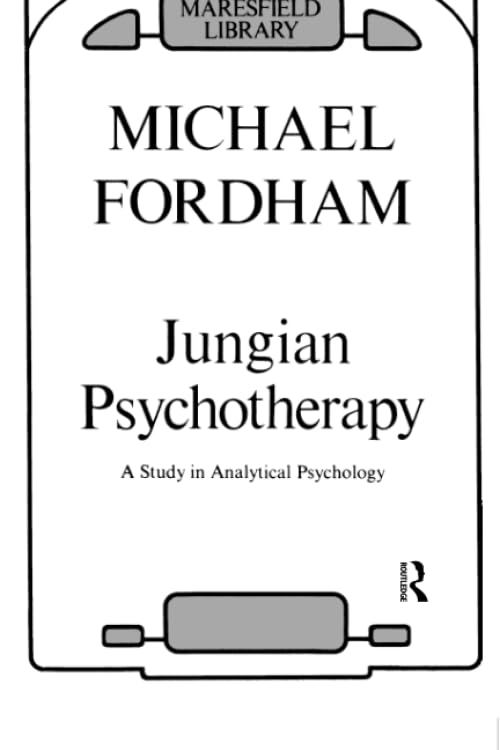
Jungian Psychotherapy by Michael Fordham
'This book contains an exposition of therapeutic methods used by analytical psychologists. It is based on Jung's own investigations and includes developments in his ideas and practices that others have initiated.'Jung held that his work was scientific in that he had discovered an objective field of enquiry. When applying this assertion to analytical psychotherapy one must make it quite clear that, unlike what happens in other sciences, the personality of the therapist enters into the procedures adopted in a way uncharacteristic of experimental method. In the natural sciences study is different in kind and the investigator's personality is significant only in his capacity to be a scientist. By contrast, in analytical therapy the personal influence of the analyst pervades his work and furthermore extends to generations of psychotherapists; the way I conduct psychotherapy is inevitably influenced by my having known Jung, having developed a personal loyalty to him and by being treated by three therapists who came under his influence. This maintains however differently from Jung and my own therapists I conduct myself when treating patients, or whatever conceptions, models or theories of my own I have developed.'It is with these reflections in mind that I have called this volume Jungian Psychotherapy with the subtitle: A Study in Analytical Psychology. Thus my debt to Jung is acknowledged but it is also indicated that analytical psychology is a discipline in its own right.'- Michael Fordham, from the Preface
'This book contains an exposition of therapeutic methods used by analytical psychologistsIt is based on Jung's own investigations and includes developments in his ideas and practices that others have initiated.Jung held that his work was scientific in that he had discovered an objective field of enquiry. When applying this assertion to analytical psychotherapy one must make it quite clear that, unlike what happens in other sciences, the personality of the therapist enters into the procedures adopted in a way uncharacteristic of experimental method. In the natural sciences study is different in kind and the investigator's personality is significant only in his capacity to be a scientist. By contrast, in analytical therapy the personal influence of the analyst pervades his work and furthermore extends to generations of psychotherapists; the way I conduct psychotherapy is inevitably influenced by my having known Jung, having developed a personal loyalty to him and by being treated by three therapists who came under his influence. This maintains however differently from Jung and my own therapists I conduct myself when treating patients, or whatever conceptions, models or theories of my own I have developed.It is with these reflections in mind that I have called this volume Jungian Psychotherapy with the subtitle: A Study in Analytical Psychology. Thus my debt to Jung is acknowledged but it is also indicated that analytical psychology is a discipline in its own right.'- Michael Fordham, from the Preface
Michael Fordham
| SKU | Unavailable |
| ISBN 13 | 9780946439195 |
| ISBN 10 | 0946439192 |
| Title | Jungian Psychotherapy |
| Author | Michael Fordham |
| Condition | Unavailable |
| Binding Type | Paperback |
| Publisher | Taylor & Francis Ltd |
| Year published | 1990-12-31 |
| Number of pages | 192 |
| Cover note | Book picture is for illustrative purposes only, actual binding, cover or edition may vary. |
| Note | Unavailable |