
The Lewis Chessmen


The Lewis Chessmen
Regular price
Checking stock...
Regular price
Checking stock...
Summary
This lively book considers the various fascinating stories which have evolved to explain the ownership, concealment and discovery of the pieces whilst also placing them in the wider context of the ancient game of chess and secular art of the middle Ages.
The feel-good place to buy books
- Free US shipping over $15
- Buying preloved emits 41% less CO2 than new
- Millions of affordable books
- Give your books a new home - sell them back to us!
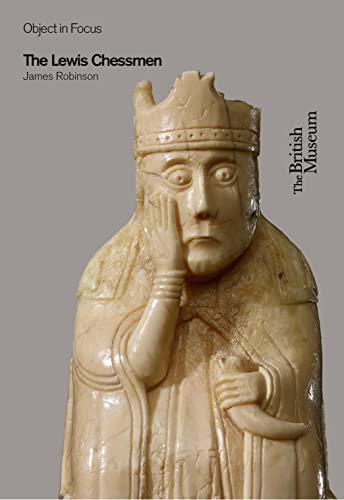
The Lewis Chessmen by James Robinson
This lively book considers the various fascinating stories which have evolved to explain the ownership, concealment and discovery of the pieces whilst also placing them in the wider context of the ancient game of chess and secular art of the middle Ages. The Lewis Chessmen consist of elaborately worked walrus ivory and whales’ teeth in the forms of seated kings and queens, mitred bishops, knights on their mounts, standing warders and pawns in the shape of obelisks. They were found in the vicinity of Uig on the Isle of Lewis, but were probably made in Norway, in around 1150-1200 AD. At this time, the Western Isles where the Chessmen were buried were part of the kingdom of Norway, and not Scotland as they are today. Although very few details of the origins of the Chessmen are known, it is possible that they belonged to a merchant travelling from Norway and that they were buried for safekeeping on route to be traded in Ireland. This seems likely as there are enough pieces, though with some elements missing, to make four sets. No exact account of the discovery remains, but they apparently came to light after the collapse of a sand-bank on the coast of the island revealed their hiding place to a passing islander. All that is certain is that they were found some time before 11th April 1831 when they were exhibited at the Society of the Antiquaries in Scotland. Of the original 93 pieces discovered on the Isle of Lewis, 82 pieces are now housed in the British Museum. An exciting read for anyone interested in the history of the famous chess pieces.
Joan Violet Robinson (1903 -1983) was an inspirational post-Keynesian economist who was well known for her work on monetary economics, imperfect competition and for fundamental contributions to many other areas of economics. Initially a supporter of the neoclassical school of economics, she became one its fiercest opponents after becoming acquainted with John Maynard Keynes. Joan Robinson was appointed lecturer in economics at the University of Cambridge, UK, in 1937, elected fellow of Newnham College in 1962 and assumed the position of full professor and fellow of Girton College in 1979. She was the first female fellow of Kings College. Joan Robinson's magnus opus The Accumulation of Capital was first published in 1956 and sought to extend Keynes's theory to the long-run issues of growth and capital accumulation.
| SKU | Unavailable |
| ISBN 13 | 9780714150239 |
| ISBN 10 | 0714150231 |
| Title | The Lewis Chessmen |
| Author | James Robinson |
| Series | Objects In Focus |
| Condition | Unavailable |
| Binding Type | Paperback |
| Publisher | British Museum Press |
| Year published | 2004-11-22 |
| Number of pages | 64 |
| Cover note | Book picture is for illustrative purposes only, actual binding, cover or edition may vary. |
| Note | Unavailable |