


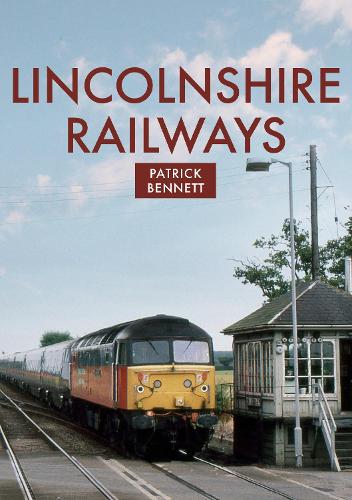
Lincolnshire Railways by Patrick Bennett
England’s second largest county contains a wealth of railway history. The county was dominated by two companies – the Great Central in the north and the Great Northern in the centre and south. The county was also penetrated by the Midland Railway and there were no fewer than three joint lines. In the south the Midland & Great Northern Joint passed through from west to east, while the Great Northern & Great Eastern Joint ran north to south. In the far north-west of the county was the Isle of Axholme Railway, jointly owned by the North Eastern and the Lancashire & Yorkshire. The East Coast Main Line passes through the west of the county and this stretch includes the major railway centre of Grantham and Stoke Bank, where Mallard made its record-breaking run. Other important railway junctions are Sleaford, Boston, Spalding and Lincoln. On the coast are the seaside towns of Skegness, Mablethorpe, Sutton and Cleethorpes, which in the tourist season would see the arrival by train of thousands of holidaymakers. Further north is Grimsby, which provided numerous fish trains. So important was this traffic that the Great Central had a class of engine commonly used on these trains known as ‘Fish Engines’. Next comes the important port of Immingham, Britain’s busiest, which sees some 240 train movements per week. On the north Lincolnshire coast is New Holland, from where the railway-owned ferry used to cross to Hull. Further west is the steel-making town of Scunthorpe, which has its own railway system and is another important customer of the railway. There were other railways too: the Immingham Electric Railway, the Alford steam tram, and the potato railways – one system of which extended to more than twenty miles. RAF Cranwell had its own branch line. There are three tourist railways, one standard gauge and two narrow gauge. Using a wealth of rare and previously unseen photographs, Patrick Bennett documents Lincolnshire’s railways.
A lifelong railway enthusiast, Patrick pursued a varied career, ending up as a lecturer in further education. Retirement to France in 2007 brought the chance to also study the railways of his adopted country, resulting in a number of books on the history of French railways.
| SKU | Unavailable |
| ISBN 13 | 9781398105485 |
| ISBN 10 | 1398105481 |
| Title | Lincolnshire Railways |
| Author | Patrick Bennett |
| Condition | Unavailable |
| Binding Type | Paperback |
| Publisher | Amberley Publishing |
| Year published | 2021-07-15 |
| Number of pages | 96 |
| Cover note | Book picture is for illustrative purposes only, actual binding, cover or edition may vary. |
| Note | Unavailable |