


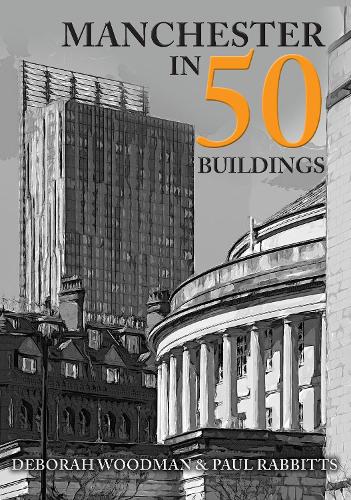
Manchester in 50 Buildings by Deborah Woodman
From its status as the world's first industrialised city, through late twentieth-century decline and subsequent regeneration and rebirth as the 'Second City of the UK', Manchester has a proud and distinctive identity. This extraordinary history is embodied in the buildings that have shaped the city. Manchester in 50 Buildings explores the history of this rich and vibrant urban centre through a selection of its greatest architectural treasures. From Victorian classics such as the neo-Gothic Town Hall to the striking new additions to the city's skyline, such as Beetham Tower, this unique study celebrates the city's architectural heritage in a new and accessible way. Authors Deborah Woodman and Paul Rabbitts guide the reader on a tour of the city's historic buildings and modern architectural marvels.You might also like
The Hut Six Story
Loading...

F Is for Flag
Loading...

Our Family Tree
Loading...
Unofficial Ancestry.com Workbook
Loading...
Boston Then and Now
Loading...

Legends and Lies
Loading...

Shoal of Time
Loading...

Once in a Great City
Loading...
-
 Glasgow in 50 Buildings
-
 Liverpool in 50 Buildings
-
 Bristol in 50 Buildings
-
 Harrogate in 50 Buildings
-
 Leeds in 50 Buildings
-
 Stamford in 50 Buildings
-
 Sheffield in 50 Buildings
-
 Brighton & Hove in 50 Buildings
-
 Cheltenham in 50 Buildings
-
 Bexhill-on-Sea in 50 Buildings
-
 Truro in 50 Buildings
-
 Plymouth in 50 Buildings
-
 Scarborough in 50 Buildings
-
 Frome in 50 Buildings
-
 City of London in 50 Buildings
-
 Birmingham in 50 Buildings
-
 Stratford-upon-Avon in 50 Buildings
-
 York in 50 Buildings
-
 Bradford in 50 Buildings
-
 Whitby in 50 Buildings
-
 Evesham in 50 Buildings
-
 Battersea and Clapham in 50 Buildings
-
 Northampton in 50 Buildings
-
 Anglesey in 50 Buildings
-
 Portsmouth in 50 Buildings
-
 Bury St Edmunds in 50 Buildings
-
 Gateshead in 50 Buildings
-
 Darlington in 50 Buildings
-
 Peterborough in 50 Buildings
-
 Cambridge in 50 Buildings
-
 Stockport in 50 Buildings
-
 Islington & Clerkenwell in 50 Buildings
-
 Whitehaven in 50 Buildings
-
 Huddersfield in 50 Buildings
-
 Brentwood in 50 Buildings
-
 Aberdeen in 50 Buildings
-
 Buxton in 50 Buildings
-
 Lichfield in 50 Buildings
-
 Winchester in 50 Buildings


Dr Deborah Woodman is a Research Development Officer at the University of Salford. Her research is focused around the history of the North West; the role of drink in society; commerce and trade; and popular politics of the nineteenth century. She has taught history at the Universities of Huddersfield, Salford and Manchester Metropolitan University. Dr Paul Rabbitts has over 35 years of experience in designing, managing and restoring urban parks across the UK. As a qualified Landscape Architect, he is also a published author and regular contributor to journals and periodicals. As well as being a Fellow of the Royal Society of Arts, a Fellow of the Royal Historical Society and a Member of the Chartered Institute of Horticulture, he currently works full time for Norwich City Council as their parks manager. He is an author of books on architects Sir Christopher Wren and Decimus Burton as well as Regent’s Park, Richmond Park, Hyde Park, the wider Royal Parks and that icon of public parks, the Victorian and Edwardian bandstand, on which he is acknowledged as a UK expert and which was the subject of his PhD at the University of East Anglia. He lectures frequently on all things parks and can be contacted via his website www.paulrabbitts.co.uk . He lives in Leighton Buzzard, Bedfordshire.
| SKU | Unavailable |
| ISBN 13 | 9781445659220 |
| ISBN 10 | 1445659220 |
| Title | Manchester in 50 Buildings |
| Author | Deborah Woodman |
| Series | In 50 Buildings |
| Condition | Unavailable |
| Binding Type | Paperback |
| Publisher | Amberley Publishing |
| Year published | 2019-11-15 |
| Number of pages | 96 |
| Cover note | Book picture is for illustrative purposes only, actual binding, cover or edition may vary. |
| Note | Unavailable |
Customers who bought this item also bought
The Hut Six Story
Loading...
F Is for Flag
Loading...
Our Family Tree
Loading...
Unofficial Ancestry.com Workbook
Loading...
Boston Then and Now
Loading...
Legends and Lies
Loading...
Shoal of Time
Loading...
Once in a Great City
Loading...

Cite Your Sources
Loading...
The Floor of Heaven
Loading...
We Pointed Them North
Loading...

My Father's Life - Second Edition
Loading...

MacLaren
Loading...
American Horizons, Volume II
Loading...

A Grandfather's Life
Loading...

The Wordy Shipmates
Loading...

Last Hunter
Loading...
New Harmony Then and Now
Loading...

Thames Mudlarking
Loading...
Captive Paradise
Loading...
Born and Bred in the Great Depression
Loading...
What the Amish Teach Us
Loading...
A 1950s Housewife
Loading...
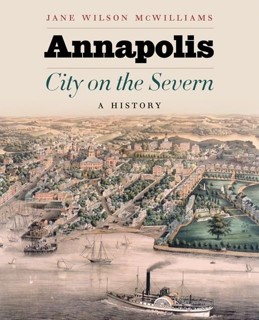
Annapolis, City on the Severn
Loading...
The Good Rain
Loading...
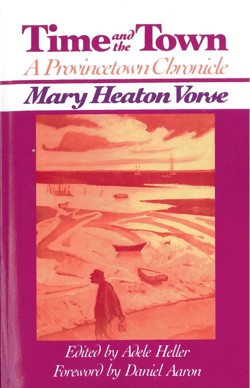
Time and the Town
Loading...
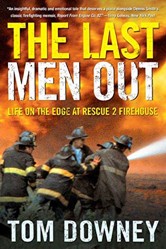
The Last Men Out
Loading...
Along the Texas Forts Trail
Loading...
Haunted New Hampshire
Loading...

Civil War on the Western Border, 1854-1865
Loading...

The American Flag
Loading...
Chicago
Loading...
Adventures in Theater History: Philadelphia
Loading...

Colorado Water Law for Non-Lawyers
Loading...