


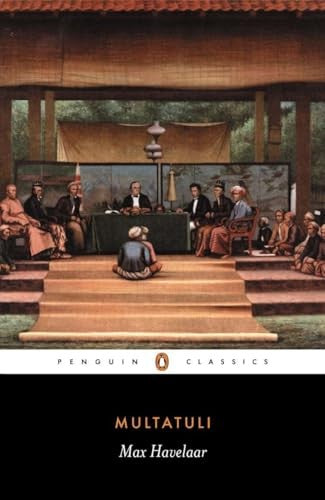
Max Havelaar by Multatuli
Roy Edwards's vibrant translation conveys the satirical and innovative style of Multatuli's autobiographical polemic. In his introduction, R. P. Meijer discusses the author's tempestuous life and career, the controversy the novel aroused and its unusual narrative structure.
“A literary masterpiece of the first order” —R. P. Meijer, from the Introduction
Multatuli is the pseudonym of Eduard Douwes Dekker (1820-1887). After 18 years of civil service in the Dutch East Indies, he returned to Europe in 1856 a disillusioned man. The way the natives were treated by their own as well as by the Dutch rulers offended him so much that he resigned after a public conflict. In his novel Max Havelaar he recorded his experiences. The book was published in 1860 and made him an instant success. Encouraged by this public acclaim, he decided to pursue a career as a writer. He became a sort of national conscience, inspiring emancipatory movements such as freethinkers, socialists and anarchists. Multatuli's career as a writer lasted exactly as long as his career as an official: 18 years. Then, once more profoundly disillusioned, he decided to give up writing and took refuge in Germany, where he died in February 1887.
| SKU | Unavailable |
| ISBN 13 | 9780140445169 |
| ISBN 10 | 0140445161 |
| Title | Max Havelaar |
| Author | Multatuli |
| Condition | Unavailable |
| Binding Type | Paperback |
| Publisher | Penguin Books Ltd |
| Year published | 1987-08-27 |
| Number of pages | 352 |
| Cover note | Book picture is for illustrative purposes only, actual binding, cover or edition may vary. |
| Note | Unavailable |