


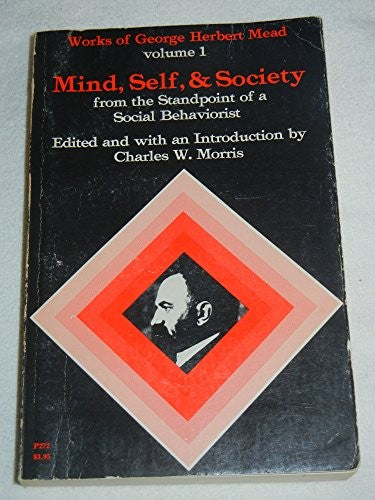
Mind, Self and Society by George Herbert Mead
The sisters Annalie Nel and Zuretha Roos grew up in the lovely Hex River Valley where their great-great-grandfather settled as a farmer during the middle of the 19th century. They have enduring memories of Ouma Sannie's farm kitchen and the food and lavish dinners she prepared. Their mother was a splendid cook and had a wide repertoire of dishes, some of which are included here. One of her pi ces de r sistance was her succulent, roast Muscovy duck, served as a fortnightly Sunday feast with crispy potatoes and home-grown veggies. The sisters fondly remember the golden-brown bird that adorned their Sunday dinner table. With these culinary doyennes preceding them, it's no wonder that an enthusiasm for food is embedded in their genes. Annalie prefers the more traditional, family recipes and is the custodian of the heirloom recipes, while Zuri tends to experiment with new tastes. Their differing approaches to food ensure that Roast Duck on Sunday includes a wide variety of sumptuous recipes, from comforting soups and traditional roasts to zesty salads and surprisingly simple desserts. Home cooks who are looking for new ideas or more traditional, family recipes will find the recipes in this book, which range from super simple to the more outlandish, a welcome change. The authors' chatty style of writing and personal anecdotes will enable the reader to fully engage with the book.
American philosopher and social psychologist George Herbert Mead was born on February 27, 1863, in South Hadley, Massachusetts, the second child of Hiram Mead, a Congregationalist minister, and Elizabeth Storrs Billings. After graduating from Oberlin College in 1883, he enrolled at Harvard University, where he earned a master's degree in philosophy in 1888. Mead continued his study of philosophy at the University of Leipzig (1888-1889), where he became quite interested in Darwinism, and at the University of Berlin (1889). During 1891-94 he was an instructor in philosophy and psychology at the University of Michigan. It was at Michigan that Mead and philosopher John Dewey (b. 1859-d. 1952), who chaired both the psychology and philosophy departments, became close personal and intellectual friends. In 1894 he joined Dewey at the University of Chicago, where Dewey chaired the philosophy department. Mead and Dewey, along with James Hayden Tufts (b. 1862-d. 1942), were known as the Chicago Pragmatists. Mead spent the rest of his life in Chicago, as assistant professor of philosophy 1894-1902, associate professor 1902-1907, and full professor 1907-1931. Influenced by evolutionary theory and the social nature of experience and behavior, Mead emphasized the natural emergence of the self and mind within the social order. Within this biosocial structure the gap between reason and impulse is bridged by the use of language. Mead called his position social behaviorism, using both social and biological conduct as an approach to all experience. During his lifetime Mead published only articles. His books, published posthumously from manuscripts and students' notes, include The Philosophy of the Present (1932); Mind, Self, and Society from the Standpoint of a Social Behaviorist (1934); Movements of Thought in the Nineteenth Century (1936); and The Philosophy of the Act (1938). Mead died on April 26, 1931, in Chicago.
| SKU | Unavailable |
| ISBN 13 | 9780226516684 |
| ISBN 10 | 0226516687 |
| Title | Mind, Self and Society |
| Author | George Herbert Mead |
| Series | Works Of George Herbert Mead |
| Condition | Unavailable |
| Binding Type | Paperback |
| Publisher | The University of Chicago Press |
| Year published | 1967-08-15 |
| Number of pages | 448 |
| Cover note | Book picture is for illustrative purposes only, actual binding, cover or edition may vary. |
| Note | Unavailable |