


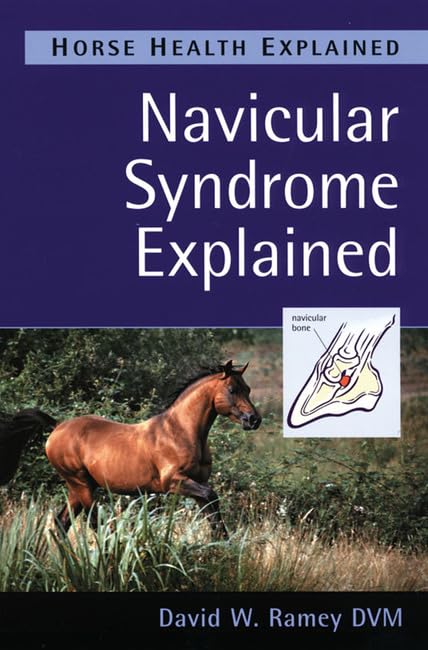
Navicular Syndrome Explained by David W Ramey Dvm
Navicular Syndrome is one of the most common, and sometimes one of the most frustrating causes of lameness in performance horses. Navicular lameness is caused by the pain associated with the compression of an inflamed bone and related structures. In its mildest form it will limit performance, but at the worst it can kill a sale or end a career. It will never go away and it will usually worsen over time. However, it can often be effectively managed with proper diagnosis, medical therapy and therapeutic trimming and shoeing. The navicular bone is located within the hoof, just behind the coffin joint formed between the short pastern and coffin bones. It is held in place by the impar and the suspensory navicular ligaments and the tendon of the deep digital flexor muscle which runs behind and under navicular bone and attaches to the coffin bone. The space between the deep digital flexor tendon and the navicular bone is protected by a fluid filled sac called the navicular bursa. In navicular syndrome, any of these structures may become inflamed and painful. Functionally, the navicular bone bears part of the horse's weight and it acts as a fulcrum for the deep digital flexor tendon. When the leg is in weight bearing position and forward motion is initiated, the deep digital flexor muscle contracts, pulls on its tendon and transmits tremendous pressure to the related tendon, bursa, bone and joint. In navicular syndrome it is the pressure on the inflamed structures which causes the pain and lameness. Although it is not an uncommon cause of lameness, it can be difficult to make a definitive diagnosis of navicular syndrome. It can cause intermittent or shifting lameness, it can appear to be a suspensory injury of shoulder lameness, or it can simply be difficult to prove that all the pain originate from navicular structures. This book has been written to help clear up many of the concerns and misconceptions that surround navicular syndrome in the horse - a condition that is often diagnosed even when such an interpretation isn't warranted. The author describes what the condition is (and what it is not), how it develops, and, most importantly, how to participate in and understand the diagnosis and various treatments. Findings on causes and treatments are also included.
David Ramey DVM is a 1983 graduate of Colorado State University and served an internship in equine medicine and surgery at Iowa State University, 1983-84. He has been in private veterinary practice since 1984 in California and is involved with all aspects of equine health care, including surgery, lameness and medicine. he is a noted speaker and author on equine health-related topics such as arthritis, colic, laminitis, medications and supplements, nutrition, tendon and ligament injuries.
| SKU | Unavailable |
| ISBN 13 | 9781872119472 |
| ISBN 10 | 1872119476 |
| Title | Navicular Syndrome Explained |
| Author | David W Ramey Dvm |
| Series | Horse Health Explained |
| Condition | Unavailable |
| Binding Type | Paperback |
| Publisher | Quiller Publishing Ltd |
| Year published | 2006-02-06 |
| Number of pages | 96 |
| Cover note | Book picture is for illustrative purposes only, actual binding, cover or edition may vary. |
| Note | Unavailable |