


On the Revolutions of Heavenly Spheres by Nicolaus Copernicus
The Ptolemaic system of the universe, with the earth at the center, had held sway since antiquity as authoritative in philosophy, science, and church teaching. Following his observations of the heavenly bodies, Nicolaus Copernicus (1473-1543) abandoned the geocentric system for a heliocentric model, with the sun at the center. His remarkable work, On the Revolutions of Heavenly Spheres, stands as one of the greatest intellectual revolutions of all time, and profoundly influenced, among others, Galileo and Sir Isaac Newton.You might also like
-
 The Great Courses Lecture Transcript and Course Guidebook: Cosmology: The History and Nature of Our Universe, Part 1-3
-
 Universe, Third Edition
-
 Simply Astronomy
-
 Big History
-
 Moon Rush
-
 The 50 Most Extreme Places in Our Solar System
-
 The Henry Holt Guide to Astronomy
-
 Miss Leavitt's Stars
-
 Exploring the Planets
-
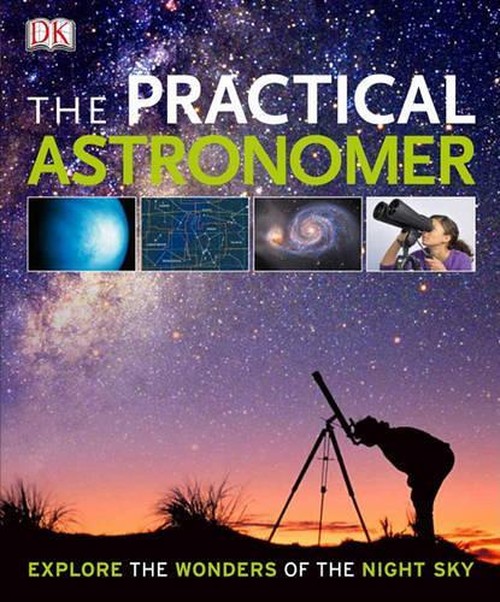 The Practical Astronomer
-
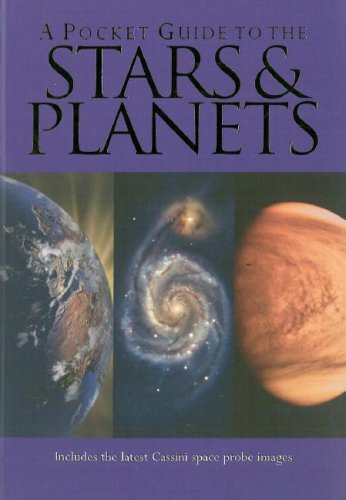 A Pocket Guide to the Stars and Planets
-
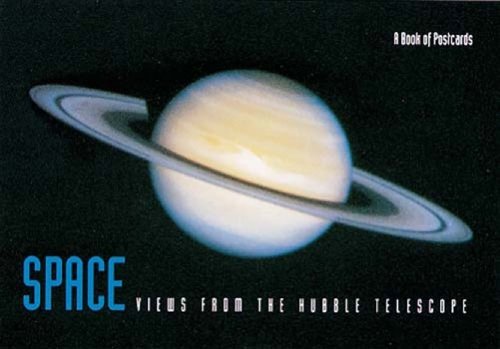 Space
Space
-
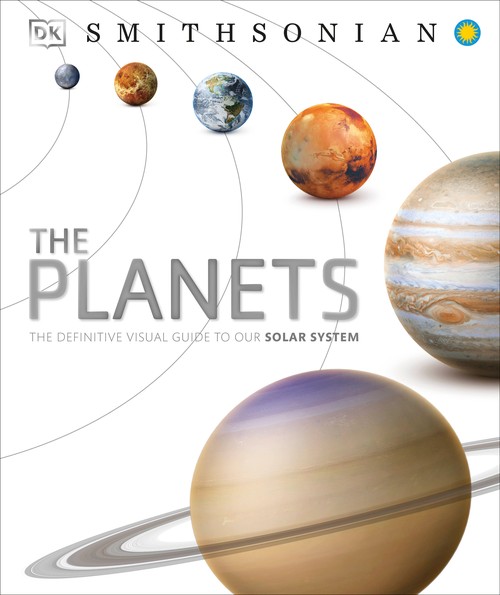 The Planets
-
 The Night Sky Month by Month
-
 El Libro de la Astronomia
-
 SNOWS OF OLYMPUS CL
-
 Space Resources
-
 Moondust
-
 The Apollo Missions
-
 Cosmic Questions
On February 19, 1473, NICOLAUS COPERNICUS, the youngest of four children, was born in Torun, Poland. The children were adopted by their uncle, Lukas Watzelrode, who eventually became Bishop of Ermland, after their father died in 1484. After leaving Torun's school, Copernicus enrolled at Cracow's University in 1491, where he studied under Albert Brudzewski. Copernicus not only acquired mathematics from him, but he was also drawn to new humanistic subjects. Copernicus left Cracow for Italy in 1496, where he studied canon law, mathematics, and astronomy in Bologna and then Padua.
Following his appointment as canon of Frauenburg Cathedral in 1497, Copernicus took a leave of absence to travel to Padua to study medicine, earning his degree in 1499. Copernicus returned to Poland in 1506, initially to Heilsberg as physician to his uncle, the bishop, after a lectureship in mathematics at Rome and doctoral studies in canon law at Ferrara. Copernicus took up residence as canonist at Frauenburg after his uncle died in 1512. Copernicus never obtained holy orders, simply taking as many vows as were required for his duties as canonist, in which he represented the cathedral chapter in a variety of controversies.
During the battle between Poland and the Teutonic Knights (1519-1521), he defended the chapter's rights and privileges, and before the Diet of Graudenz in 1522, he proposed a currency reform program. Meanwhile, Copernicus worked as a physician, providing free medical care to the impoverished. Despite his numerous responsibilities as canonist and physician, Copernicus found time to study astronomy. Following his astronomical observations began in Italy, he attempted to develop a single system from the ancients by a comparative examination of them.
In his Commentariolus of 1530, Copernicus provided a preliminary outline of his revolutionary heliocentric theory, which placed the sun at the center of the universe. This work drew a lot of attention, and supporters persuaded Copernicus to overcome his apprehensions about introducing a new concept of the cosmos that went against established orthodoxy and tradition. Copernicus' seminal work, De revolutionibus orbium coelestium (On the Revolutions of Heavenly Spheres), published in 1543, elucidated the heliocentric theory in detail. Copernicus only lived long enough to see the book published: he died of illness in late 1542, followed by a terrible stroke that left him partially paralyzed.
On the day Copernicus died, May 24, 1543, an early copy of the Revolutions was brought to him in Frauenburg.
| SKU | Unavailable |
| ISBN 13 | 9781573920353 |
| ISBN 10 | 1573920355 |
| Title | On the Revolutions of Heavenly Spheres |
| Author | Nicolaus Copernicus |
| Series | Great Minds Series |
| Condition | Unavailable |
| Binding Type | Paperback |
| Publisher | Prometheus Books |
| Year published | 1995-11-01 |
| Number of pages | 352 |
| Cover note | Book picture is for illustrative purposes only, actual binding, cover or edition may vary. |
| Note | Unavailable |