The Pirate by Captain Frederick Marryat
It was in the latter part of the month of June, of the year seventeen hundred and ninety something, that the angry waves of the Bay of Biscay were gradually subsiding, after a gale of wind as violent as it was unusual during that period of the year. Still they rolled heavily; and, at times, the wind blew up in fitful, angry gusts, as if it would fain renew the elemental combat; but each effort was more feeble, and the dark clouds which had been summoned to the storm, now fled in every quarter before the powerful rays of the sun, who burst their masses asunder with a glorious flood of light and heat; and, as he poured down his resplendent beams, piercing deep into the waters of that portion of the Atlantic to which we now refer, with the exception of one object, hardly visible, as at creation, there was a vast circumference of water, bounded by the fancied canopy of heaven. We have said, with the exception of one object; for in the centre of this picture, so simple, yet so sublime, composed of the three great elements, there was a remnant of the fourth. We say a remnant, for it was but the hull of a vessel, dismasted, water-logged, its upper works only floating occasionally above the waves, when a transient repose from their still violent undulation permitted it to reassume its buoyancy.Captain Frederick Marryat (July 10, 1792 – August 9, 1848) was an English Royal Navy officer, novelist, and Charles Dickens' contemporary and acquaintance. He is remembered today as an early pioneer of the sea narrative. He is most known for his semi-autobiographical novel Mr Midshipman Easy and his children's book The Children of the New Forest, as well as for inventing a widely used nautical flag signaling system. Marryat was the editor of The Metropolitan Magazine from 1832 to 1835. He continued to write novels, the most famous of which being Mr Midshipman Easy, published in 1836. He spent a year in Brussels, then traveled across Canada and the United States before settling in London in 1839, where he became acquainted with Charles Dickens and others in the literary world.
He was in North America in 1837 when the Lower Canadian Rebellion erupted, and he assisted British soldiers in defeating it. In appreciation of his invention and other accomplishments, he was appointed a Member of the Royal Society. He relocated to a tiny farm in Manor Cottage, Norfolk, in 1843, and died there in 1848. Florence Marryat, his daughter, went on to become a well-known writer and actor.
Francis Samuel Marryat, his son, finished his late novel The Little Savage. Marryat's novels are evocative of their day, with concerns about family ties and social standing frequently overshadowing naval action, but they are fascinating as fictionalized accounts of the author's 25 years at sea. These were among the earliest marine novels, admired by Joseph Conrad and Ernest Hemingway. These served as inspiration for C.'s later works.
| SKU | Unavailable |
| ISBN 13 | 9781604503555 |
| ISBN 10 | 1604503556 |
| Title | The Pirate |
| Author | Captain Frederick Marryat |
| Condition | Unavailable |
| Binding Type | Paperback |
| Publisher | Tark Classic Fiction |
| Year published | 2009-02-20 |
| Number of pages | 144 |
| Cover note | Book picture is for illustrative purposes only, actual binding, cover or edition may vary. |
| Note | Unavailable |
Customers who bought this item also bought

Whistler



This Inevitable Ruin
Of Mice and Men

The Midnight Library: A GMA Book Club Pick


Kin: Oprah's Book Club

The Great Alone
The Things We Never Say
The Five-Star Weekend

My Husband's Wife







First Lie Wins: Reese's Book Club
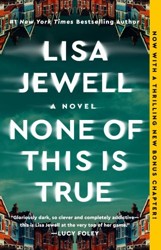
None of This Is True