
The Population Explosion


World of Books
The feel-good place to buy books
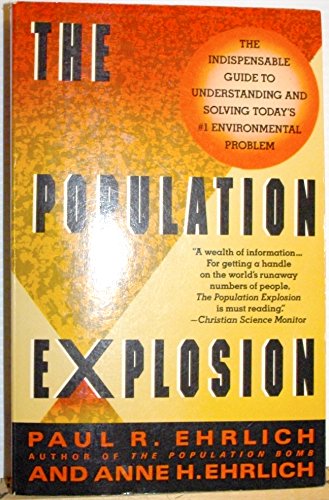
The Population Explosion by Paul R Ehrlich
Gardeners have tales to tell and home gardens are often at the heart of their stories. Home Gardens and Food Production explores stories which reveal the diversity of those who grow food at home and demonstrate the close relationships between home, food and identity.
Kathryn Besio uses Hilo, Hawai'i as a case study to examine the meanings of household food production and home. Drawing on empirical research including participant-observation, in-depth interviews and a survey of home gardeners, she shows how Hawai'i's legacy of pre-contact and post-colonial social, ethnic, gender and class relations play a major part in narratives of homes, homeland and domesticity in one specific place over time. Readers will recognise parallels to situations in the continental United States, Western Europe, Australia and New Zealand where home gardens are being promoted as an environmentally sustainable way of enhancing household food security. As the author demonstrates, this overlooks the social, cultural and place-specific dimensions of home food production, ignoring classed, gendered, and ethnic diversity. Joining a feminist post-colonial theoretical framework with first-hand empirical research, this book makes an important contribution to a previously under-researched aspect of alternative food production and will be of interest to students and researchers in geography, anthropology, food studies, sociology, gender and post-colonial studies.
Ehrlich, Paul R.: - Paul R. Ehrlich is a co-founder with Peter H. Raven of the field of co-evolution, and has pursued long-term studies of the structure, dynamics, and genetics of natural butterfly populations. He has also been a pioneer in alerting the public to the problems of overpopulation, and in raising issues of population, resources, and the environment as matters of public policy. Ehrlich is the author of The Population Bomb, and many other books, as well as hundreds of papers.
Ehrlich is a fellow of the American Association for the Advancement of Science, the American Academy of Arts and Sciences, and the American Philosophical Society, and a member of the National Academy of Sciences. Ehrlich has received several honorary degrees, the John Muir Award of the Sierra Club, the Gold Medal Award of the World Wildlife Fund International, a MacArthur Prize Fellowship, the Crafoord Prize of the Royal Swedish Academy of Sciences (given in lieu of a Nobel Prize in areas where the Nobel is not given), in 1993 the Volvo Environmental Prize, in 1994 the United Nations' Sasakawa Environment Prize, in 1995 the Heinz Award for the Environment, in 1998 the Tyler Prize for Environmental Achievement and the Dr. A. H. Heineken Prize for Environmental Sciences, in 1999 the Blue Planet Prize, in 2001 the Eminent Ecologist Award of the Ecological Society of America and the Distinguished Scientist Award of the American Institute of Biological Sciences. In addition to The Population Bomb, Ehrlich is the author of Human Natures: Genes, Cultures, and the Human Prospect (Island Press, 2000) and co-author of The Work of Nature: How The Diversity Of Life Sustains Us (Island Press, 1998). With his wife Anne, he is the author of Betrayal of Science and Reason: How Anti-Environmental Rhetoric Threatens Our Future (Island Press, 1996) and One With Nineveh: Politics, Consumption, and the Human Future (Island Press, 2004). His latest book with Anne is The Dominant Animal: Human Evolution and the Environment (Island Press, 2008). Paul R. Ehrlich received his Ph.D. from the University of Kansas.
Ehrlich is a fellow of the American Association for the Advancement of Science, the American Academy of Arts and Sciences, and the American Philosophical Society, and a member of the National Academy of Sciences. Ehrlich has received several honorary degrees, the John Muir Award of the Sierra Club, the Gold Medal Award of the World Wildlife Fund International, a MacArthur Prize Fellowship, the Crafoord Prize of the Royal Swedish Academy of Sciences (given in lieu of a Nobel Prize in areas where the Nobel is not given), in 1993 the Volvo Environmental Prize, in 1994 the United Nations' Sasakawa Environment Prize, in 1995 the Heinz Award for the Environment, in 1998 the Tyler Prize for Environmental Achievement and the Dr. A. H. Heineken Prize for Environmental Sciences, in 1999 the Blue Planet Prize, in 2001 the Eminent Ecologist Award of the Ecological Society of America and the Distinguished Scientist Award of the American Institute of Biological Sciences. In addition to The Population Bomb, Ehrlich is the author of Human Natures: Genes, Cultures, and the Human Prospect (Island Press, 2000) and co-author of The Work of Nature: How The Diversity Of Life Sustains Us (Island Press, 1998). With his wife Anne, he is the author of Betrayal of Science and Reason: How Anti-Environmental Rhetoric Threatens Our Future (Island Press, 1996) and One With Nineveh: Politics, Consumption, and the Human Future (Island Press, 2004). His latest book with Anne is The Dominant Animal: Human Evolution and the Environment (Island Press, 2008). Paul R. Ehrlich received his Ph.D. from the University of Kansas.
| SKU | Unavailable |
| ISBN 13 | 9780671732943 |
| ISBN 10 | 0671732943 |
| Title | The Population Explosion |
| Author | Paul R Ehrlich |
| Condition | Unavailable |
| Binding Type | Paperback |
| Publisher | Simon & Schuster |
| Year published | 1991-04-01 |
| Number of pages | 320 |
| Cover note | Book picture is for illustrative purposes only, actual binding, cover or edition may vary. |
| Note | Unavailable |