


Pragmatism, Rights, and Democracy by Beth J Singer
A biography of the Supreme Court Justice of 34 years, Hugo Black, (1886-1971). He once was a member of the Ku Klux Klan, and went on to be one of the most celebrated and important civil libertarians in the history of the USA and the 20th century's chief proponent of the First Amendment.You might also like

Our Big Book of Words
Loading...

True Facts That Sound Like Bull$#*t
Loading...
Maybe
Loading...
Mom's Story
Loading...
Jumbo Book of Hidden Pictures
Loading...

Grandma's Story
Loading...

The Berenstain Bears Go to School
Loading...

On Writing Well
Loading...
Dad's Story Journal (Linen Hardcover)
Loading...

I Wrote A Book About You (Black)
Loading...

The Pilot Logbook
Loading...
Canvas One Line a Day
Loading...

Calypso Mini Cutouts
Loading...

Brain Games - Sticker by Number: Flowers & Nature Stained Glass (28 Images to Sticker)
Loading...
More editions available

Amazing Nature Puzzles
Loading...
What Do You Do With A Problem?
Loading...
Just Between Us: Mother & Daughter: A No-Stress, No-Rules Journal
Loading...
More editions available
-
 The Metaphysics of Experience
-
 X-The Problem of the Negro as a Problem for Thought
-
 Pets, People, and Pragmatism
-
 The Politics of Survival
-
 Stanley Cavell and the Education of Grownups
-
 Race Questions, Provincialism, and Other American Problems
-
 Loyalty to Loyalty
-
 Pragmatic Pluralism and the Problem of God
-
 Peirce's Philosophical Perspectives
-
 William James on the Courage to Believe
-
 Pragmatism, Reason, and Norms
-
 Philosophy in Experience
-
 Reason, Experience, and God
-
 Charles S. Peirce
-
 Yes, but not Quite
-
 John Dewey Between Pragmatism and Constructivism
-
 The Drama of Possibility
-
 Cosmopolitanism and Place
-
 William James in Focus
-
 Doing Philosophy Personally
-
 Charles Peirce's Theory of Scientific Method
-
 Pragmatic Fashions
-
 Philosophy Americana
-
 The Things in Heaven and Earth
-
 Experience and God
-
 Self, God and Immortality
-
 Quantum Mechanics and the Philosophy of Alfred North Whitehead
-
 Thinking Through the Imagination
-
 Pragmatism, Nation, and Race
-
 After Emerson
-
 The Problem of the Color Line at the Turn of the Twentieth Century
-
 Peirce and Contemporary Thought
-
 The Basic Writings of Josiah Royce, Volume I
-
 Meddling
-
 The Gleam of Light
-
 Habits of Whiteness
-
 Pragmatism As Post-Postmodernism


"Singer's theory of rights, an impressive development of social accounts by pragmatists George Herbert Mead and John Dewey, was developed in Operative Rights (1993)This successor volume includes applications, lectures, replies to critics, and clarifications. For Singer, Dewey, and Mead, rights exist only if they are embedded in the operative practices of a community. People have a right in a community if their claim is acknowledged, and if they would acknowledge similar claims by others. Singer's account contrasts with theories of natural rights, which state that humans have rights by virtue of being human. Singer's account also differs from Kantian attempts to derive rights from the necessary conditions of rationality. While denying that rights exist independently of a community's practices, Singer maintains that rights to personal autonomy and authority ought to exist in all communities. Group rights, an anathema among individualistic theories, are from Singer's pragmatist perspective a valuable institution. Singer's discussion of rights appropriate for minority communities (e.g., the Bosnian Muslims and the Canadian Quebecois) is particularly illuminating. Her book is a model of careful reasoning. General libraries, and certainly academic libraries, should have Singer's Operative Rights. The volume under review is a good addition for research libraries and recommended for graduate students and above."[Singer] examines the views of Rousseau, Mill, and T. H. Green on human rights and those of Dewey and G. H. Mead on the relationship between rights and the democratic process... Recommended." -Choice "[Singer] examines the views of Rousseau, Mill, and T. H. Green on human rights and those of Dewey and G. H. Mead on the relationship between rights and the democratic process... Recommended." -Library Journal
Beth J. Singer is Professor Emeritus at Brooklyn College of the City University of New York.
| SKU | Unavailable |
| ISBN 13 | 9780823218677 |
| ISBN 10 | 0823218678 |
| Title | Pragmatism, Rights, and Democracy |
| Author | Beth J Singer |
| Series | American Philosophy |
| Condition | Unavailable |
| Binding Type | Hardback |
| Publisher | Fordham University Press |
| Year published | 1999-02-01 |
| Number of pages | 207 |
| Cover note | Book picture is for illustrative purposes only, actual binding, cover or edition may vary. |
| Note | Unavailable |
Customers who bought this item also bought
Our Big Book of Words
Loading...
True Facts That Sound Like Bull$#*t
Loading...
Maybe
Loading...
Mom's Story
Loading...
Jumbo Book of Hidden Pictures
Loading...
Grandma's Story
Loading...
The Berenstain Bears Go to School
Loading...
On Writing Well
Loading...
Dad's Story Journal (Linen Hardcover)
Loading...
I Wrote A Book About You (Black)
Loading...
The Pilot Logbook
Loading...
Canvas One Line a Day
Loading...
Calypso Mini Cutouts
Loading...
Brain Games - Sticker by Number: Flowers & Nature Stained Glass (28 Images to Sticker)
Loading...
More editions available
Amazing Nature Puzzles
Loading...
What Do You Do With A Problem?
Loading...
Just Between Us: Mother & Daughter: A No-Stress, No-Rules Journal
Loading...
More editions available

Because I Had A Teacher
Loading...
Milk and Honey
Loading...
Yoga Anatomy Coloring Book, The
Loading...

National Parks Quarters Map
Loading...

One-Minute Devotions(r) Grace for Today
Loading...


What Is the Gospel?
Loading...




SM Jrnl Artisan Page a Day Travel
Loading...
Supernatural What the Bible Teaches About the Unseen World and Why It Matters
Loading...
More editions available

Every Flipping Day Desktop Flipbook
Loading...

ESV Student Study Bible
Loading...
What Do You Do With A Chance?
Loading...
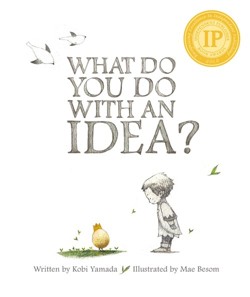
What Do You Do With An Idea?
Loading...

Satanic Bible
Loading...

Our Bucket List Adventures
Loading...

Letters to My Baby
Loading...

Nouveau One Line a Day
Loading...

The Camping Logbook
Loading...

Grandpa's Story
Loading...
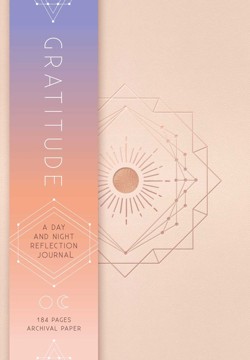
Gratitude
Loading...

The Green Witch's Sticker Book
Loading...

Tickle Monster Laughter Kit
Loading...

You Belong Here
Loading...

The Manual to Manhood
Loading...
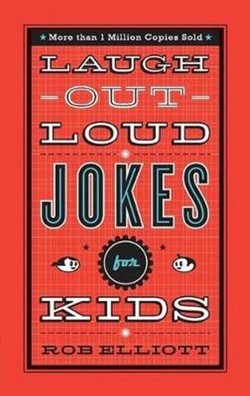
LaughOutLoud Jokes for Kids
Loading...