


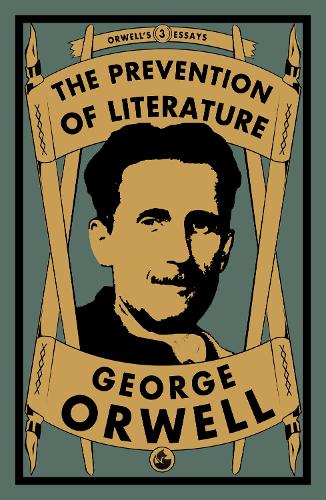
The Prevention of Literature by George Orwell
George Orwell set out 'to make political writing into an art', and to a wide extent this aim shaped the future of English literature – his descriptions of authoritarian regimes helped to form a new vocabulary that is fundamental to understanding totalitarianism. While 1984 and Animal Farm are amongst the most popular classic novels in the English language, this new series of Orwell's essays seeks to bring a wider selection of his writing on politics and literature to a new readership. In The Prevention of Literature, the third in the Orwell's Essays series, Orwell considers the freedom of thought and expression. He discusses the effect of the ownership of the press on the accuracy of reports of events, and takes aim at political language, which 'consists almost entirely of prefabricated phrases bolted together.' The Prevention of Literature is a stirring cry for freedom from censorship, which Orwell says must start with the writer themselves: 'To write in plain vigorous language one has to think fearlessly.'
'A writer who can – and must – be rediscovered with every age' Irish Times
Born Eric Arthur Blair (1903–1950), George Orwell was an English journalist, writer and critic. Orwell devoted his life to working against extremism, and in his description of how authoritarian regimes pervade our thoughts, he gave us a new vocabulary to understand totalitarianism. He is best remembered today for his innumerable essays, his novels – in particular Animal Farm and 1984 – and his longer non-fiction, especially The Road to Wigan Pier and Down Out in Paris and London.
| SKU | Unavailable |
| ISBN 13 | 9781913724313 |
| ISBN 10 | 191372431X |
| Title | The Prevention of Literature |
| Author | George Orwell |
| Condition | Unavailable |
| Binding Type | Paperback |
| Publisher | Renard Press Ltd |
| Year published | 2021-01-01 |
| Number of pages | 64 |
| Cover note | Book picture is for illustrative purposes only, actual binding, cover or edition may vary. |
| Note | Unavailable |