Resource Extraction and Protest in Peru by Moises Arce
Natural resource extraction has fueled protest movements in Latin America and existing research has drawn considerable scholarly attention to the politics of antimarket contention at the national level, particularly in Ecuador, Bolivia, and Argentina. Despite its residents reporting the third-highest level of protest participation in the region, Peru has been largely ignored in these discussions. In this groundbreaking study, Mois s Arce exposes a longstanding climate of popular contention in Peru. Looking beneath the surface to the subnational, regional, and local level as inception points, he rigorously dissects the political conditions that set the stage for protest. Focusing on natural resource extraction and its key role in the political economy of Peru and other developing countries, Arce reveals a wide disparity in the incidence, forms, and consequences of collective action. Through empirical analysis of protest events over thirty-one years, extensive personal interviews with policymakers and societal actors, and individual case studies of major protest episodes, Arce follows the ebb and flow of Peruvian protests over time and space to show the territorial unevenness of democracy, resource extraction, and antimarket contentions. Employing political process theory, Arce builds an interactive framework that views the moderating role of democracy, the quality of institutional representation as embodied in political parties, and most critically, the level of political party competition as determinants in the variation of protest and subsequent government response. Overall, he finds that both the fluidity and fragmentation of political parties at the subnational level impair the mechanisms of accountability and responsiveness often attributed to party competition. Thus, as political fragmentation increases, political opportunities expand, and contention rises. These dynamics in turn shape the long-term development of the state. Resource Extraction and Protest in Peru will inform students and scholars of globalization, market transitions, political science, contentious politics and Latin America generally, as a comparative analysis relating natural resource extraction to democratic processes both regionally and internationally.You might also like


The Book Thief




The Gales of November

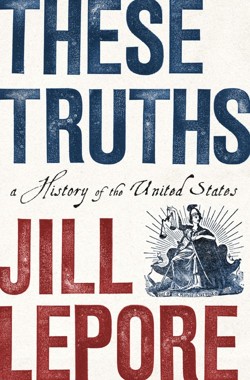
These Truths




The The Case for Trump



-
 Voces Femeninas de Hispanoamerica
-
 Transformations and Crisis of Liberalism in Argentina, 1930–1955
-
 The Politics of Mexican Oil
-
 Science Under Adversity
-
 Parties And Unions In The New Global Economy
-
 Unsettling Statecraft
-
 Rethinking Latin America’s Left Turn
-
 Street Matters
-
 Staging Buenos Aires
-
 The Seventh Heaven
-
 Business Power and the State in the Central Andes
-
 Now We Are in Power
-
 Against Racism
-
 Development Design
-
 Conjuring the State
-
 The Time of Freedom
-
 Sport in Cuba
-
 Female and Male in Latin America
-
 The Hovering Giant (Revised Edition)
-
 Bolivia
-
 Newsrooms in Conflict
-
 The Vigorous Core of Our Nationality
-
 Enforcing the Rule of Law
-
 Voices, Visions, and a New Reality
-
 The Expulsion of Mexico's Spaniards, 1821-1836
-
 Making Citizens in Argentina
-
 Sports Culture in Latin American History
-
 Cultures of the City
-
 Cuba, Castro, and the United States
-
 Imagination Beyond Nation
-
 Enduring Reform
-
 Gaitán of Colombia
-
 Narco-Democratization
-
 For a Proper Home
-
 Media, Sound, and Culture in Latin America and the Caribbean
-
 Honorable Lives
-
 Restructuring Domination
-
 Highland Indians and the State in Modern Ecuador
-
 Struggles of Voice


Why, at a time of unprecedented democracy and economic abundance, do we see rising levels of protest in Peru and elsewhere in Latin America? Moises Arce's book offers a compelling explanationMining activities in Latin America have expanded much more rapidly than our understanding of their consequences. Resource Extraction and Protest in Peru is thus a timely and important contribution. I recommend it to all students of Latin American politics.
* Steven Levitsky, Harvard University *Moises Arce delivers an important book. Against the tide of conventional wisdom, he masterfully shows that sporadic, seemingly isolated protests against natural resource extraction at the subnational level, when aggregated, do have significant national policy effects. Drawing on a wealth of evidence, Arce insightfully combines political science and social movement theory to reveal the links between democracy, party competition, and variation in anti-market protest at the subnational level in Peru. The book has tremendous comparative implications for anyone studying protest against the 'new extractivism' elsewhere in Latin America.
* Eduardo Silva, Tulane University *. . . Arce pushes the social movement literature into new dimensions . . . Resource Extraction offers indispensable reading for social movement scholars in the fields of sociology, political science, anthropology, history, and Latin American studies.
* The Historian *Moises Arce is professor of political science at the University of Missouri. He is the author of Market Reform in Society: Post-crisis Politics and Economic Change in Authoritarian Peru.
| SKU | Unavailable |
| ISBN 13 | 9780822963097 |
| ISBN 10 | 0822963094 |
| Title | Resource Extraction and Protest in Peru |
| Author | Moises Arce |
| Series | Pitt Latin American Series |
| Condition | Unavailable |
| Binding Type | Paperback |
| Publisher | University of Pittsburgh Press |
| Year published | 2014-09-22 |
| Number of pages | 200 |
| Cover note | Book picture is for illustrative purposes only, actual binding, cover or edition may vary. |
| Note | Unavailable |
Customers who bought this item also bought
The Book Thief
The Gales of November
These Truths
The The Case for Trump

Empire of AI


The Fate of the Day

1776


The The End of Everything


The The End of Everything


Defenders of the West

The Greatest Sentence Ever Written

The The Jakarta Method


Democracy Awakening

The Wreck of the Mentor
Bad Law




The Lost Empire of Emanuel Nobel