


The Self-Made Tapestry by Ball
Why do similar patterns and forms appear in nature in settings that seem to bear no relation to one another? The windblown ripples of desert sand follow a sinuous course that resembles the stripes of a zebra or a marine fish. In the trellis-like shells of microscopic sea creatures we see the same angles and intersections as for bubble walls in a foam. The forks of lightning mirror the branches of a river or a tree. This book explains why these are no coincidences. Nature commonly weaves its tapestry by self-organization, employing no master plan or blueprint but by simple, local interactions between its component parts - be they grains of sand, diffusing molecules or living cells. And the products of self- organization are typically universal patterns: spirals, spots, and stripes, branches, honeycombs. This book explains, in non-technical language, and with profuse illustrations, how nature's patterns are made.You might also like

The Deliberate Corruption of Climate Science
Loading...

Beautiful Experiments
Loading...
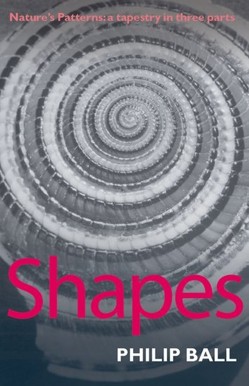
Shapes
Loading...



The Metaverse
Loading...


Flow
Loading...



Strange Curves, Counting Rabbits, & Other Mathematical Explorations
Loading...
More editions available
Holt: Biology Bvl 1994
Loading...

Becoming a Technical Professional
Loading...
Scientifica
Loading...
How Food Works
Loading...

The Real Science behind the X Files, Th
Loading...


The Molecular Vision of Life
Loading...

Tambora
Loading...
Mapping the Next Millennium
Loading...
"Philip Ball has produced a superb book about patterns in nature, The Self-Made TapestryFrom the ribbed desert sands to tree-form streaks of lightening, countless examples give rise to fascinating reflections on the astounding order that exists amid chaos. Lavishly illustrated, this is a stunning book." * The Sunday Times *
Philip Ball is an editor at Nature magazine.
| SKU | Unavailable |
| ISBN 13 | 9780198502432 |
| ISBN 10 | 0198502435 |
| Title | The Self-Made Tapestry |
| Author | Ball |
| Condition | Unavailable |
| Binding Type | Paperback |
| Publisher | Oxford University Press |
| Year published | 2001-07-05 |
| Number of pages | 296 |
| Cover note | Book picture is for illustrative purposes only, actual binding, cover or edition may vary. |
| Note | Unavailable |
Customers who bought this item also bought





The Coming Wave
Loading...


Empire of AI
Loading...





Path Between the Seas: The Creation of the Panama Canal 1870 to 1914
Loading...
More editions available

Chemistry
Loading...


The Art of Doing Science and Engineering
Loading...


The Elements
Loading...



The Selfish Gene
Loading...

The Book of Strange But True Science
Loading...

The Invisible Rainbow
Loading...



The Cartoon Guide to Calculus
Loading...

Daily Science Grade 4 Te
Loading...




Stay Curious and Keep Exploring
Loading...

The Cartoon Guide to Chemistry
Loading...



The Elements
Loading...





The Return of the Oystercatcher
Loading...



Biocentrism
Loading...

Napoleon'S Buttons
Loading...


The Tao of Physics
Loading...