
Shakespeare and the Fire of Love


Summary
The feel-good place to buy books
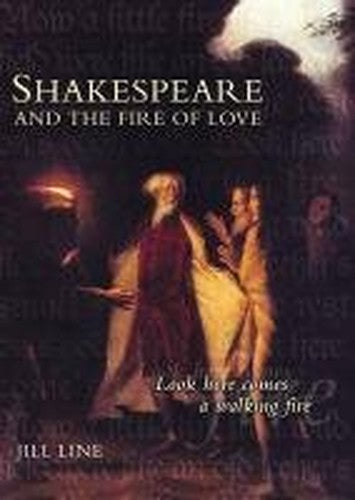
Shakespeare and the Fire of Love by Jill Line
'From women's eyes this doctrine I derive: They are the ground, the books, the academes, From whence doth spring the true Promethean fire' These lines, spoken by Berowne in Love's Labour's Lost, embody all the passions of the early stages of love but, as so often with Shakespeare, he seems to be hinting at something more. What is the doctrine he derives from women's eyes? What is it women's eyes convey? What is the true Promethean fire? The answers to these questions lie in the Christian-Platonic philosophy of love which permeates all Shakespeare's plays and poems. Although Christian-Platonism, or the new learning as it was known in his time, has long been associated with the poetry of many of his contemporaries, its relationship to Shakespeare's work is not so well known. This perennial philosophy has come down through a long line of teachers, including Hermes Trismegistus, Pythagoras, Plato and Plotinus. The philosopher of this tradition, whom Shakespeare most clearly reflects, was the scholar-priest Marsilio Ficino, who lived in Florence a hundred years before him. It was he who drew together the strands of many teachings and, having found the same truths in Christianity, formulated a philosophy that is generally referred to today as Christian-Platonism. Most of the comedies and some of the sonnets are explained in the light of this philosophy as they show most clearly the concepts of Platonic love. The tragedies, some of the Roman plays and Shakespeare's last plays are used to show how he expanded on these ideas throughout his life, but only passing reference is made to the histories. Most Shakespearean criticism of recent years has been set firmly in the historical, social and political context of our contemporary world. This book reveals the philosophy which enabled Shakespeare to write of such universal themes as the harmony and disharmony between nations and princes, and the inner conflicts of mind and soul in men and women whose natures and desires are not confined to any particular age. It will appeal to theatregoers and students, especially those seeking to understand inner meaning of his plays and poems.
Jill Line has been lecturing and writing on Shakespeare, Ficino and Christian-Platonism for many years. She has an MA from the Shakespeare Institute, University of Birmingham, and was a lecturer at the University of Surrey. She has lectured at the Temenos Academy and other organisations, including the Prince of Wales Summer School for Teachers with the RSC. She has contributed to the Temenos Review and to Friend to Mankind (Shepheard-Walwyn 1999), and a series of booklets for the Globe Theatre.
| SKU | Unavailable |
| ISBN 13 | 9780856832253 |
| ISBN 10 | 0856832251 |
| Title | Shakespeare and the Fire of Love |
| Author | Jill Line |
| Condition | Unavailable |
| Binding Type | Paperback |
| Publisher | Shepheard-Walwyn (Publishers) Ltd |
| Year published | 2004-06-01 |
| Number of pages | 192 |
| Cover note | Book picture is for illustrative purposes only, actual binding, cover or edition may vary. |
| Note | Unavailable |