


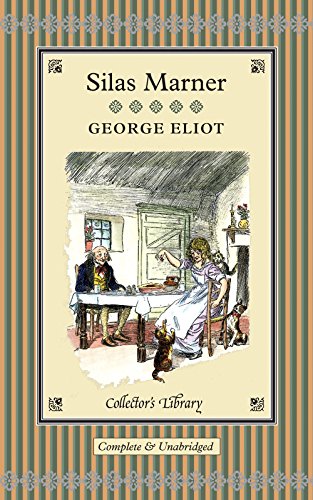
Silas Marner by George Eliot
George Eliot's own favourite novel centres on Silas Marner, the linen weaver of Raveloe, a village on the brink of industrialization. He was once a respected member of a narrow congregation, but the events that took place during one of his cataleptic fits led to the loss of everything that he valued. Now he lives a withdrawn half-life and is an object of suspicion to his new neighbours; he exists only for his work and his golden guineas. But when his precious money is stolen and, shortly after, seemingly and mysteriously replaced by the child Eppie, Silas is awakened to life by the redemptive power of love With an Afterword by John Grant.
George Eliot (1819-80) was born Mary Ann Evans into the family of a Warwickshire land agent and did not escape provincial life until she was 30. But she was brilliantly self-educated and able at once to shine in London literary circles. It was, however, her novels of English rural life that brought her fame, starting with Adam Bede, published under her new pen name in 1859, and reaching a zenith with Middlemarch in 1871. Eliot was a devoutly moral woman but lived for 25 years with a man who already had a wife. It is indicative of the respect and love that she inspired in her most devoted readers that Queen Victoria was one of them.
| SKU | Unavailable |
| ISBN 13 | 9781904919575 |
| ISBN 10 | 190491957X |
| Title | Silas Marner |
| Author | George Eliot |
| Condition | Unavailable |
| Binding Type | Hardback |
| Publisher | Pan Macmillan |
| Year published | 2005-03-01 |
| Number of pages | 264 |
| Cover note | Book picture is for illustrative purposes only, actual binding, cover or edition may vary. |
| Note | Unavailable |