


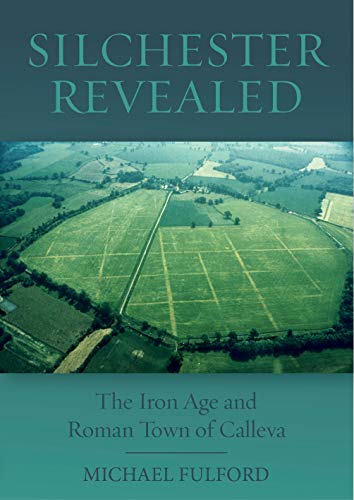
Silchester Revealed by Michael Fulford
A highly illustrated synthesis of 500 years of occupation of the Iron Age to Roman town of Calleva (Silchester).
A welcome addition to the bibliography on Silchester specifically and to the literary landscape of Roman Britain in general … [It] thus functions not just to reveal Silchester, but also to reveal the development and future potential of archaeological excavation in general in approachable and straightforward terms* Bryn Mawr Classical Review *
I thoroughly enjoyed this book. It is in many respects a celebration of the evidence that can be obtained from careful excavation and – just as important – the detailed analysis of the findings that allows their full potential to be realised … Thank goodness a young lecturer at Reading University was up for the challenge in 1974. This book is a trumphant statement of what Michael Fulford has achieved since then. * Current Archaeology *
This is a terrific book, both for what it is and what it represents. The latter is a remarkable project, without precedent and possibly unrepeatable. * British Archaeology *
I thoroughly enjoyed this book. It is in many respects a celebration of the evidence that can be obtained from careful excavation and – just as important – the detailed analysis of the findings that allows their full potential to be realised … Thank goodness a young lecturer at Reading University was up for the challenge in 1974. This book is a trumphant statement of what Michael Fulford has achieved since then. * Current Archaeology *
This is a terrific book, both for what it is and what it represents. The latter is a remarkable project, without precedent and possibly unrepeatable. * British Archaeology *
Professor of Archaeology at University of Reading since 1988. Director of excavations at Silchester and its environs. Principal research interests are in Roman archaeology, particularly rural settlement, urbanism, economy, material culture, technology and trade
| SKU | Unavailable |
| ISBN 13 | 9781911188834 |
| ISBN 10 | 1911188836 |
| Title | Silchester Revealed |
| Author | Michael Fulford |
| Condition | Unavailable |
| Binding Type | Paperback |
| Publisher | Windgather Press |
| Year published | 2021-03-15 |
| Number of pages | 240 |
| Cover note | Book picture is for illustrative purposes only, actual binding, cover or edition may vary. |
| Note | Unavailable |