


Six Drawing Lessons by William Kentridge
Art, William Kentridge says, is its own form of knowledge. It does not simply supplement the real world, and cannot be purely understood in the rational terms of academic disciplines. The studio is where linear thinking is abandoned and the material processes of the eye, the hand, the charcoal and paper become themselves the guides of creativity.You might also like
Marvel Comics: The Variant Covers
Loading...
Drawing the Human Form
Loading...
The Art Book
Loading...
El libro del arte (The Art Book)
Loading...
How Art Works
Loading...
Acrylic Painting
Loading...
Art Education and Human Development
Loading...

I Love Fashion
Loading...

R.Atkinson Fox/W.M.Thompson PG
Loading...
The Beauty Of Gesture
Loading...
Slang Aesthetics
Loading...
The Work of Art
Loading...
-
 The Origin of Others
-
 The Unanswered Question
-
 Working Space
-
 Six Walks in the Fictional Woods
-
 Poetics of Music in the Form of Six Lessons
-
 The Romantic Generation
-
 The Genesis of Secrecy
-
 Space, Time and Architecture
-
 Lessons of the Masters
-
 The Shape of Content
-
 The Witness of Poetry
-
 i
i
-
 This Craft of Verse
-
 To Save and to Destroy
-
 The Use of Poetry and the Use of Criticism
-
 Sincerity and Authenticity
-
 Other Traditions
-
 Writing and Being
-
 The Secular Scripture
-
 Concerto Conversations
-
 Children of the Mire
-
 Remembering the Future


[This] is an enlightening, circuitous, and self-reflexive performance that delves into [Kentridge’s] greatest obsessions in the realms of art, politics, history, and image-making… Kentridge discusses topics including Plato’s cave allegory (a subject that looms over much, if not all, of the book), Africa’s colonies, and the violence of the EnlightenmentHe delivers sharp insights into the history and character of Johannesburg; his memories from growing up under apartheid provide some of the book’s most lucid moments. He also elaborates upon life in the art studio (a ‘safe space for stupidity’)… Time—including how it affects work in the studio—and memory are also major themes. The argument here is really an anti-argument; Kentridge emphasizes the need to occupy the gap between certainty and uncertainty, and stresses ‘being aware of the limits of seeing,’ and ‘our own limits of understanding, the limits of our memory, but prodding the memory nonetheless.’… This is an essential book for anybody seeking a better understanding of Kentridge’s work. * Publishers Weekly *
Anyone who has seen the film animations of the great South African artist will be fascinated by the account he gives of his thinking and studio practice. -- Kenneth Baker * San Francisco Chronicle *
This is a beautiful and necessary book in all respects… It looks at the work of an artist from his own perspective, which in some instances may be a risky strategy, but Kentridge is such a good writer that the book is as brisk as it is insightful… He is also a wonderful draftsman, and his drawings, often executed in pen and ink or cut paper, are carefully reproduced here. The production of this book was handled as a work of art too. The size, proportion, binding, and attention to detail are superb. The design by Dean Bornstein harmonizes perfectly with the tone of the book. Enthusiastically recommended. -- S. Skaggs * Choice *
Anyone who has seen the film animations of the great South African artist will be fascinated by the account he gives of his thinking and studio practice. -- Kenneth Baker * San Francisco Chronicle *
This is a beautiful and necessary book in all respects… It looks at the work of an artist from his own perspective, which in some instances may be a risky strategy, but Kentridge is such a good writer that the book is as brisk as it is insightful… He is also a wonderful draftsman, and his drawings, often executed in pen and ink or cut paper, are carefully reproduced here. The production of this book was handled as a work of art too. The size, proportion, binding, and attention to detail are superb. The design by Dean Bornstein harmonizes perfectly with the tone of the book. Enthusiastically recommended. -- S. Skaggs * Choice *
William Kentridge is an animator, illustrator, printmaker, sculptor, and theater director based in Johannesburg, South Africa. A member of the American Philosophical Society, Kentridge’s diverse works have been exhibited at museums worldwide, including the Museum of Modern Art, the Tate Modern, and Kunstmuseum Basel. As a director, he has staged productions of Shostakovich’s The Nose and Berg’s Lulu at the Metropolitan Opera and Mozart’s The Magic Flute at the Brooklyn Academy of Music and Le Théâtre Royal de la Monnaie in Brussels.
| SKU | Unavailable |
| ISBN 13 | 9780674365803 |
| ISBN 10 | 0674365801 |
| Title | Six Drawing Lessons |
| Author | William Kentridge |
| Series | The Charles Eliot Norton Lectures |
| Condition | Unavailable |
| Binding Type | Hardback |
| Publisher | Harvard University Press |
| Year published | 2014-09-01 |
| Number of pages | 208 |
| Cover note | Book picture is for illustrative purposes only, actual binding, cover or edition may vary. |
| Note | Unavailable |
Customers who bought this item also bought
Colour and Light
Loading...
What Art Does
Loading...
Reflections on the Psalms
Loading...
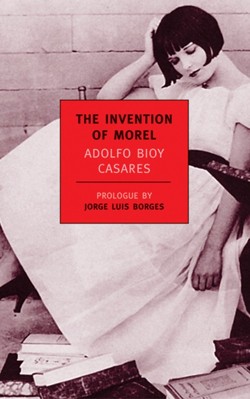
The Invention of Morel
Loading...
The Work of Art
Loading...
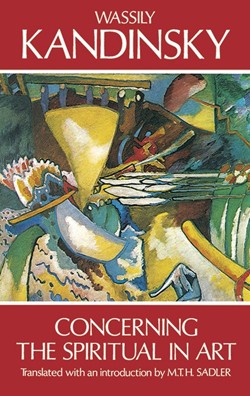
Concerning the Spiritual in Art
Loading...
Art/Work - Revised & Updated
Loading...
The Art Book
Loading...

You Never Know
Loading...

Hot Girl Murder Club
Loading...
E Is for Edward
Loading...

The Art of the National Parks
Loading...
Textures
Loading...

Pantone: The Twentieth Century in Color
Loading...
Ebony
Loading...
The Art of Ruth E. Carter
Loading...
Heavier Than Heaven
Loading...
Monsters
Loading...
Framed Drawing Techniques
Loading...
Glitch Feminism
Loading...
The Art of Still Life
Loading...
How to Be an Artist
Loading...
Framed Environment Design
Loading...
Poems
Loading...
The Library of Lost Maps
Loading...