Social Continuity and Rupture in Rural China I by Tang Lixing
As the first of a two-volume set examining the distinctive social structure and governance of Huizhou, China, this book focuses on the internal elements of this social functioning.
From the sixteenth century to the first half of the twentieth century, Huizhou, a historic region in what is now Anhui Province in China, was characterized by long-term social stability and prosperity. Even during times of war and unrest, Huizhou was able to quickly restore order. This two-volume study explores the reasons for this stability and its relevance and implications for contemporary society. In this first volume, the author provides an insider’s view of the factors that contributed to this remarkable social stability. It begins with an account of the historical context of the region, including clans, businessmen, and non-state institutions. The book then examines the internal drivers of this stable society, including autonomous local governance based on Confucian culture, merchant culture, and clan culture, which together ensured effective leadership of various non-governmental organizations.
The title will appeal to scholars and students of Chinese history, social and economic history in modern China, as well as readers interested in China’s transition to modernity.
You might also like




The Book Thief


Black AF History
The Gales of November


The Art of War

The The Case for Trump


The Emperor of All Maladies

The Secret Founding of America
- An Introduction to Chinese Rhetoric
- The Political History of the Guge Kingdom
-
 Affects and Communities in Contemporary American Ethnic Novels
-
 Language Variation and Change
- Classics Scholarship in the Western Han Dynasty
-
 Populism, Power and Foreign Policy
-
 Governing Food Safety in China
- Everyday China
-
 An Outline of Chinese Literature I
-
 Climate Change and Industry Structure in China
-
 Shareholder Activism in China and Beyond
-
 Social Construction and Social Development in Contemporary China
-
 Exploring Grammatical Metaphor
-
 On East Asian Regional Cooperation II
-
 Communicative Cities and Urban Space
-
 On East Asian Regional Cooperation I
-
 Social Structure and Social Stratification in Contemporary China
-
 A History of Chinese Theatre in the 20th Century I
- Urban Space in Transition
- A History of Translation Studies in China
-
 A History of Chinese Theatre in the 20th Century III
- The Study of EFL Learners’ Oral Language Development
- Rural Control in Imperial China II
-
 A Study of Excavated Documents in China
- Rural Control in Imperial China I
-
 A Critical History of Contemporary Chinese Fiction
-
 The Origin and Evolution of China's Names II
-
 Law and Literature
-
 The Origin and Evolution of China's Names I
-
 Restriction and Creation
-
 Community Governance in China
-
 Social Continuity and Rupture in Rural China II
-
 A Study of Vladimir Nabokov’s Cosmopolitan Literary Thoughts
-
 Perceiving Plato's Concern
-
 Innovation Through Convergence
-
 Digitization of the Global Value Chain and High-Quality Development
-
 AI and Security in China's Higher Education
-
 Genres of Chinese Intellectual Thought
-
 A Multidimensional Study of Tao Yuanming
-
 Towards an Ethical Subject
-
 State Evolution and Governance in Ancient China
-
 A Concise History of China's Population
-
 Literary Communication in Song Dynasty
-
 A Study of Chinese Characters
-
 The Cultural Turn in Translation Studies
-
 Studies on Chinese Discourse Grammar
-
 The West Uighur Kingdom on the Silk Road


Tang Lixing is a distinguished professor at the China Academy of Art and a professor of history at Shanghai Normal University, China. He is a pioneering scholar of Anhui Studies in China. His research expertise includes late imperial and modern Chinese history, Chinese social history, and cultural history. His recent publications with Routledge also include Merchants and Society in Modern China: Rise of Merchant Groups (2018).
| SKU | Unavailable |
| ISBN 13 | 9781032951485 |
| Title | Social Continuity and Rupture in Rural China I |
| Author | Tang Lixing |
| Series | China Perspectives |
| Condition | Unavailable |
| Binding Type | Paperback |
| Publisher | Routledge |
| Year published | 2025-02-01 |
| Cover note | Book picture is for illustrative purposes only, actual binding, cover or edition may vary. |
| Note | Unavailable |
Customers who bought this item also bought
The Book Thief
Black AF History
The Gales of November
The Art of War
The The Case for Trump
The Emperor of All Maladies
The Secret Founding of America



The Fate of the Day



1776
The Greatest Sentence Ever Written


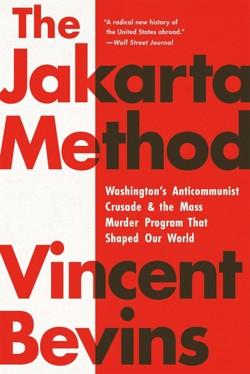
The The Jakarta Method

Women Holding Things

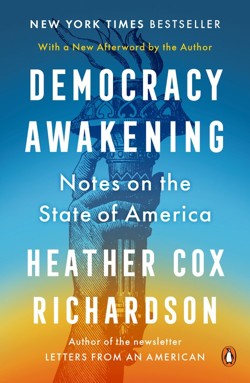
Democracy Awakening


The Wreck of the Mentor