
State and Society in the Philippines


World of Books
The feel-good place to buy books
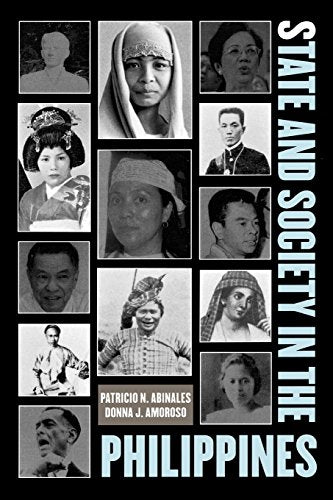
State and Society in the Philippines by Patricio N Abinales
People in the Philippines routinely vote, run for office, organize social movements, and call for good governance by the state. Why, then, is there a recurring state-society dilemma in the Philippines? One horn of the dilemma is the persistent inability of the state to provide basic services, guarantee peace and order, and foster economic development. The other is Filipinos' equally enduring suspicion of a strong state. The idea of a strong Republic evokes President Marcos' martial law regime of the 1970s and 1980s, which spawned two armed rebellions, cost thousands of lives in repression and billions of dollars in corruption, set the nation back years in economic development, and exacerbated suspicion of the state. This dilemma stimulates thinking about the puzzle of state resilience: How has a "weak state" maintained the territorial integrity of the Philippines in the postwar period in the face of two major rebellions and an armed separatist movement, corruption, mismanagement, intractable poverty, weak sovereignty, and an often chaotic electoral system? Why does the inability to collect taxes, secure citizens' lives and property, and maintain economic infrastructure not result in state failure? State and Society in the Philippines engages the dilemma of state-society relations through a historical treatment of state formation and the corresponding conflicts and collaborations between state leaders and social forces. It examines the long history of institutional state weakness in the Philippines and the efforts made to overcome the state's structural fragility and strengthen its bond with society. It answers these difficult questions by focusing on how the state has shaped and been shaped by its interaction with social forces, especially in the rituals of popular mobilization that have produced surprising and diverse results.
Outstanding scholarship and admirable depth and breadth of discussion and analyses about state formation and the dynamics of state-society relations in the Philippines* Contemporary Southeast Asia *
Abinales and Amoroso build their case with much care and nuance as they dispute conventional analyses of issues such as national events, social movements, and the entrenchment of the oligarchy, the centralizing and authoritarian tendency of the state, the plundering of the economy, relationships between leaders and their subjects, the shifting roles of women. For beginners on the Philippines, this book presents a succinct and intelligent introduction; for veterans, it invites reflection and indicates trajectories for further study; for Filipinos who care about their country, it paints a pictures which can provide impetus for more enduring reform. -- Jose Magadia S.J., Ateneo de Manila University
Scholarly and highly readable, this volume is an excellent introduction for those interested in the dynamics of Philippine society and the historical state that so far has failed to govern it well. Indispensable material for Philippine specialists and other social scientists, but equally valuable for college teachers and students understanding why a country-endowed with so much human and other resources-paradoxically falls back on massive foreign service for its economic and political survival. -- Felipe B. Miranda, University of the Philippines-Diliman
State and Society in the Philippines is a thought-provoking, incisive and timely re-examination of Philippine political history. Using a distinct analytical approach that travels across time, the book offers a fresh perspective on how and why politics in the Philippines have not led to the realization of political promises and developmental aspirations. In the process, it provides important missing pieces to the Philippine development puzzle. A must-read for all students of Philippine politics and history. -- Eric C. Batalla, De La Salle University-Manila
Abinales and Amoroso resist pat generalizations about Philippine state and society. Theirs is a work rich in nuances and gray areas, ideal for those who have given serious thought to the contradictions that define Philippine life. The authors are keen-and sympathetic-analysts and chroniclers. They do not flinch at complexity that defines the country's 'patchwork' state and society. The Philippines, they say, is best understood by looking at how the interplay between state and society, national and local, domination and resistance, continuity and change have shaped the country through the centuries. They correctly point out the recurring dilemma of state-society relations: Filipinos recognize that a weak state is largely to blame for many of their ills, ranging from poor social services to runaway crime, yet they are also suspicious of a strong state and its potential for abuse. -- Sheila S. Coronel, Philippine Center for Investigative Journalism
Abinales and Amoroso go far beyond what one would expect from a textbook, providing not only a summation of existing scholarship but also a creative new interpretation of Philippine politics and state-society dynamics. This book is very accessible to undergraduate audiences, and does an outstanding job of putting current politics in historical context. -- Paul D. Hutchcroft, University of Wisconsin-Madison
[This] book tackles the gulf that exists between hopes and reality when it comes to the Philippines as a modern state: Why is it that Philippine governments are often weak, and marked by inefficiency, corruption, and an overall lack of modern characteristics? . . . [It] deserves to be read by anyone, Filipino or not, who wants to understand why the Philippines is the way it is-and where it might be headed. -- Manuel L. Quezon III, columnist, Philippine Daily Inquirer
This book succeeds brilliantly in explaining the formation of the Philippine state, the first item in its title This book is an excellent historical account of State Formation in the Philippines. A detailed timeline that starts with Philippine contacts with China during the Tang Dynasty and ends with the results of the 2004 presidential elections provides a useful guide to the reader. -- Aprodicio Laquian * Pacific Affairs *
A competent, clearly written book for both the undergraduate and non-specialist reader. . . . Abinales and Amoroso have admirably tracked the historical development of the Philippines. * Journal of Southeast Asian Studies *
The most comprehensive political history of the Philippines to appear in print. It takes a global view of the process of state formation and covers nearly a millennium of historical change. . . . The overarching theme of the volume is the dynamic tension between a state too weak to deliver basic services (and collect taxes), and social forces often able to steer the state toward their interests. Highly recommended. * CHOICE *
Abinales and Amoroso build their case with much care and nuance as they dispute conventional analyses of issues such as national events, social movements, and the entrenchment of the oligarchy, the centralizing and authoritarian tendency of the state, the plundering of the economy, relationships between leaders and their subjects, the shifting roles of women. For beginners on the Philippines, this book presents a succinct and intelligent introduction; for veterans, it invites reflection and indicates trajectories for further study; for Filipinos who care about their country, it paints a pictures which can provide impetus for more enduring reform. -- Jose Magadia S.J., Ateneo de Manila University
Scholarly and highly readable, this volume is an excellent introduction for those interested in the dynamics of Philippine society and the historical state that so far has failed to govern it well. Indispensable material for Philippine specialists and other social scientists, but equally valuable for college teachers and students understanding why a country-endowed with so much human and other resources-paradoxically falls back on massive foreign service for its economic and political survival. -- Felipe B. Miranda, University of the Philippines-Diliman
State and Society in the Philippines is a thought-provoking, incisive and timely re-examination of Philippine political history. Using a distinct analytical approach that travels across time, the book offers a fresh perspective on how and why politics in the Philippines have not led to the realization of political promises and developmental aspirations. In the process, it provides important missing pieces to the Philippine development puzzle. A must-read for all students of Philippine politics and history. -- Eric C. Batalla, De La Salle University-Manila
Abinales and Amoroso resist pat generalizations about Philippine state and society. Theirs is a work rich in nuances and gray areas, ideal for those who have given serious thought to the contradictions that define Philippine life. The authors are keen-and sympathetic-analysts and chroniclers. They do not flinch at complexity that defines the country's 'patchwork' state and society. The Philippines, they say, is best understood by looking at how the interplay between state and society, national and local, domination and resistance, continuity and change have shaped the country through the centuries. They correctly point out the recurring dilemma of state-society relations: Filipinos recognize that a weak state is largely to blame for many of their ills, ranging from poor social services to runaway crime, yet they are also suspicious of a strong state and its potential for abuse. -- Sheila S. Coronel, Philippine Center for Investigative Journalism
Abinales and Amoroso go far beyond what one would expect from a textbook, providing not only a summation of existing scholarship but also a creative new interpretation of Philippine politics and state-society dynamics. This book is very accessible to undergraduate audiences, and does an outstanding job of putting current politics in historical context. -- Paul D. Hutchcroft, University of Wisconsin-Madison
[This] book tackles the gulf that exists between hopes and reality when it comes to the Philippines as a modern state: Why is it that Philippine governments are often weak, and marked by inefficiency, corruption, and an overall lack of modern characteristics? . . . [It] deserves to be read by anyone, Filipino or not, who wants to understand why the Philippines is the way it is-and where it might be headed. -- Manuel L. Quezon III, columnist, Philippine Daily Inquirer
This book succeeds brilliantly in explaining the formation of the Philippine state, the first item in its title This book is an excellent historical account of State Formation in the Philippines. A detailed timeline that starts with Philippine contacts with China during the Tang Dynasty and ends with the results of the 2004 presidential elections provides a useful guide to the reader. -- Aprodicio Laquian * Pacific Affairs *
A competent, clearly written book for both the undergraduate and non-specialist reader. . . . Abinales and Amoroso have admirably tracked the historical development of the Philippines. * Journal of Southeast Asian Studies *
The most comprehensive political history of the Philippines to appear in print. It takes a global view of the process of state formation and covers nearly a millennium of historical change. . . . The overarching theme of the volume is the dynamic tension between a state too weak to deliver basic services (and collect taxes), and social forces often able to steer the state toward their interests. Highly recommended. * CHOICE *
Patricio N. Abinales is professor in the School of Pacific and Asian Studies, the University of Hawai`i at Manoa. Donna J. Amoroso (1960-2011) was visiting associate professor at the National Graduate Institute for Policy Studies, Tokyo, and editor of the Kyoto Review of Southeast Asia at the Center for Southeast Asian Studies, Kyoto University.
| SKU | Unavailable |
| ISBN 13 | 9780742510241 |
| ISBN 10 | 0742510247 |
| Title | State and Society in the Philippines |
| Author | Patricio N Abinales |
| Series | State And Society In East Asia |
| Condition | Unavailable |
| Binding Type | Paperback |
| Publisher | Rowman & Littlefield |
| Year published | 2005-04-21 |
| Number of pages | 388 |
| Prizes | Winner of Choice Outstanding Book of the Year 2006. |
| Cover note | Book picture is for illustrative purposes only, actual binding, cover or edition may vary. |
| Note | Unavailable |