
Teresa de Avila, Lettered Woman


Summary
The feel-good place to buy books
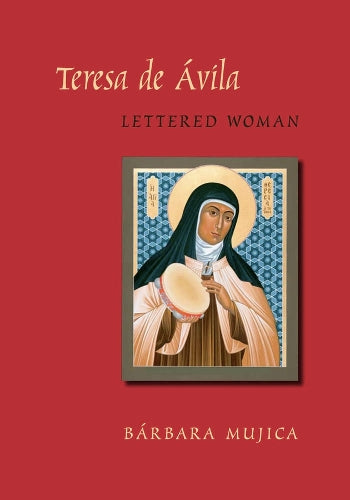
Teresa de Avila, Lettered Woman by Barbara Mujica
In 1562, Teresa de Avila founded the Discalced Carmelites and launched a reform movement that would pit her against the Church hierarchy and the male officials of her own religious order. This new spirituality, which stressed interiority and a personal relationship with God, was considered dangerous and subversive. It provoked the suspicion of the Inquisition and the wrath of unreformed Carmelites, especially the Andalusian friars, who favored the lax practices of their traditional monasteries. The Inquisition investigated Teresa repeatedly, and the Carmelite General had her detained. But even during the most terrible periods of persecution, Teresa continued to fight for the reform using the weapon she wielded best: the pen. Teresa wrote hundreds, perhaps thousands, of letters to everyone from the king to prelates to mothers of novices. Teresa's epistolary writing reveals how she used her political acumen to dodge inquisitors and negotiate the thorny issues of the reform, facing off with the authorities - albeit with considerable tact - and reprimanding priests and nuns who failed to follow her orders. Her letters bring to light the different strategies she used - code names, secret routing - in order to communicate with nuns and male allies. They show how she manipulated language, varying her tone and rhetoric according to the recipient or slipping into deliberate vagueness in order to avoid divulging secrets. What emerges from her correspondence is a portrait of extraordinary courage, ability, and shrewdness. In the sixteenth century, the word letrado (lettered) referred to the learned men of the Church. Teresa treated letrados with great respect and always insisted on her own lack of learning. The irony is that although women could not be letradas, Teresa was, as her correspondence shows, 'lettered' in more ways than one.
Mujica expertly and gracefully weaves together materials from numerous academic fields, including monastic and eccleslastical history, analyses of Church doctrine, national history, literary theory and criticism, and hagiography, among others, and the very readable prose makes it accessible to the general educated readerCAROL SLADE AUTHOR OF ST. TERESA OF AVILA: AUTHOR OF A HEROIC LIFE ""This book will be particularly valuable for both scholars and students."" SHERRY VELASCO AUTHOR OF THE LIEUTENANT NUN: TRANSGENDERISM, LESBIAN DESIRE, AND CATALINA DE ERAUSO AND MALE DELIVERY: REPRODUCTION, EFFEMINACY, AND PREGNANT MEN IN EARLY MODERN SPAIN
Barbara Mujica is a Professor of Spanish at Georgetown University and President Emerita of the Association for Hispanic Classical Theater (AHCT). She is a specialist in early modern Spanish literature who has written extensively on mysticism, the pastoral novel, and seventeenth-century theater. She is also a best-selling novelist whose most recent work is Sister Teresa, based on the life of Teresa de Avila.
| SKU | Unavailable |
| ISBN 13 | 9780826516312 |
| ISBN 10 | 0826516319 |
| Title | Teresa de Avila, Lettered Woman |
| Author | Barbara Mujica |
| Condition | Unavailable |
| Binding Type | Hardback |
| Publisher | Vanderbilt University Press |
| Year published | 2009-05-01 |
| Number of pages | 272 |
| Cover note | Book picture is for illustrative purposes only, actual binding, cover or edition may vary. |
| Note | Unavailable |