


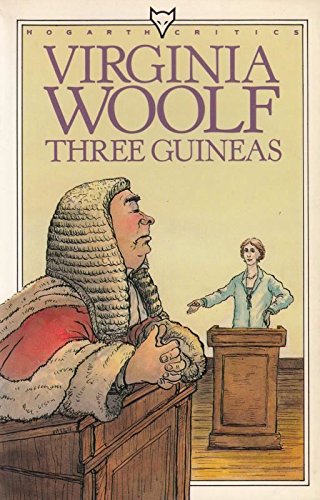
Three Guineas by Virginia Woolf
Woolf s goal is not merely freedom and equality for race and sex and people, it is human civilization, a civilization which must be better, sounder, and surer than we know. The New York TimesThree Guineas is written as a series of letters in which Virginia Woolf ponders the efficacy of donating to various causes to prevent war. In reflecting on her situation as the daughter of an educated man in 1930s England, Woolf challenges liberal orthodoxies and marshals vast research to make discomforting and still-challenging arguments about the relationship between gender and violence, and about the pieties of those who fail to see their complicity in war-making. This pacifist-feminist essay is a classic whose message resonates loudly in our contemporary global situation.
Virginia Woolf (1882-1941), one of the major literary figures of the twentieth century, transformed the art of the novel. The author of numerous novels, collections of letters, journals, and short stories, she was an admired literary critic and a master of the essay form.
Mark Hussey, general editor of Harcourt's annotated Woolf series, is professor of English at Pace University in New York City and editor of the Woolf Studies Annual.
Jane Marcus is Distinguished Professor of English at CUNY-Graduate Center and City College of New York. She is the author of Virginia Woolf and the Languages of Patriarchy; Art and Anger: Reading Like a Woman; The Young Rebecca West; and, most recently, Hearts of Darkness: White Women Write Race.
| SKU | Unavailable |
| ISBN 13 | 9780701207014 |
| ISBN 10 | 0701207019 |
| Title | Three Guineas |
| Author | Virginia Woolf |
| Condition | Unavailable |
| Binding Type | Paperback |
| Publisher | Vintage |
| Year published | 1986-06-05 |
| Number of pages | 224 |
| Cover note | Book picture is for illustrative purposes only, actual binding, cover or edition may vary. |
| Note | Unavailable |