
Trauma and the Destructive-Transformative Struggle


Summary
The feel-good place to buy books
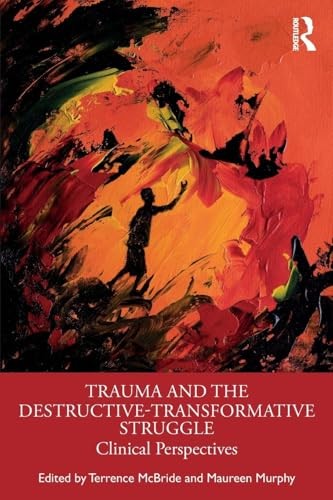
Trauma and the Destructive-Transformative Struggle by Terrence Mcbride
The impact of trauma can be both destructive and transformative. This book presents not only a range of theoretical frameworks through which different trauma can be understood, from the effects of childhood abuse to those of war and catastrophes, but also gives readers insights into how trauma presents itself in the consulting room."This book provides an excellent overview of current psychoanalytic exploration of the various forms of traumaIt emphasizes that when confronted with the traumatic effects of external destructive events, we must never lose sight of the multiple intrapsychic meaning of traumatic experience. Contributors provide us with new knowledge, and with their extensive clinical material they deepen our insights for treatment. The book helps the psychoanalytic clinician bridge the gap between the theoretical framework of trauma and clinical practice." --Werner Bohleber, Training and Supervising Analyst, German Psychoanalytical Association
"This collection of essays on trauma, broadly and deeply conceived, is a very welcome addition to trauma studies. The types of trauma being written about - to body, to mind, to infant, to social group - suggest how wide we must set our lens if we are to say something genuinely crucial and helpful to those of us who see trauma in the consulting room. Most importantly, this book exposes the wide range of theories and practices in which trauma work is being done. This marks a very significant shift in psychoanalytic theory and practice. Trauma work can be undertaken with care, with precision and with power, across different theoretical traditions. This is a unifying force in psychoanalysis, and I might say, is the deep message of this collection." --Adrienne Harris, New York University
"For all who are interested in learning from different clinical and theoretical perspectives, this book shows a vast array of well-regarded psychoanalysts’ experience in dealing with Trauma – ‘a wound that alters development, disrupts time, obstructs symbolization’, as stated by M. Murphy, one of the book’s editors. It’s really a compilation of a comprehensive psychoanalytic approach to trauma nowadays. I felt so enriched by this truly original and important work and would highly recommend it!" --Sergio Nick, Adult, Child and Adolescent Psychoanalyst, Brazilian Psychoanalytic Society, Rio de Janeiro, and Vice President of the International Psychoanalytical Association
"...the volume impressively illustrates the theoretical and clinical pluralism of today's psychoanalysis. The wealth and breadth of conceptual and clinical knowledge that psychoanalysis has accumulated over more than a hundred years of history deserves to be used to benefit those who suffer from the unimaginable pain that human beings can inflict on each other. The twentieth century, of which psychoanalysis is the child, has been called the century of trauma. The current pandemic and its social, political and societal consequences unfortunately indicate that we will continue to be preoccupied with dealing with trauma in the twenty-first century. As this highly recommended volume illustrates, psychoanalysis may indeed contribute to understanding and dealing with traumatized human beings and societies." - Marianne Leuzinger-Bohleber, The International Journal of Psychoanalysis (102)(2):435-439
"This book provides an excellent overview of current psychoanalytic explorations of the various forms of trauma. It emphasizes that when confronted with the traumatic effects of external destructive events, we must never lose sight of the multiple intrapsychic meaning of traumatic experience. Contributors provide us with new knowledge, and with their extensive clinical material they deepen our insights for treatment. The book helps the psychoanalytic clinician bridge the gap between the theoretical framework of trauma and clinical practice." --Werner Bohleber, Training and Supervising Analyst, German Psychoanalytical Association
"This collection of essays on trauma, broadly and deeply conceived, is a very welcome addition to trauma studies. The types of trauma being written about - to body, to mind, to infant, to social group - suggest how wide we must set our lens if we are to say something genuinely crucial and helpful to those of us who see trauma in the consulting room. Most importantly, this book exposes the wide range of theories and practices in which trauma work is being done. This marks a very significant shift in psychoanalytic theory and practice. Trauma work can be undertaken with care, with precision and with power, across different theoretical traditions. This is a unifying force in psychoanalysis, and I might say, is the deep message of this collection." --Adrienne Harris, New York University
"For all who are interested in learning from different clinical and theoretical perspectives, this book shows a vast array of well-regarded psychoanalysts’ experience in dealing with Trauma – ‘a wound that alters development, disrupts time, obstructs symbolization’, as stated by M. Murphy, one of the book’s editors. It’s really a compilation of a comprehensive psychoanalytic approach to trauma nowadays. I felt so enriched by this truly original and important work and would highly recommend it!" --Sergio Nick, Adult, Child and Adolescent Psychoanalyst, Brazilian Psychoanalytic Society, Rio de Janeiro, and Vice President of the International Psychoanalytical Association
"...the volume impressively illustrates the theoretical and clinical pluralism of today's psychoanalysis. The wealth and breadth of conceptual and clinical knowledge that psychoanalysis has accumulated over more than a hundred years of history deserves to be used to benefit those who suffer from the unimaginable pain that human beings can inflict on each other. The twentieth century, of which psychoanalysis is the child, has been called the century of trauma. The current pandemic and its social, political and societal consequences unfortunately indicate that we will continue to be preoccupied with dealing with trauma in the twenty-first century. As this highly recommended volume illustrates, psychoanalysis may indeed contribute to understanding and dealing with traumatized human beings and societies." - Marianne Leuzinger-Bohleber, The International Journal of Psychoanalysis (102)(2):435-439
Terrence McBride is a Training and Supervising Analyst and Faculty Member at the Los Angeles Institute and Society for Psychoanalytic Studies (LAISPS). He is also Past President and former Dean and Director of Training at LAISPS. He is on the Board of the North American Psychoanalytic Confederation (NAPsaC) and is the current President of the Confederation of Independent Psychoanalytic Societies (CIPS). He is in private practice in Los Angeles, California.
Maureen Murphy is a Personal and Supervising Analyst and Faculty Member at the Psychoanalytic Institute of Northern California (PINC). She was the Founding President of PINC and former chair of NAPsaC. She teaches courses on contemporary psychosomatic concepts, particularly the impact of burgeoning biotechnology on core psychoanalytic concepts. She is in private practice in San Francisco.
| SKU | Unavailable |
| ISBN 13 | 9780367333904 |
| ISBN 10 | 0367333902 |
| Title | Trauma and the Destructive-Transformative Struggle |
| Author | Terrence Mcbride |
| Condition | Unavailable |
| Binding Type | Paperback |
| Publisher | Taylor & Francis Ltd |
| Year published | 2019-08-27 |
| Number of pages | 236 |
| Cover note | Book picture is for illustrative purposes only, actual binding, cover or edition may vary. |
| Note | Unavailable |