
Turkish Intelligence and the Cold War


World of Books
The feel-good place to buy books
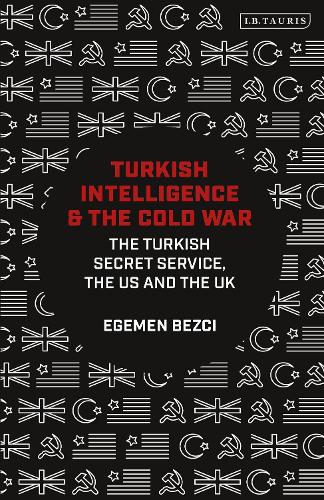
Turkish Intelligence and the Cold War by Egemen Bezci
Turkish Intelligence and the Cold War examines the hitherto unexplored history of secret intelligence cooperation between three asymmetric partners – specifically the UK, US and Turkey – from the end of the Second World War until the Turkey’s first military coup d'état on 27 May 1960. The book shows that our understanding of the Cold War as a binary rivalry between the two blocs is too simple an approach and obscures important characteristics of intelligence cooperation among allies. Egemen Bezci shows that a pragmatic approach offers states new opportunities to protect national interests, by conducting ‘’intelligence diplomacy’ to influence crucial areas such as nuclear weapons and to exploit cooperation in support of their own strategic imperatives. This study not only reveals previously-unexplored origins of secret intelligence cooperation between Turkey and West, but also contributes to wider academic debates on the nature of the Cold War by highlighting the potential agency of weaker states in the Western Alliance.
Turkish Intelligence & The Cold War will broaden many readers knowledge of Turkish intelligenceA worthwhile contribution to the literature. * Studies in Intelligence *
In April 1957 US Ambassador Fletcher Warren burst into Prime minister Menderes’s cabinet meeting to try and prevent him from taking military action in Syria. Menderes had to make a hard choice. This is one of the more dramatic moments in Egemen Bezci’s new book Turkish Intelligence and the Cold War. * Duvar English *
Overall, the book is highly likely to be beneficial for scholars and students who are interested in Cold War history, Middle Eastern history, Turkish history and Intelligence Studies. It focuses on an under-studied topic, challenges the conventional wisdom and makes a significant contribution to the literature. * Middle Eastern Studies *
Turkish Intelligence and the Cold War is unique in several ways, it gets us to think about the Cold War from outside the simple binary of the East-West divide, enables us to examine non-Western approaches to espionage and gets us to analyse how weaker powers respond to the asymmetrical relationships. * The New Arab *
A useful contribution to the intelligence literature, in particular on the subject of international intelligence cooperation and the role of intelligence in foreign policy. * Intelligence and National Security *
[Turkish Intelligence and the Cold War] provides essential information for understanding the intelligence–based cooperation between Ankara and the UK–US axis led by Washington in the early years of the Cold War. * EFRC: Études Françaises de Renseignement et de Cyber *
In April 1957 US Ambassador Fletcher Warren burst into Prime minister Menderes’s cabinet meeting to try and prevent him from taking military action in Syria. Menderes had to make a hard choice. This is one of the more dramatic moments in Egemen Bezci’s new book Turkish Intelligence and the Cold War. * Duvar English *
Overall, the book is highly likely to be beneficial for scholars and students who are interested in Cold War history, Middle Eastern history, Turkish history and Intelligence Studies. It focuses on an under-studied topic, challenges the conventional wisdom and makes a significant contribution to the literature. * Middle Eastern Studies *
Turkish Intelligence and the Cold War is unique in several ways, it gets us to think about the Cold War from outside the simple binary of the East-West divide, enables us to examine non-Western approaches to espionage and gets us to analyse how weaker powers respond to the asymmetrical relationships. * The New Arab *
A useful contribution to the intelligence literature, in particular on the subject of international intelligence cooperation and the role of intelligence in foreign policy. * Intelligence and National Security *
[Turkish Intelligence and the Cold War] provides essential information for understanding the intelligence–based cooperation between Ankara and the UK–US axis led by Washington in the early years of the Cold War. * EFRC: Études Françaises de Renseignement et de Cyber *
Egemen Bezci received his PhD in intelligence studies at the University of Nottingham, UK. He is a Fellow of the Royal Historical Society. He is currently working as a Data Scientist helping private sector clients to address business requirements. His work appeared in academic and popular venues such as the Bulletin of the Atomic Scientists, New Scientist, National Interest, War on the Rocks, and Stanford University Press, among others. His research received prestigious research grants including ones from the Royal Swedish Academy of Sciences, Taiwan Ministry of Foreign Affairs, and the University of Nottingham Vice-Chancellor’s Research Excellence Scholarship.
| SKU | Unavailable |
| ISBN 13 | 9780755636495 |
| ISBN 10 | 075563649X |
| Title | Turkish Intelligence and the Cold War |
| Author | Egemen Bezci |
| Condition | Unavailable |
| Binding Type | Paperback |
| Publisher | Bloomsbury Publishing PLC |
| Year published | 2021-04-22 |
| Number of pages | 304 |
| Cover note | Book picture is for illustrative purposes only, actual binding, cover or edition may vary. |
| Note | Unavailable |