
What Animals Mean in the Fiction of Modernity


Summary
The feel-good place to buy books
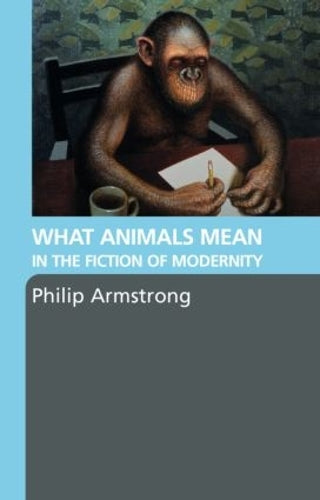
What Animals Mean in the Fiction of Modernity by Philip Armstrong
Philip Armstrong examines the function of animals and animal representations in four classic narratives: Robinson Crusoe, Gullivers Travels, Frankenstein and Moby-Dick and explores how these stories have been re-worked, in ways that reflect shifting social and environmental forces, by later novelists."Remarkable depth and breadth in its engagement with critical discussions of animals in modern fiction"
- Susan McHugh in Society & Animals 17.4 (2009): 363-7
"An essential book for anyone involved in Animal Studies and everyone concerned with animals in literature".
- Marion Copeland in Humanimalia 1.1 (September 2009)
"A magisterial reading of Moby-Dick appears in What Animals Mean in the Fiction of Modernity alongside compelling studies of Gulliver's Travels, Robinson Crusoe, Frankenstein, a host of twentieth-century novels, and critical analyses of Wells and Lawrence ...".
- Robert McKay in The Minnesota Review issue 73-4 (2010)
Philip Armstrong teaches at the University of Canterbury, Aotearoa, where he is Co-Director of the New Zealand Centre for Human-Animal Studies.
| SKU | Unavailable |
| ISBN 13 | 9780415358392 |
| ISBN 10 | 0415358396 |
| Title | What Animals Mean in the Fiction of Modernity |
| Author | Philip Armstrong |
| Condition | Unavailable |
| Binding Type | Paperback |
| Publisher | Taylor & Francis Ltd |
| Year published | 2008-01-21 |
| Number of pages | 264 |
| Cover note | Book picture is for illustrative purposes only, actual binding, cover or edition may vary. |
| Note | Unavailable |