
Winchester: Swithun's 'City of Happiness and Good Fortune'


Summary
The feel-good place to buy books
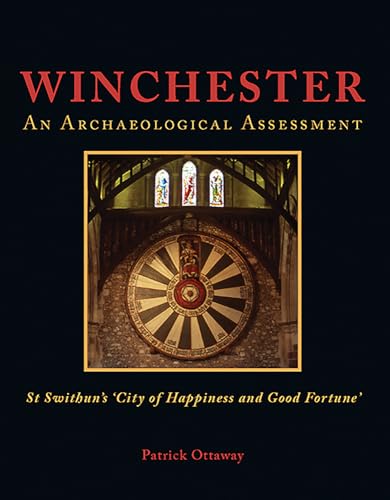
Winchester: Swithun's 'City of Happiness and Good Fortune' by Patrick Ottaway
This critical assessment of the archaeology of the historic city of Winchester and its immediate environs from earliest times to the present day is the first published comprehensive review of the archaeological resource for the city, which as seen many major programmes of archaeological investigation.There is evidence for activity and occupation in the Winchester area from the Palaeolithic period onwards, but in the Middle Iron Age population rose sharply with settlement was focused on two major defended enclosures at St Catherine's Hill and, subsequently, Oram's Arbour. Winchester became a Roman 'civitas' capital in the late 1st century AD and the typical infrastructure of public buildings, streets and defences was created. Following a period of near desertion in the Early Anglo-Saxon period, Winchester became a significant place again with the foundation of a minster church in the mid-7th century. In the Late Anglo-Saxon period it became the pre-eminent royal centre for the Kingdom of Wessex. The city acquired a castle, cathedral and bishop's palace under norman kings but from the late 12th century onwards its status began to decline to that of a regional market town. The archaeological resource for Winchester is very rich and is a resource of national and, for the Anglo-Saxon and Norman periods, of international importance.
Personal investigation shows through in this volume, which is much more than a dry presentation of an urban database..Everything is presented in a coherent chronological sequence, providing a much better context for what has been found. * Medieval Archaeology *
The Winchester archaeological assessment is a triumph for the team who have put it together and provides a clear, in-depth look at the development of the city, with a period-by-period overview fully illustrated with site plans and summary mapping of discoveries, superb photographs of some of the more important finds, and a valuable commentary on the history of discovery. The discussion of the archaeological potential of each period is valuable, with pointers to possible future research (including building studies), rather than a rigid series of research aims, which so often are superseded by the nature of discoveries. Especially valuable are the summary plans of discoveries: for example, the Roman Forum, the late Saxon churches, and the Brooks excavations, among the rich selection of illustrations of site plans and finds. * Current Archaeology *
Handsomely produced and keenly priced, this is a synthesis of impressive clarity and scope which is likely to be the first port of call for anyone seeking to engage or re-engage with Winchester's archaeology and history. Valuable for academic and professional readers, and accessible to the non-specialist, it does an excellent job of delivering broader public value from the investment of public money in the Uad and UAA for Winchester. * Archaeological Journal *
Ottaway has produced an excellent book, which summarises very well the underground Roman and Anglo-Saxon city. This is the meat of the book, and it is an invaluable resource while we await the definitive excavation reports… * British Archaeology *
The Winchester archaeological assessment is a triumph for the team who have put it together and provides a clear, in-depth look at the development of the city, with a period-by-period overview fully illustrated with site plans and summary mapping of discoveries, superb photographs of some of the more important finds, and a valuable commentary on the history of discovery. The discussion of the archaeological potential of each period is valuable, with pointers to possible future research (including building studies), rather than a rigid series of research aims, which so often are superseded by the nature of discoveries. Especially valuable are the summary plans of discoveries: for example, the Roman Forum, the late Saxon churches, and the Brooks excavations, among the rich selection of illustrations of site plans and finds. * Current Archaeology *
Handsomely produced and keenly priced, this is a synthesis of impressive clarity and scope which is likely to be the first port of call for anyone seeking to engage or re-engage with Winchester's archaeology and history. Valuable for academic and professional readers, and accessible to the non-specialist, it does an excellent job of delivering broader public value from the investment of public money in the Uad and UAA for Winchester. * Archaeological Journal *
Ottaway has produced an excellent book, which summarises very well the underground Roman and Anglo-Saxon city. This is the meat of the book, and it is an invaluable resource while we await the definitive excavation reports… * British Archaeology *
Patrick Ottaway runs an archaeological consultancy, PJO Archaeology, based in York, providing a wide range of services to commercial and academic clients all over the UK. Educated at Oxford, Leeds and with a PhD from York in Viking Age ironwork, He has over 30 years of experience as a field archaeologist, notably as the former Head of Fieldwork at York Archaeological Trust, and has a particular expertise in researching the archaeology of towns.
| SKU | Unavailable |
| ISBN 13 | 9781785704499 |
| ISBN 10 | 1785704494 |
| Title | Winchester: Swithun's 'City of Happiness and Good Fortune' |
| Author | Patrick Ottaway |
| Series | Urban Archaeological Assessment |
| Condition | Unavailable |
| Binding Type | Hardback |
| Publisher | Oxbow Books |
| Year published | 2017-05-26 |
| Number of pages | 416 |
| Cover note | Book picture is for illustrative purposes only, actual binding, cover or edition may vary. |
| Note | Unavailable |